K–5 Lesson 1 / 12

Where Did the Synagogue
Come From?

The Temple and the First Synagogues
For Grades 3–5
◆ ◆ ◆

A long time ago, there was no such thing as a synagogue. This is the story of how the synagogue came to be.
The Makor Project makorproject.org
A Question to Hold 2 / 12

One question we will answer

A synagogue is a building where Jewish people meet to pray, read the Torah, and gather. But where did the first synagogue come from?

To answer this, we go back about three thousand years — much further than the year you were born.

The answer begins with a building called the Temple, in a city called Jerusalem.

Long ago, Jewish prayer had one home: the Temple in Jerusalem.
The First Temple 3 / 12
About 3,000 years ago · Jerusalem

Tradition tells: King Solomon builds the First Temple

About three thousand years ago, a king named Solomon built a great stone building in the city of Jerusalem. It was called the Temple. Inside it, priests offered prayers and sacrifices to the one God of the Jewish people.

The Temple stood on a high platform of stone called the Temple Mount. The First Temple stood for about 370 years.

King Solomon builds the First Temple in Jerusalem.
1 Kings 6 · The Hebrew Bible
Destruction · Exile 4 / 12
586 BCE · The First Destruction

The Temple is destroyed

The First Temple is destroyed, and the city burns.

In the year 586 BCE, a powerful empire called Babylon attacked Jerusalem. They knocked down the walls, burned the city, and destroyed the Temple.

What does BCE mean? BCE means "before the year 1." The bigger the BCE number, the longer ago it was — so 586 BCE comes after 957 BCE.

Many Jewish families were taken far from home to live in Babylon. This is called the Exile.

For the first time, Jewish families lived where they could not go to the Temple to pray. They had to find a new way.

2 Kings 25 · The Hebrew Bible
A New Idea 5 / 12

An idea that traveled

If we cannot go to the Temple, we will bring the prayers to wherever we are.

The Jewish families living in Babylon began to do something new. They gathered in small groups in houses of assembly — places to meet, pray, read sacred writings, and teach their children.

In Hebrew this place is a beit knesset — "house of meeting." In Greek, the same idea was called a synagogue — "gathering" or "assembly."
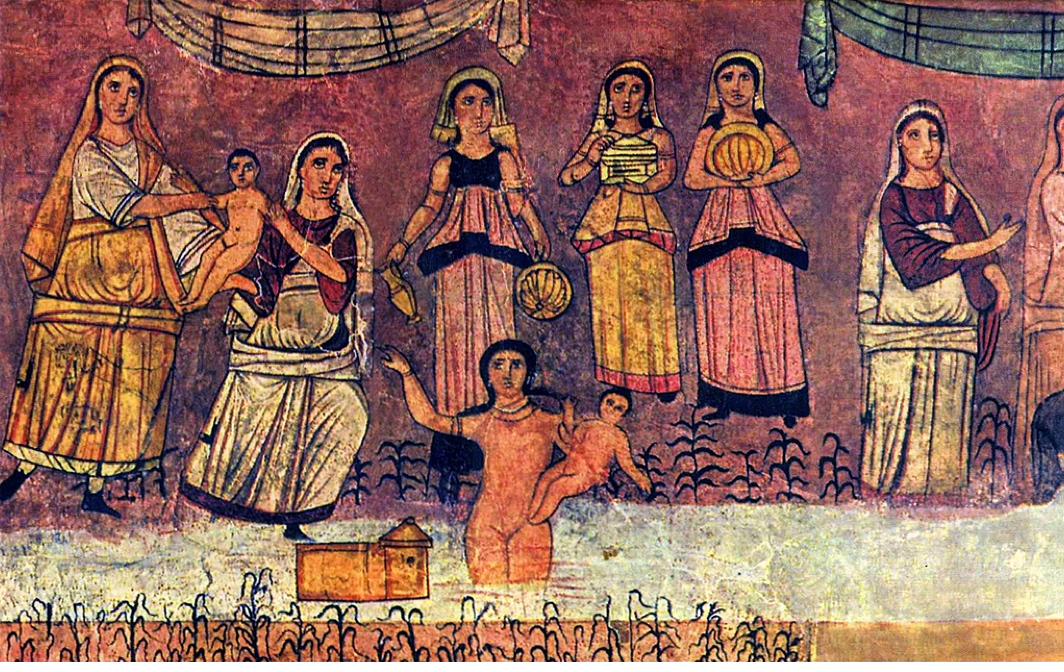
A painted wall panel from the ancient synagogue at Dura-Europos showing robed biblical figures in warm ochre and red tones
A wall painting from the synagogue at Dura-Europos, Syria, about 244 CE — among the oldest synagogue art that still survives.
National Museum of Damascus · public domain
The word's earliest written use, c. 3rd century BCE
The Second Temple 6 / 12
516 BCE · Rebuilding

The Temple is rebuilt

After about 70 years in Babylon, many Jewish people were allowed to return to Jerusalem. They rebuilt the Temple on the same platform where the first one had stood. This is the Second Temple.

But Jewish families did not stop using their synagogues. People liked having a place close to home where they could pray every week.

So now there were both: the Temple in Jerusalem and synagogues in every Jewish town.
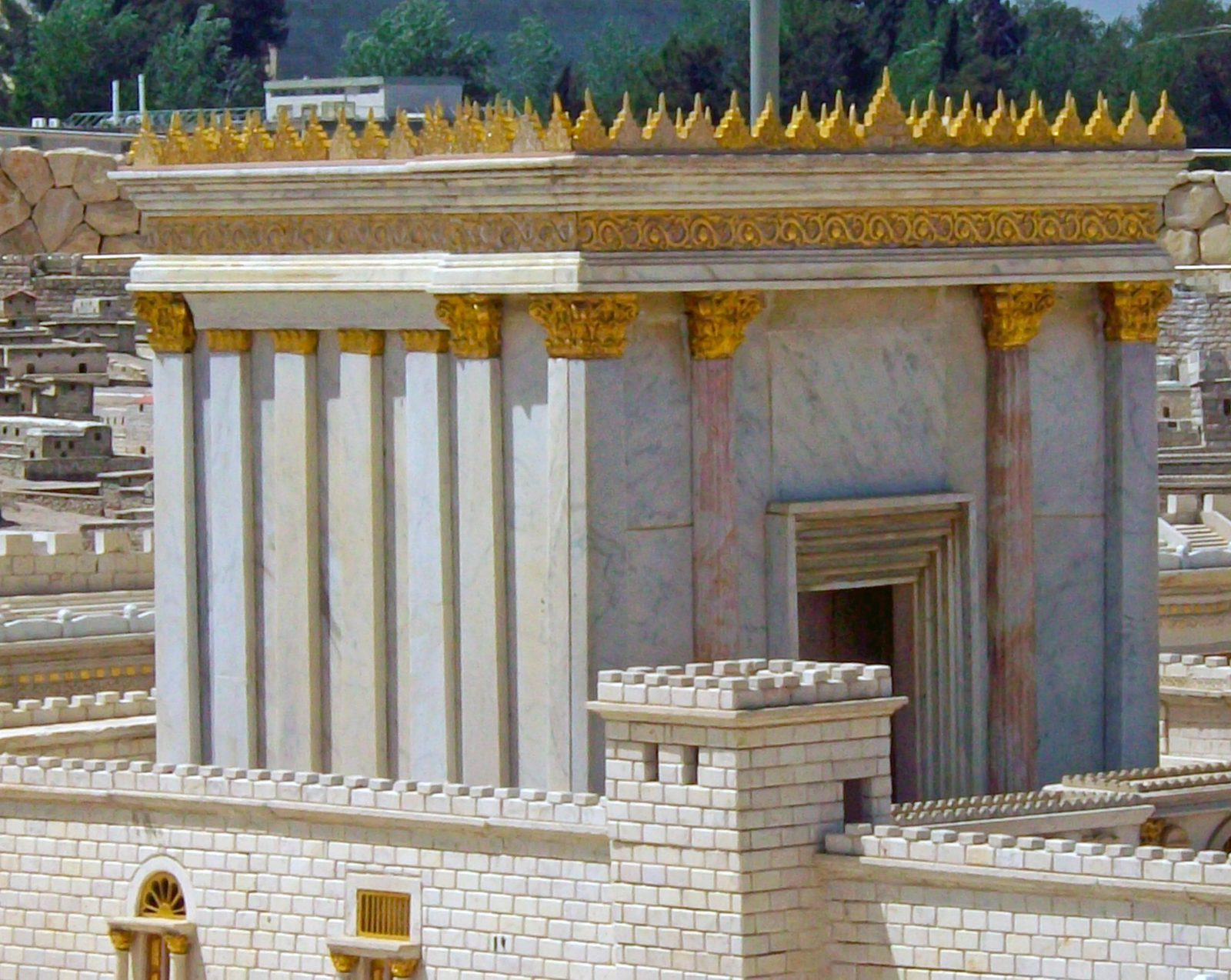
A detailed scale model of the Second Temple — a white stone building with a golden roof, set within walled courtyards
A model of the Second Temple, at the Israel Museum in Jerusalem.
Photo by Daniel Case · Wikimedia Commons · CC BY-SA 3.0
Ezra 6 · The Hebrew Bible
A Turning Point 7 / 12
70 CE · The Second Destruction

The Temple is destroyed again — for the last time

Only one great wall was left standing — and it is still there today.

About 600 years later, in 70 CE, the Roman Empire — the same Romans who built the Colosseum — attacked Jerusalem and destroyed the Second Temple. The Temple has not been rebuilt since.

This was a moment that changed everything. With no Temple at all, the synagogue had to carry everything Jewish families needed.

The synagogue became the heart of Jewish life. It has been ever since.

Josephus · The Jewish War · 75 CE
Inside a Synagogue 8 / 12

What is inside a synagogue?

Every synagogue, anywhere in the world, has these same five things. The numbers on the photo point to each one:

  • 1 · Ark — cabinet for the Torah scrolls
  • 2 · Torah — handwritten scroll inside the ark
  • 3 · Bimah — raised reading platform
  • 4 · Ner Tamid — eternal lamp
  • 5 · Mezuzah — case at the doorway

A drawing of a synagogue inside. The numbers point to the five things every synagogue has.

1 2 3 4 5
2
3
4
5
Around the World 9 / 12

Historic synagogues — and the one near you

Once Jewish families learned that they could pray in any house of meeting, they built synagogues everywhere they went. Some are still being used for prayer every week.

Most towns have a synagogue. Many welcome school visits — just ask.

The Big Idea 11 / 12

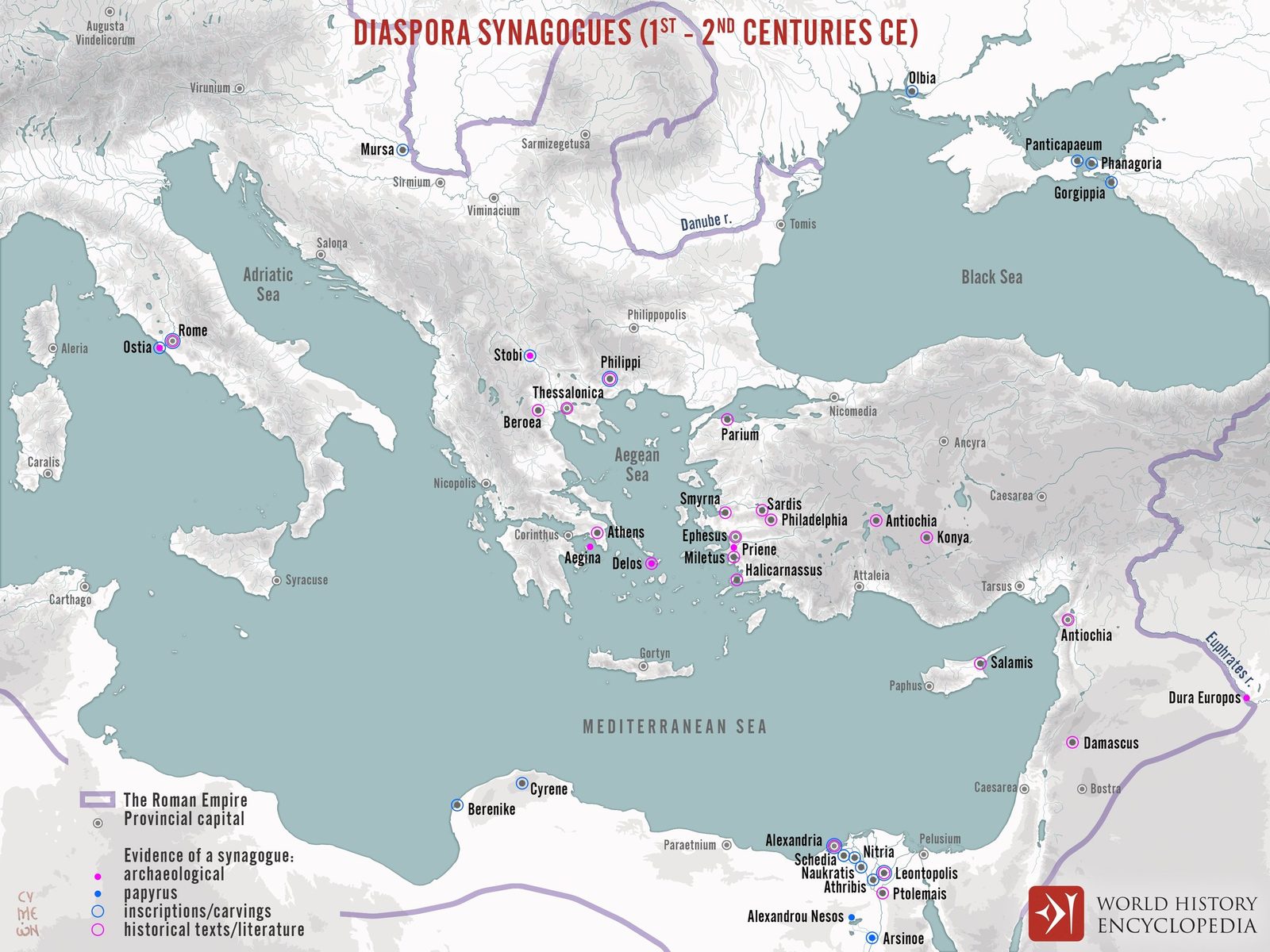
The synagogue is a portable idea

A map showing synagogues spread across the ancient Mediterranean and Middle East
Synagogues spread across the ancient world.
Map of Diaspora Synagogues by Simeon Netchev · World History Encyclopedia · CC BY-NC-ND 4.0

Anywhere ten Jewish adults can meet, there can be a synagogue.

A church needs a church building. A mosque needs a mosque building. But a synagogue is, at its heart, just a place where people gather.

Because it was an idea — not a single building tied to one place — Jewish families could carry it anywhere they went: to Babylon, Rome, Spain, Poland, Yemen, Morocco, and America.

That is how the Jewish people kept their traditions alive for more than 2,500 years.

Words to Know 10 / 12

The most important words in this lesson

TempleThe great building in Jerusalem
where Jewish prayers were offered
long ago. Destroyed in 70 CE.
SynagogueA "house of meeting." A place
where Jewish people gather to
pray, read the Torah, and learn.
TorahThe first five books of the
Hebrew Bible. Written by hand
on a long scroll.
JerusalemThe city in Israel where the
Temple stood. Every synagogue
in the world faces it.
In Jerusalem Today

The Western Wall — a piece of the Temple you can visit today

Aerial photograph of the Temple Mount in Jerusalem, with the Western Wall plaza at its base
The Temple Mount in Jerusalem today — the Temple once stood here.
Photo by Andrew Shiva · Wikimedia Commons · CC BY-SA 4.0
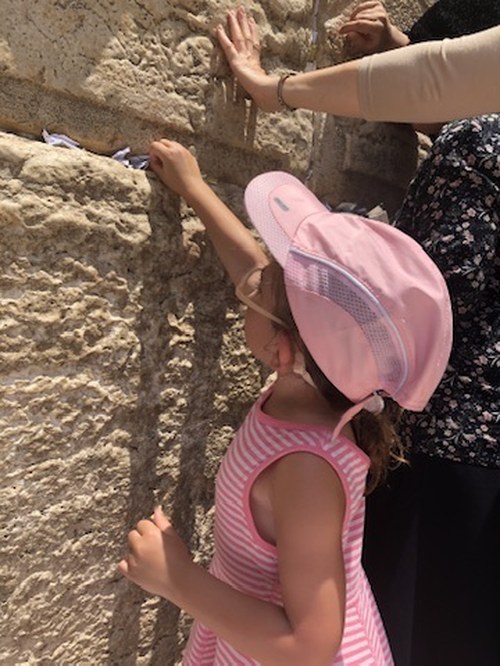
A young child placing a small note into a crack between the stones of the Western Wall
A child places a note in the Western Wall.
Courtesy of The Makor Project.

When the Romans destroyed the Temple, one outer wall of the Temple Mount was left standing. We call it the Western Wall — in Hebrew, the Kotel.

It is the closest place to where the Temple once stood, and Jewish people come from all over the world to pray here.

Many people write a wish or a prayer on a small slip of paper — a kvitel — and gently tuck it into the cracks between the ancient stones. Grown-ups and children both do it. So many notes are placed that twice a year they are carefully gathered and buried.

What We Learned 12 / 12

What we now know

◆ ◆ ◆

Now you know where the synagogue came from.