A missing chapter · The classical world
Judea in the Classical World
Return, revolt, and survival, the small province that lived inside the Greek and Roman empires, and what it left behind.
Standards alignment
New York State Social Studies Framework, Key Idea SS.9.3, Classical Civilizations (the Greek and Roman era). Grade 9, Global History & Geography I.
For six centuries, a small people lived in the land of Judea while the great powers of the classical world rose and fell around them. The Persians ruled them, then the Greeks, then the Romans. Alexander the Great passed through their land. The Roman Empire governed it. And it was here, in Roman Judea, that the religion of Christianity began. Through all of it, the Jewish people of Judea kept their own history, one of return, revolt, and survival.
This chapter begins where the ancient Israelites left off, exiled to Babylon in 586 BCE, and follows them through the next six hundred years: the return home, life under one empire after another, a daring revolt against a Greek kingdom, the long rule of Rome, and a catastrophe in 70 CE that destroyed their Temple but did not end their story. It is a period rich with evidence you can still see: a coin minted by Jewish rebels, a Roman monument carved with the looting of Jerusalem, and the oldest copies of biblical books ever found.
Judea lived through the same classical world you study in Greece and Rome, and played a part in each chapter of it:
- The Greek world — after Alexander the Great, Judea lived for centuries inside the Greek-speaking empires that ruled the eastern Mediterranean.
- A revolt against empire — the Maccabean revolt of 167 BCE, a successful uprising against a Greek kingdom that won decades of independence.
- The Roman Empire — Judea became a Roman province, ruled through the general Pompey, the client-king Herod, and the emperors.
- The beginning of Christianity — the new religion began as a movement within the Judaism of Roman-era Judea.
- The evidence — coins, monuments, manuscripts, and excavated cities that let us reconstruct what happened.
Where this picks up
In 586 BCE the Babylonian empire destroyed Jerusalem, burned the First Temple, and carried much of the population of the Kingdom of Judah into exile in Babylonia, in what is now Iraq. It might have been the end of them. Instead, the exile lasted only about fifty years, a single generation. In 539 BCE the Persian king Cyrus conquered Babylonia, and the next year he allowed the exiles to return and rebuild their temple. The Second Temple was finished around 516 BCE.
The people who returned were now usually called Judeans, or Jews, both words come from "Judah." For the next six centuries they lived in their land, but rarely ruled it themselves. They were governed by a succession of empires: Persian, then Greek, then Roman.
Living inside the Greek world
In 332 BCE Alexander the Great of Macedon passed through the region on his way to Egypt, and Judea became part of the Greek-speaking world he left behind. After his death his generals divided his empire, and Judea was ruled first by the Ptolemies of Egypt and then by the Seleucids, the Greek dynasty centered in Syria.
This is the world historians call Hellenistic, Greek language, Greek cities, Greek gods spreading across the eastern Mediterranean. Many Judeans adopted Greek ways; others resisted. The tension came to a head in 167 BCE, when the Seleucid king Antiochus IV tried to ban Jewish practice and rededicated the Jerusalem Temple to the Greek god Zeus. The result was a revolt.
A revolt against a Greek empire
The Maccabean revolt (167–160 BCE) was led by a priestly family, the Maccabees, against the Seleucid Greek empire that ruled them. Against the odds, it worked: in 164 BCE the rebels retook Jerusalem and rededicated the Temple, the event that became the holiday of Hanukkah. Over the following decades the Maccabees won full independence, founding a Jewish kingdom under the Hasmonean dynasty that lasted until Rome arrived a century later.
Under Rome
In 63 BCE the Roman general Pompey took Jerusalem, and Judea passed into the Roman orbit, first as a kingdom under Roman control, then directly as a Roman province. Rome governed through client-kings, the most famous of whom was Herod the Great (ruled 37–4 BCE), a brutal but extraordinary builder.
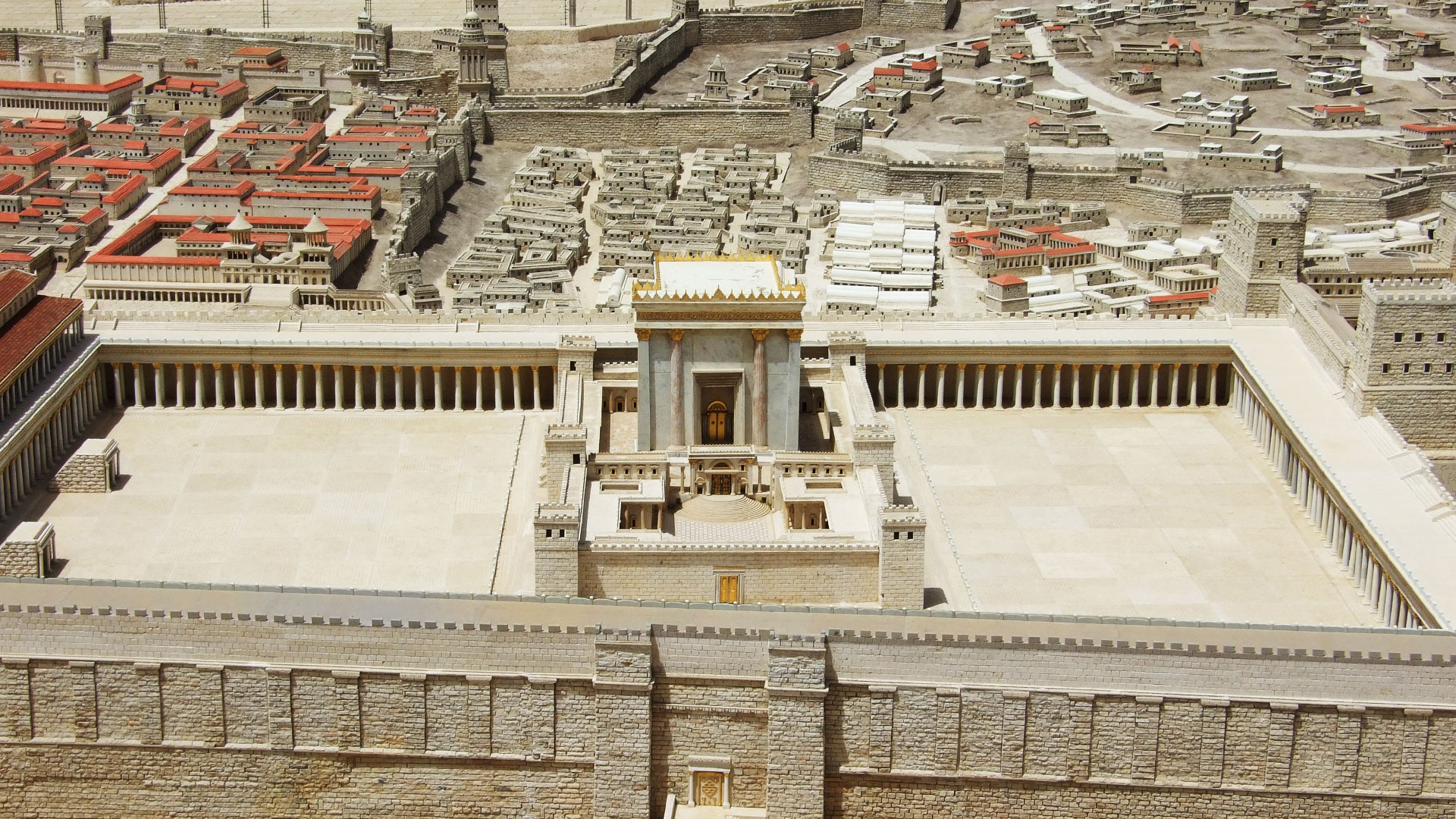
Herod rebuilt the Second Temple on a scale that made it one of the great structures of the Roman world. The enormous stone platform he built to support it still stands in Jerusalem; one of its retaining walls is the Western Wall, where people pray today. It is Herod's wall, not the Temple itself, the Temple stood above it.
This Roman province is also where, in the first century CE, a Jewish teacher named Jesus lived and was executed by Roman authority. The movement that grew up around him became Christianity, a religion that began here, inside Roman-ruled Jewish Judea, before spreading across the empire.
The evidence in the ground
Like Greece and Rome, this period left a material record archaeologists can read, and some of it is spectacular.
The oldest biblical manuscripts ever found

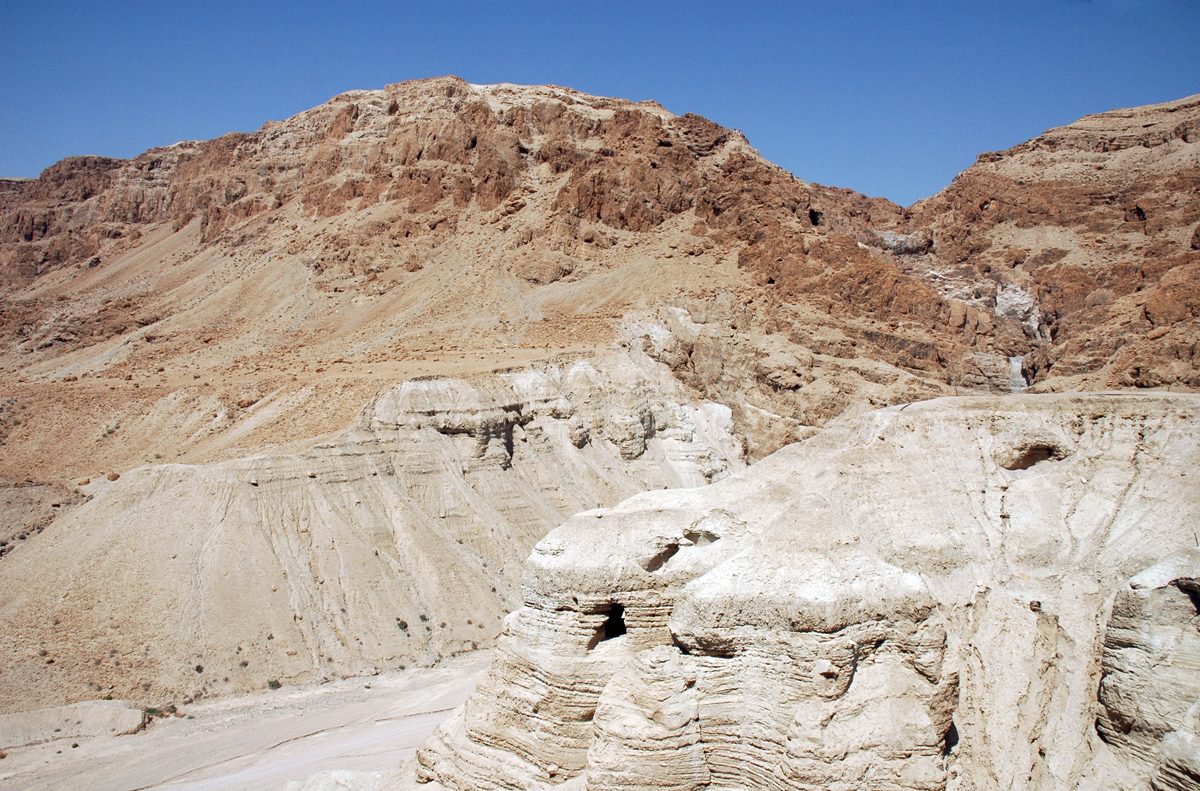
Between 1947 and 1956, in caves above the Dead Sea near a site called Qumran, shepherds and then archaeologists found clay jars holding hundreds of manuscripts, the Dead Sea Scrolls. Written between roughly the third century BCE and the first century CE, they include the oldest surviving copies of biblical books, about a thousand years older than any copy known before. The Great Isaiah Scroll is nearly complete. These are the actual writings of Judean communities of this period, in their own hands.
A coin that is also an argument
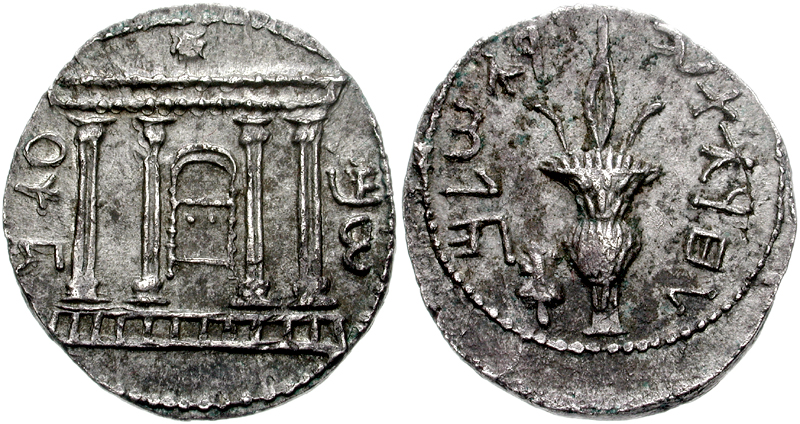
The last great ancient Jewish uprising against Rome, the Bar Kokhba revolt (132–135 CE), minted its own coins, by hammering new designs over circulating Roman coins, literally striking the rebels' images on top of the empire's. The design carries an argument: the Jerusalem Temple, already destroyed by Rome sixty years earlier, appears on one face, the temple they were fighting to restore. The lettering uses paleo-Hebrew, a deliberately revived ancient script. A coin made to declare independence, memory, and defiance, all at once.
The catastrophe of 70 CE — and why it is not the end
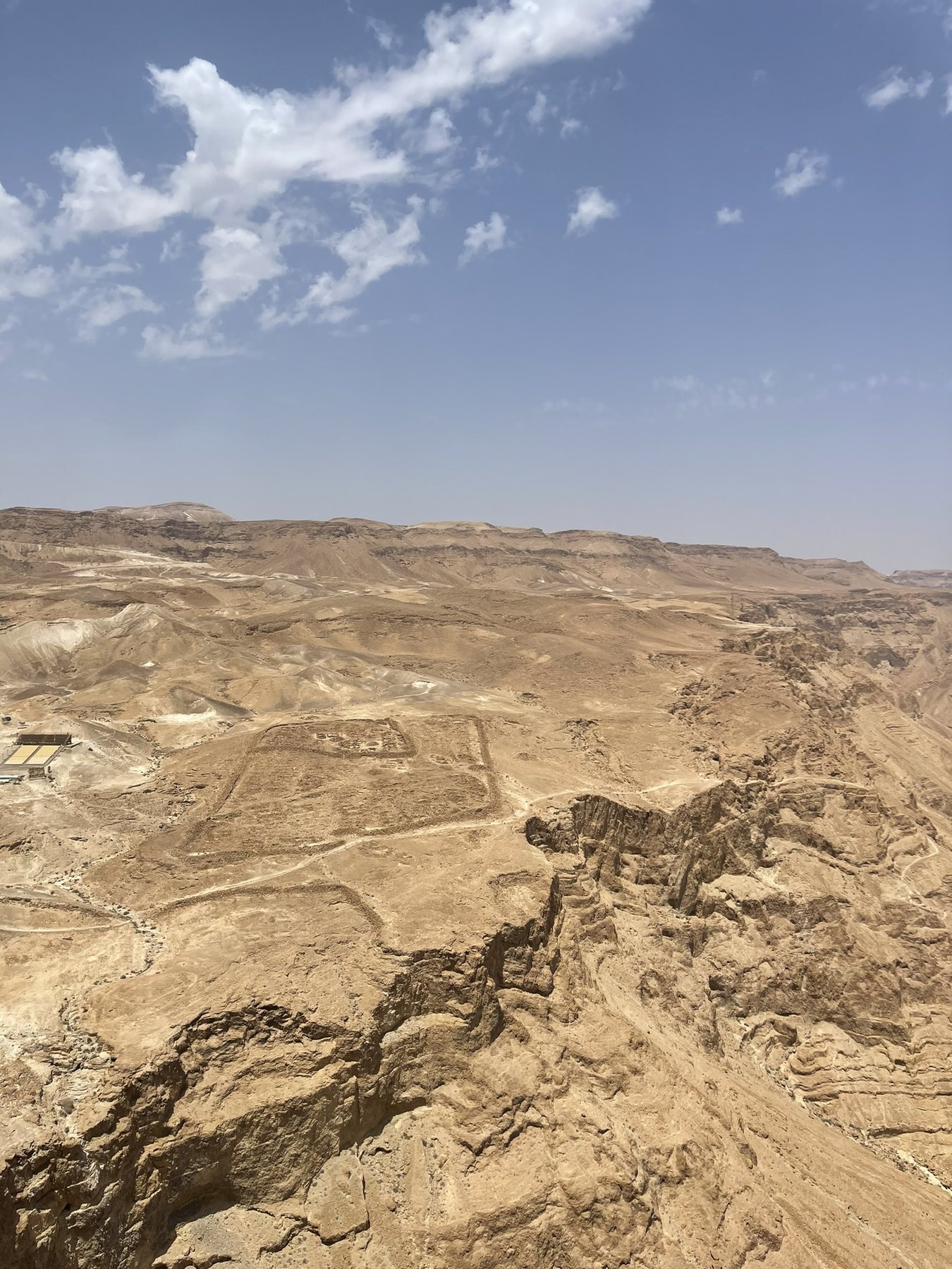
In 66 CE the province rose against Rome in the Great Revolt. Rome crushed it. In 70 CE the Roman army took Jerusalem and destroyed the Second Temple; the last rebels held out on the desert fortress of Masada until 73 or 74 CE.
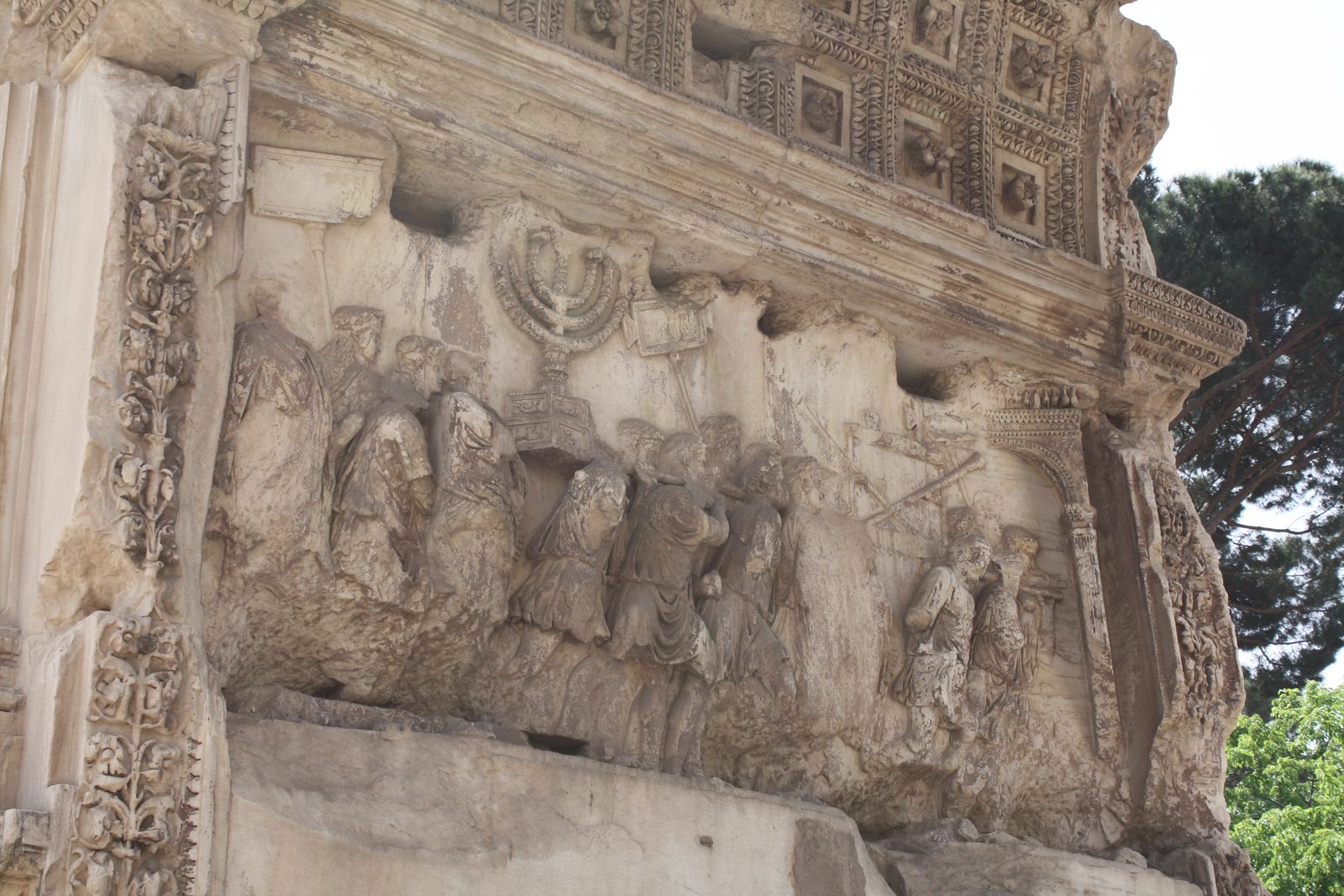
Rome treated the victory as a triumph worth carving in stone. In Rome, the Arch of Titus still stands in the Forum, built around 81 CE to celebrate the defeat of Judea. Inside its archway, a carved panel shows Roman soldiers carrying the spoils of the Jerusalem Temple through the streets, including its great seven-branched lampstand, the menorah. It is a Roman monument bragging about destroying Jerusalem, and it became, by accident, one of the most important images in Jewish history: the menorah carved on it is the model for the emblem on the flag of the modern State of Israel.
The Temple was gone, and this time it would not be rebuilt. By every expectation of the ancient world, a people who lost their temple and their capital should have vanished, as countless others did. Instead, Jewish teachers gathered in a town called Yavneh and built a new kind of Judaism, one centered not on a temple and its sacrifices but on study, prayer, and a portable text. The synagogue and the rabbi replaced the Temple and the priest. That transformation is what carried Jewish life forward, without a temple, for the next two thousand years.
The classical period did not end Jewish history at 70 CE. It is where Judaism became something that could survive anything, the bridge between the ancient Israelites and every Jewish community that came after.
Key terms
Second Temple: The temple in Jerusalem rebuilt after the return from Babylon (c. 516 BCE) and destroyed by Rome in 70 CE.
Hellenistic: The Greek-influenced culture that spread across the eastern Mediterranean after Alexander's conquests.
Maccabean revolt: The successful Jewish uprising (167–160 BCE) against the Seleucid Greek empire; origin of the holiday of Hanukkah.
Hasmonean: The dynasty that ruled the independent Jewish kingdom established after the Maccabean revolt.
Dead Sea Scrolls: Manuscripts (c. 3rd century BCE – 1st century CE) found near Qumran, including the oldest known copies of biblical books.
Great Revolt: The Jewish uprising against Rome (66–73 CE) that ended with the destruction of the Second Temple in 70 CE.
Bar Kokhba revolt: The last major ancient Jewish uprising against Rome (132–135 CE), known for its own minted coins.
Menorah: The seven-branched lampstand of the Jerusalem Temple, carried off by Rome and carved on the Arch of Titus.
- Same world, two sides. The textbook teaches Alexander, the Roman Empire, and the rise of Christianity. How does adding the Judean side change or deepen the story of any one of them?
- Revolt against empire. Compare the Maccabean revolt against the Seleucid Greeks with another resistance-to-empire story in your textbook. What made the Maccabean revolt unusually successful?
- Reading an object. The Bar Kokhba coin shows a Temple that had already been destroyed, in a revived ancient script, struck over Roman coins. What was the coin trying to say, and to whom?
- The enemy's monument. The Arch of Titus was built by Rome to celebrate destroying Jerusalem, yet it preserved an image Jews would later treasure. How can a monument carry one meaning for its makers and something different to the people it depicts?
- Survival. Most ancient peoples who lost their temple and capital disappeared. Why didn't this one? What replaced the Temple, and why did that matter?
Sources & where to see the objects
- The Great Isaiah Scroll, c. 2nd century BCE — The Israel Museum, Jerusalem (Shrine of the Book); Digital Dead Sea Scrolls.
- The Holyland Model of Jerusalem (1:50 scale, commissioned 1966) — The Israel Museum, Jerusalem.
- Bar Kokhba silver tetradrachm (sela), 132–135 CE — image courtesy Classical Numismatic Group (CNG).
- The Arch of Titus, Rome, c. 81 CE — the spoils panel showing the menorah. Photographs by Mark Cartwright / World History Encyclopedia.
- Masada — the desert fortress of the Great Revolt's final stand, and its site museum.
- Qumran and the caves of the Dead Sea Scrolls — above the northwestern shore of the Dead Sea.
- Fuller treatment, with full citations, in the Land of Israel and The Temples topics of The Makor Project (makorproject.org).