 K–5 Lesson
Teacher's Guide
A Shabbat Table
A weekly day of rest, seen through a family meal · Grades K–2
K–5 Lesson
Nothing is more familiar to a young child than a family meal. Shabbat, the Jewish day of rest each week, is a perfect first window into Jewish life precisely because it happens at a table, with bread and candles and family, all familiar to every child. Showing a child a Shabbat table is showing them something ordinary and human: a family pausing together at the end of a week. The unfamiliar words arrive wrapped in a completely familiar scene. For the students, the lesson is simply: here is one special meal a Jewish family shares every week, and here is what is on the table.
Students learn that Jewish families set aside one day every week, called Shabbat, to rest and be together, and that it begins with a special Friday-evening meal that has a few familiar parts: candles, bread, and family. By the end, a student can name what goes on a Shabbat table and say what Shabbat is for.
Ask: "Does your family ever have a special meal where everyone sits down together? What makes it special?" Let children share. This anchors Shabbat in something they already know.
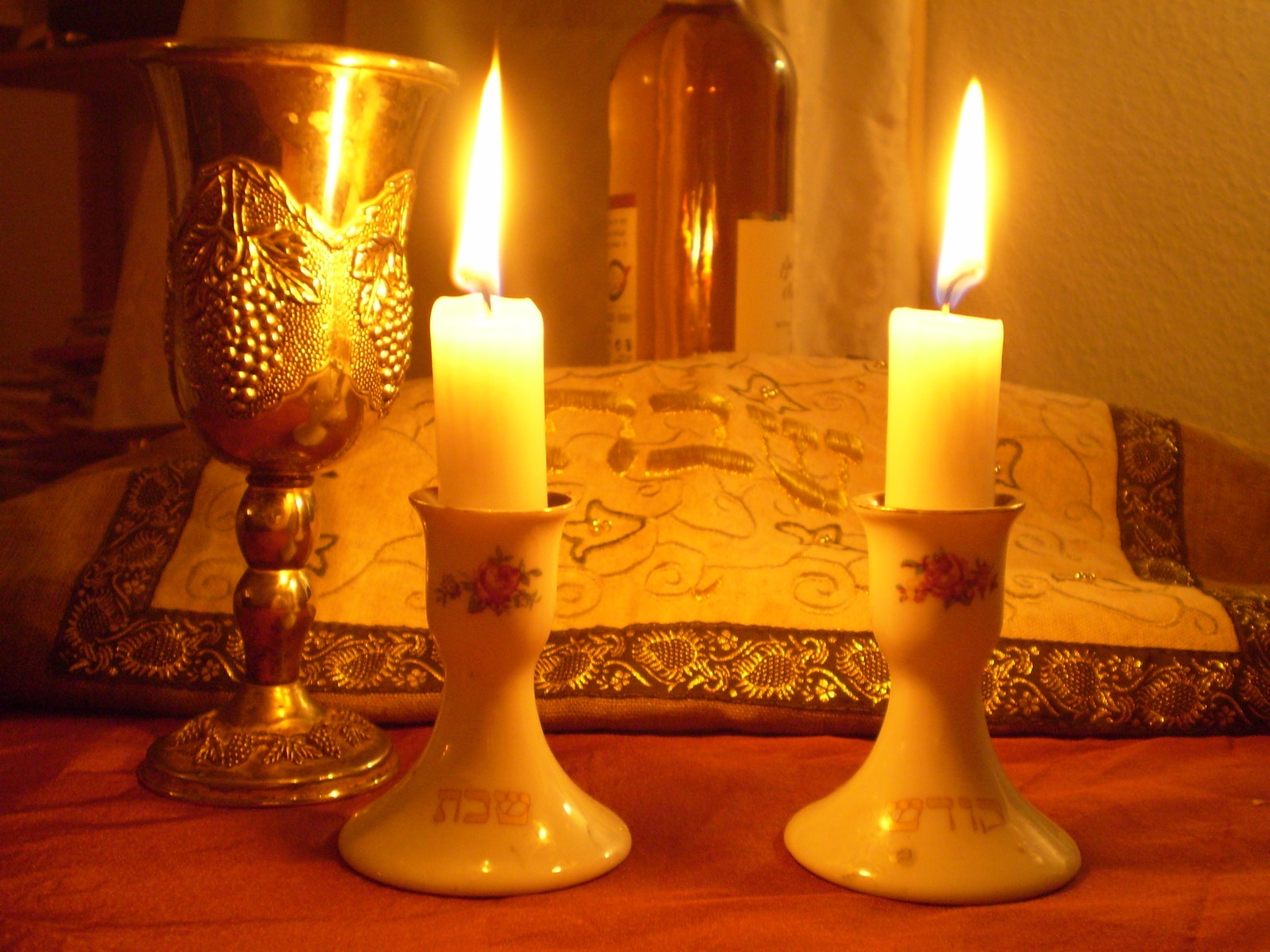
Explain that many Jewish families have a special meal like this every single week, on Friday night, to start a day of rest called Shabbat. Walk through what is on the table (candles, challah, the cup, family) keeping it concrete and warm.
Distribute the "Set the Shabbat Table" handout. Children cut out the candles, challah, cup, and place settings and glue them onto the table scene, then color it.
Ask: "What is Shabbat for?" (Resting, and being together.) Connect back to the special meals children named at the start, every culture has ways of pausing to be together.