Hatred has a history.
Those who learn it can recognize it.
Antisemitism offers one of history's longest and most extensively documented records of how prejudice is constructed, normalized, institutionalized, and ultimately translated into law. Makor teaches that arc, and the living civilization it was aimed at, for classrooms and campuses that already teach the Holocaust and are ready to broaden the frame.
The Holocaust is taught.
What came before it,
and after, is not.
Most classrooms that teach the Holocaust meet it in 1933, as if hatred appeared from nowhere, and leave it in 1945, as if the story simply ended. The thousand-year record that made it possible, the living civilization it targeted, and the reckoning that followed are mostly missing. An atrocity taught only as an event, without the ideology that produced it, is one students cannot learn to recognize. Makor restores that context.
Jewish history is not a niche subject. It is a continuous thread through world history. Understanding it helps students better understand the ancient world, the development of Christianity and Islam, medieval Europe, the modern Middle East, migration, democracy, nationalism, civil rights, and the history of prejudice itself.
Makor asks no school to build a new course, only that this history be woven into the world-history, European-history, and civics units already taught, as drop-in lessons or primary-source exercises.
Read the case →A living civilization, more than three thousand years on.
Before the dark thread, there is the subject itself: a civilization that has kept its texts, its calendar, and its communities continuous across three millennia and six continents, the same Torah read on the same Saturday in Yemen, Poland, and Argentina. You cannot understand what the Holocaust tried to end without first meeting what it was aimed at. So the story begins there, with the living world, told through the people who lived it and the documents they left.
A free, source-grounded library for classrooms everywhere.
The Makor Project gathers the Jewish historical context that most secondary-school curricula pass over, and shapes it for the lessons teachers already teach. Everything is anchored in primary documents, university-press scholarship, and institutional archives.
Six Units, a growing set of Topics
From the long civilizational record through the postwar reckoning, concise, sourced pages built to drop into existing units, stand on their own, or anchor an elective, a document-analysis module, or a student-curated exhibit.
Reference tools built in
A glossary, a dated timeline, a misconceptions log, a films and field-trips library, and a dedicated K–5 portal, each cross-linked to the Topics.
Points to the archives, not around them
Every claim names its source and links out to the holding institution. Makor assembles the arc; it does not replace the museums and libraries that hold the record.
Curated and growing
New Topics are added as production continues, each carrying a last-updated stamp and a published corrections policy. Found something to fix? Write the editor.
Six Units. Read in sequence, or pick the one the classroom needs.
Each Unit gathers a set of Topics.
The Jewish World
The long civilizational record, sacred texts, the diaspora as a working network, continuous presence in the Land, the synagogue, the Temples.
Unit 2Communities Across the World
The regional histories, the modern State of Israel, the MENA departure, Soviet Jewry, American Jewry, Ethiopian Jewry, and Herzl.
Unit 3The Evolution of Antisemitism
The long arc, Adversus Judaeos, the ghetto system, the blood libel, the 1879 racial turn, the Protocols, and the contemporary record.
Unit 4The Holocaust Era
1933–1939 and the architecture of persecution, Aktion T-4, the camp system, the Einsatzgruppen, the Holocaust in MENA, resistance and rescue.
Unit 5Jewish Contributions
The civilizational record through the people who shaped it, Maimonides, Rashi, Karo, Einstein, Herzl, with further Topics in production.
Unit 6Memory & Responsibility
The postwar reckoning, liberation and the displaced persons, the trials, restitution, the memory architecture, Nostra Aetate, Holocaust denial.
The scale, in figures you can check.
Years of continuous Jewish civilizational record, from the early biblical period to the present.
Disabled Germans killed in the T-4 program of 1940–41, before the death camps, whose staff and methods T-4 supplied.
Jews displaced from MENA countries across 1948–1972, Iraq, Egypt, Libya, Yemen, Syria, Morocco, Tunisia, Algeria, Iran, and Aden.
Jewish survivors still living in displaced-persons camps after liberation, the last did not close until 1957.
Ethiopian Jews flown to Israel in roughly 36 hours during Operation Solomon, May 24–25, 1991.
People carried on a single Operation Solomon flight, a world record for one aircraft.
The history between the well-known moments.
A few of the threads worth following, each anchored in a Topic with primary-source citations.
The Cairo Geniza is a thousand-year archive of a single Mediterranean community.
A synagogue storeroom in Old Cairo, opened in 1896, held some 400,000 fragments: merchant letters to India, rabbinic rulings from Spain to Yemen, even manuscripts in Maimonides' own hand. The diaspora reads here as a living network, not a list of expulsions.
Unit 1 · The Jewish World →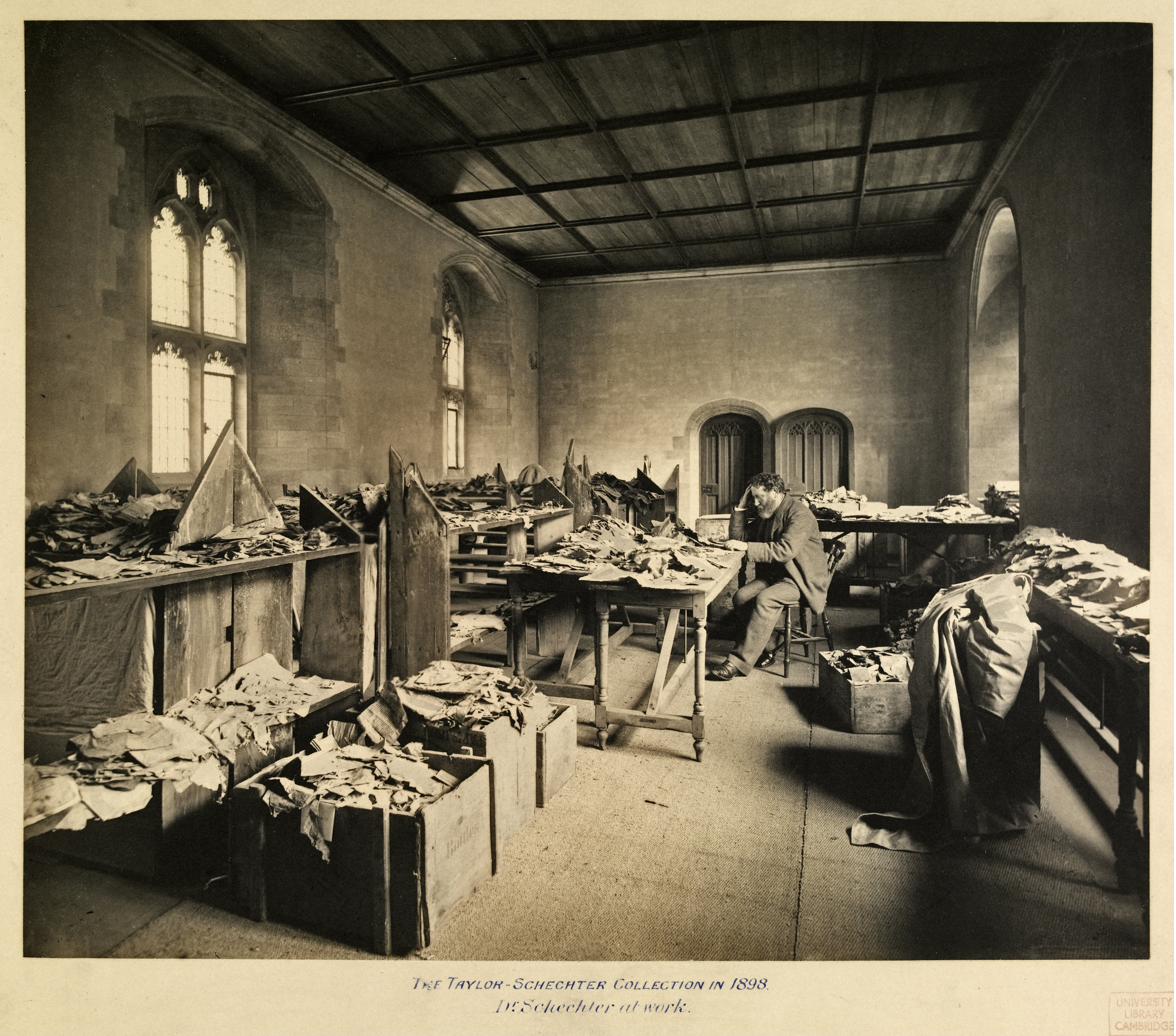
One of the most influential Christian theologians of the Middle Ages built his work partly on a Jewish one.
Thomas Aquinas, whose Summa Theologica remains foundational for the Catholic Church, cited the Jewish philosopher Maimonides roughly eighty times, under the Latin name Moses the Egyptian. The medieval Jewish intellectual world was part of the wider conversation, not walled off from it.
Unit 5 · Jewish Contributions →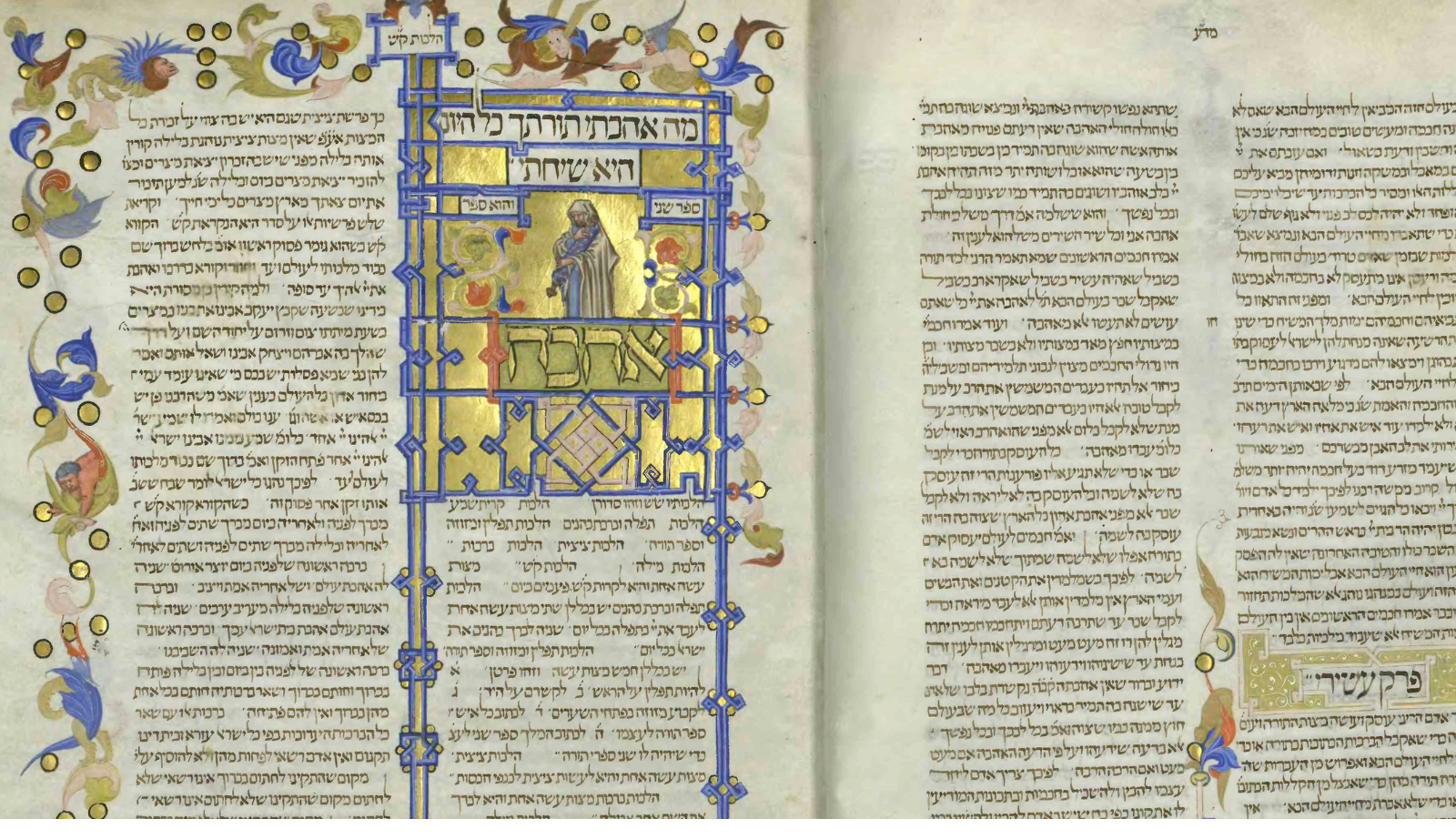
Rome destroyed the Temple and suppressed Jewish political sovereignty, but Jewish presence in the land continued.
In 70 CE Rome destroyed the Temple and scattered much of the population, the moment later cast as the end of Jewish life in the land. But the community never disappeared: Tiberias, Safed, the Ottoman towns. The record runs century by century, at the level the sources support.
Topic · The Continuous Jewish Presence →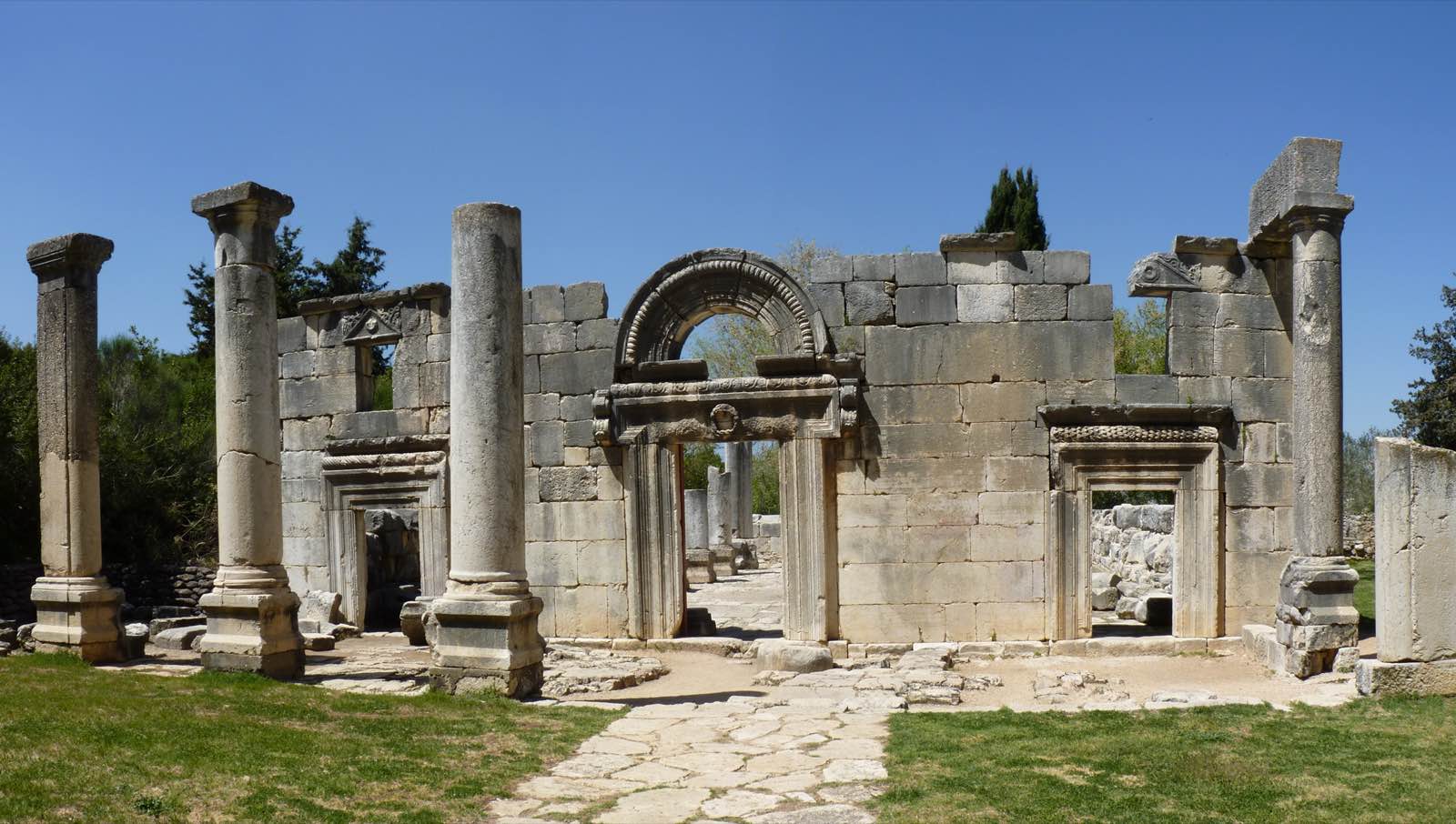
In 1965, the Catholic Church set aside the deicide accusation.
For roughly 1,800 years, the teaching called Adversus Judaeos held Jews collectively guilty for the death of Jesus, the deicide charge, and helped license persecution across Europe. In 1965 the Second Vatican Council adopted Nostra Aetate, by a vote of 2,221 to 88, formally setting that charge aside.
Topic · Adversus Judaeos →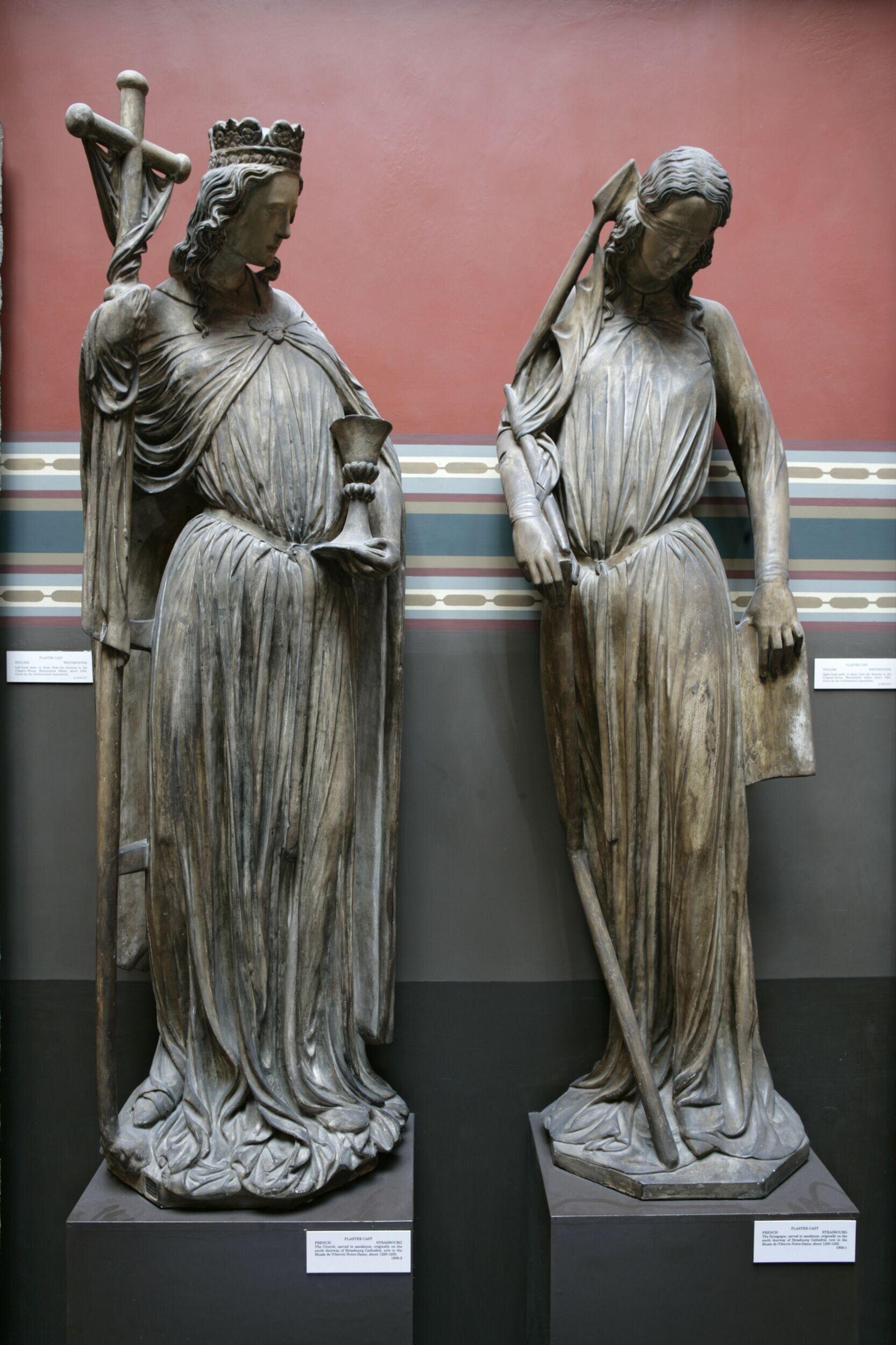
Choose your starting point.
Start with Unit 1, or take one of the routes below.
Unit 1 · The Jewish World
Begin where the story does (a living civilization, its land, texts, and communities) then follow the six Units in order, built to read like the textbook chapters that are missing.
Enter the Jewish World →Resources & reference
For K–5
Jewish life met through the familiar, holidays, synagogues, geography, and a few people worth knowing. The hard history is held for later grades.
The Curriculum Gap
Why this platform exists. In most classrooms, Jews appear in antiquity, then vanish until the Holocaust, with nothing in between. Makor restores the whole continuous story.
Printable Makor Textbook Chapters and Lessons
Every Topic page prints to PDF, with primary sources, image credits, and standards alignments built in. Alongside them, Makor Originals, "missing chapter" readings and classroom lessons written by the platform, fill what textbooks skip, with more on the way.
The Museum
A visual essay, coins, manuscripts, synagogues, and everyday objects. The civilization shown, not told. Start here if you'd rather look than read.
Virtual Field Trips
Walk through the Tenement Museum, POLIN, the Anne Frank House, the Israel Museum, and more, guided routes into collections around the world.
Misconceptions
Common errors about Jewish history, named and corrected with sources, a quick credibility check for teachers and a useful classroom exercise.
History connects across centuries, places, and people.
Follow the thread that draws you in.