Additionally, each topic page is available as a PDF.
Between the fall of the Temple in 70 CE and the founding of modern Israel in 1948 lie eighteen centuries. Jewish communities lived in the land through all of them. Here is the record, period by period, and how we know it.
The Continuous Jewish Presence in the Land · Unit 1
Why this Topic exists
How we know.
The version most people learn is simple: Rome destroyed the Temple in 70 CE, the Jews were scattered, and they did not return until 1948. It makes a clean story, and it skips eighteen centuries. Through all of them, Jewish communities lived in the land, and this page follows them, ruler by ruler, to show how we know they were there.
History does not run on assertion. It runs on evidence.
And here the evidence runs unusually deep: in the ground, in the archives of every empire that governed the land, and in the people’s own letters and law books. What follows walks the centuries one period at a time, from the fall of the Temple to 1948, with what survives from each. The place itself, its geography and its names, belongs to the Land of Israel Topic.
Common misconceptions this Topic addresses
The continuous Jewish presence in the land of Israel from antiquity through the modern period is one of this Topic's load-bearing factual claims. The dedicated Misconceptions entries document the century-by-century record and the broader question of Jewish indigeneity.
- "The Jewish people left the land of Israel in 70 CE and returned in 1948." → see the dedicated entry →
- "Jews are foreign colonizers of the land of Israel." → see the dedicated entry →
- "Most Jews historically lived in Eastern Europe and are of Ashkenazi heritage." → see the dedicated entry →
The kinds of evidence
How historians know.
No single source carries the whole claim. The strength of the record is that six independent kinds of evidence, gathered by different people for different reasons, all point the same way. When sources that never coordinated end up agreeing, a historian trusts the result.
- Remains in the ground. Excavated synagogues, ritual baths, cemeteries, oil lamps, and Hebrew inscriptions, left in place and uncovered centuries later. Archaeology cannot be edited after the fact.
- Writing cut in stone. Names and dedications carved into synagogue floors and tombstones, in Hebrew, Aramaic, and Greek, by the communities that used them.
- The community's own texts. Law codes, letters, and commentaries written in the land and stamped with a place and a date: the Mishnah, the Palestinian Talmud, medieval responsa (a rabbi’s written rulings on questions of law), the writings of Safed.
- The rulers' own paperwork. Every empire that governed the land, Roman through British, kept administrative and tax records, and the Jewish communities they taxed appear in them.
- Travelers passing through. Christian, Muslim, and Jewish visitors across many centuries described the Jewish communities they met, independently, and often centuries apart.
- Headcounts. Ottoman tax registers and, later, British censuses that record the population town by town.
No single source tells the entire story. Together, these independent lines of evidence allow historians to reconstruct an unusually well-documented record of continuous Jewish life in the land, with scholarly debate focused on the numbers and the details rather than on whether the communities were there. The rest of this page walks the centuries from 70 CE to 1948, and these kinds of evidence turn up along the way.
After 70 CE: the shift, not the disappearance
The center moved. The population did not.
The events after 70 CE are where the common picture, that Rome's destruction of the Temple emptied the land of Jews, parts company with the record.
In 70 CE the Romans destroyed the Second Temple and much of Jerusalem. They did not deport the population of the land en masse. The destruction was severe, and the deportations extensive: many were enslaved and sold into the Mediterranean slave markets. But the Jewish population of the land, in the hundreds of thousands, was not removed. What changed decisively was the center of gravity of Jewish life.
By rabbinic tradition, Yochanan ben Zakkai was carried out of besieged Jerusalem hidden in a coffin and won permission from Vespasian to open a school at Yavneh on the coastal plain. Whatever the legendary details, the historical reality is that a rabbinic academy was established at Yavneh in the immediate aftermath of 70 CE and became the new center of Jewish religious authority. The Sanhedrin, the Jewish high court, reconstituted itself there.
In 132 CE a second revolt broke out under Simon bar Kokhba. For about three years (132–135 CE) the rebels held real territory and struck their own coinage. Rome crushed the revolt in 135 CE, and the emperor Hadrian barred Jews from the city of Jerusalem, renamed it Aelia Capitolina, and renamed the province Syria Palaestina, the deliberate name choice from which "Palestine" descends.
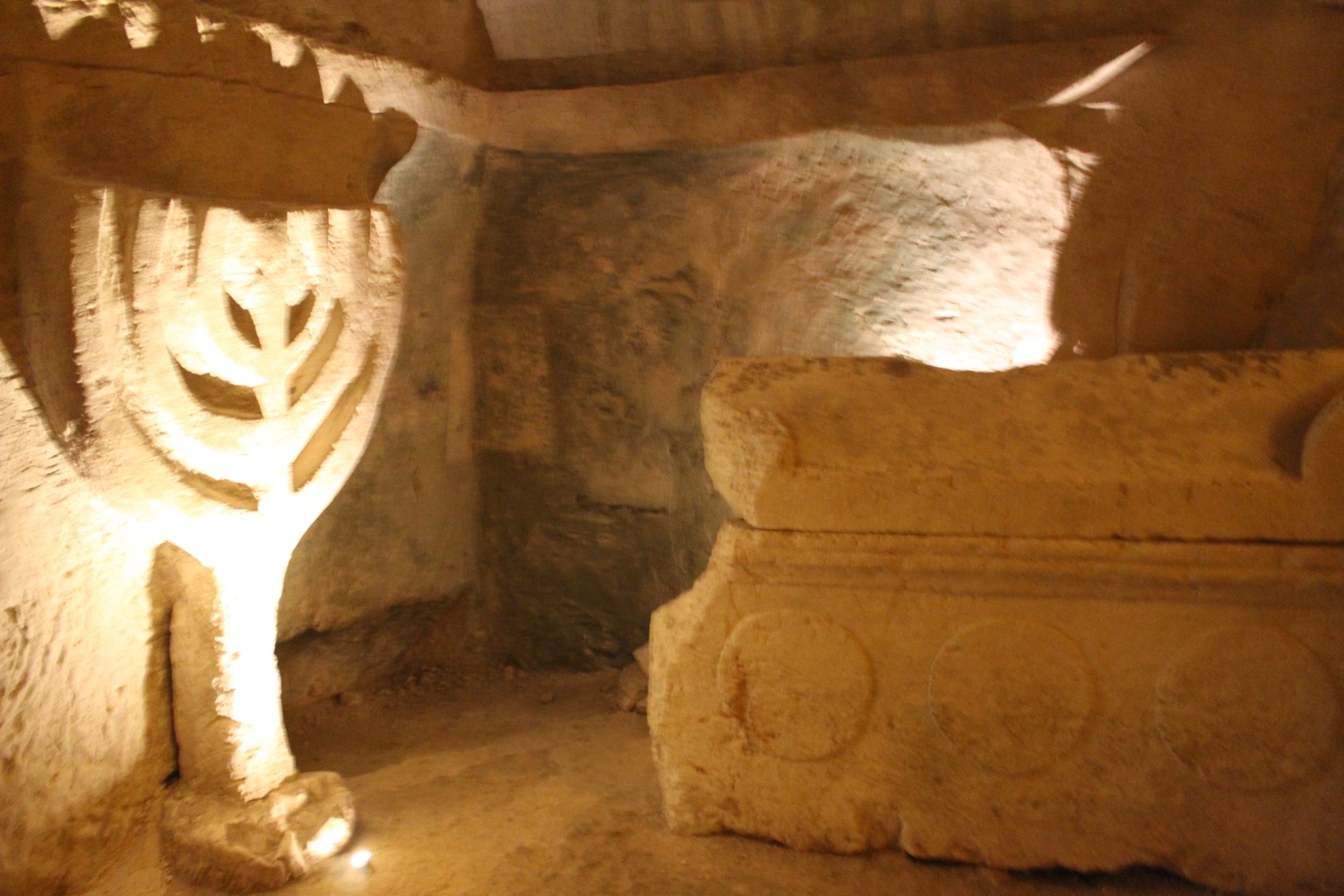
The ban from the city did not empty the land. It shifted the Jewish center north, to the Galilee. The Sanhedrin moved in turn to Usha, Beit She'arim, Sepphoris, and Tiberias, all Galilean. The catacombs at Beit She'arim hold the burial of Rabbi Judah the Prince and several centuries of Jewish leaders who lived and died in the land after 70 CE. What was produced in these centuries shaped Judaism permanently: the Mishnah, the first major codification of the oral legal tradition, was compiled in the Galilee around 200 CE under Judah the Prince, and the Jerusalem Talmud (Yerushalmi), mostly written in the Tiberias academy despite its name, was completed around 400 CE. Both were produced by Jews living continuously in the land in the centuries after the Temple was destroyed.
Byzantine rule · 324 – 638 CE
Continued life, mainly in the Galilee.
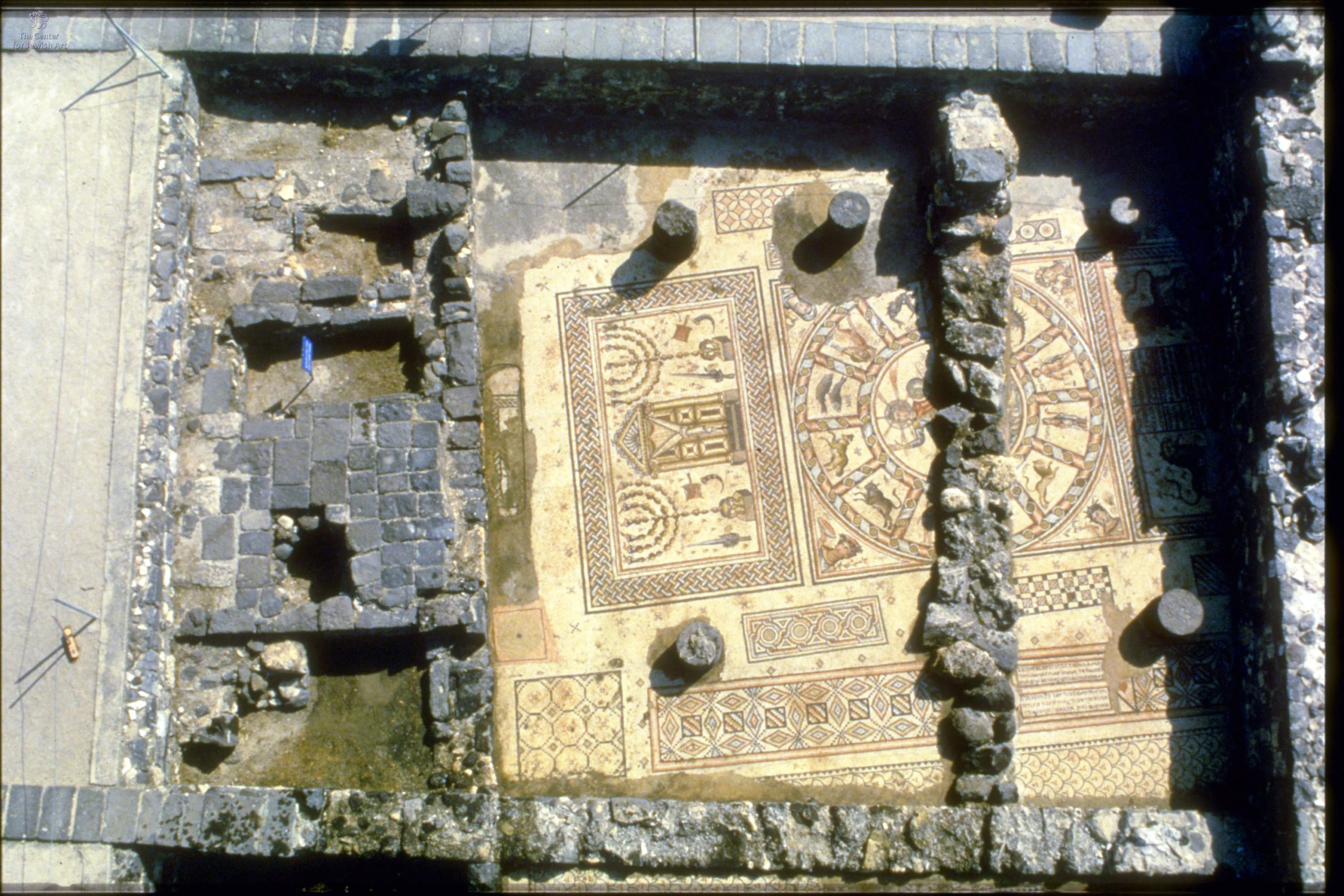
When the Roman Empire Christianized under Constantine after 312 CE, the land became part of the Byzantine Empire and a major site of Christian pilgrimage. Jewish life continued, mainly in the Galilee. There were periodic persecutions (Justinian's anti-Jewish legislation in the sixth century, restrictions on synagogue building), but communities held on in Tiberias, Sepphoris, Beit She'arim, and rural Galilean villages. Synagogues from this period have been excavated and are archaeologically attested: Beit Alpha (sixth century), Hammat Tiberias (fourth century), and the Galilean basilical synagogues at Capernaum and Bar'am. Political authority changed hands, but Jewish religious and communal life kept developing in the Galilee.
Early Islamic Period · 638 – 1099
The end of the Byzantine ban.
Caliph Umar took Jerusalem in 638 CE. By a tradition recorded in early Islamic and Jewish sources, Umar permitted Jews to live in Jerusalem again, ending the Byzantine prohibition that had stood for five centuries. The "Pact of Umar" (disputed in date and authenticity in its received form) set the framework under which non-Muslim communities, Jews and Christians as dhimmis, lived under Islamic rule: with restrictions, but with protected religious practice.
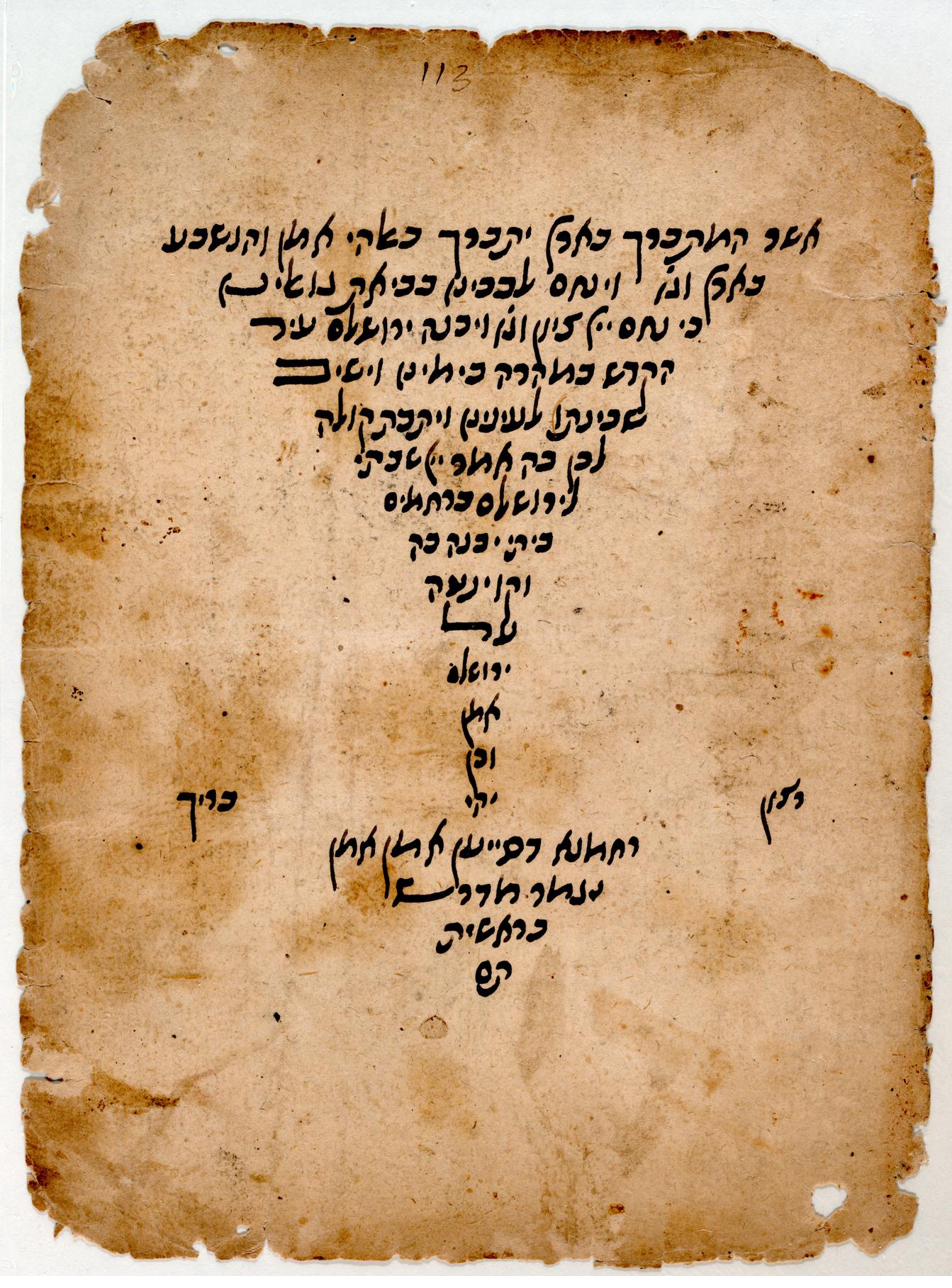
The Geonic period of Babylonian Jewish leadership (c. 589–1038 CE) overlapped with this era. The authority of the Babylonian Talmud spread widely, and rabbinic correspondence flowed between Baghdad, Cairo, and the communities of the land. The Cairo Geniza preserves extensive correspondence between Land-of-Israel communities and the wider diaspora across these centuries.
Crusader Period · 1099 – 1291
Ten men. Then rebuilt.
The First Crusade, an army of European Christians marching to seize the Holy Land, reached Jerusalem in 1099 and committed one of the most heavily attested massacres of the medieval period. Jewish and Muslim inhabitants of the city were killed indiscriminately. Communities outside Jerusalem survived. The city itself stayed mostly emptied of non-Christians until Saladin retook it in 1187 and re-permitted Jewish residence. A run of further invasions (the Crusader recapture of 1229, the Khwarezmian raid of 1244, the Mongol incursion of 1260) devastated the Jerusalem community again and again without ever ending it.
In 1267 the Catalan rabbi and physician Nachmanides (Moshe ben Nachman, the Ramban), exiled from Aragon after the Disputation of Barcelona, reached Jerusalem at about seventy-three. He found the city devastated. In a letter to his son he described what was left of its Jews: only two brothers, dyers, joined by up to ten men in their home on the Sabbath for prayers. Ten. Not zero. Within weeks he had founded a synagogue in a ruined house on Mount Zion (the Ramban Synagogue), and Torah scrolls that had been evacuated to Shechem before the Mongol raid were brought back. Jewish life in Jerusalem revived around him; he is remembered as Avi HaYishuv, "Father of the Community." The Ramban Synagogue is active again today, in the Jewish Quarter of the Old City.
The Nachmanides moment holds the pattern that runs across this whole Topic. Reduced to ten men. Not zero. Then rebuilt.
Mamluk Period · 1291 – 1517
The four holy cities.
The Mamluk Sultanate, based in Cairo, took the territory after the fall of Acre in 1291 ended the Crusader presence. Mamluk rule was generally hostile to Jewish communities (synagogue building was restricted, dhimmi laws enforced), but communities persisted in Jerusalem, Hebron, Safed, and Tiberias.
Even under restrictive rule, new migrations kept reshaping the existing communities. The 1492 Spanish Expulsion sent waves of Sephardi refugees, the Jews of Spain and Portugal, across the Mediterranean, the land among them. Obadiah of Bertinoro arrived in Jerusalem in 1488, and his letters home record the community he found. The arriving Sephardim joined the existing communities of the four holy cities and reshaped their composition and intellectual life on the eve of the Ottoman conquest.
Ottoman Period · 1517 – 1917
Safed, Hebron, Tiberias, Jerusalem.
The Ottoman Empire conquered the territory in 1517 and held it for four centuries. The population of the land around 1800 is estimated at 250,000 to 300,000: predominantly Arab Muslim, with sizable Christian (Greek Orthodox, Greek Catholic, Maronite, Armenian) and Druze minorities, and a continuous Jewish population concentrated in the four holy cities.
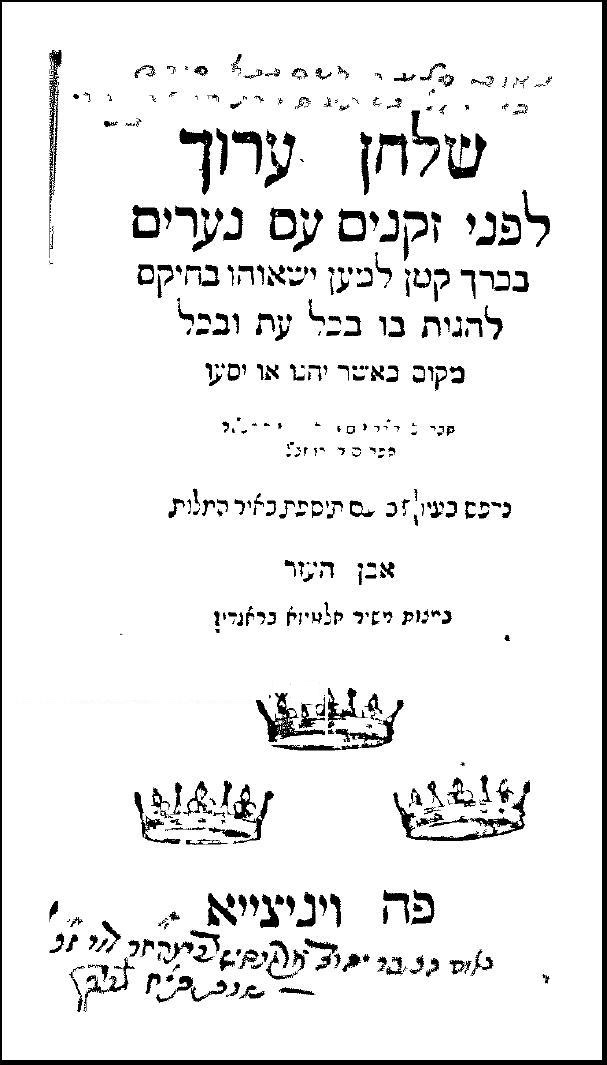
Safed (Tzfat), in the Upper Galilee, drew Jewish scholars from across the Mediterranean in the sixteenth century and became a center of Jewish law and mysticism whose reach was worldwide. Joseph Karo (born in Toledo in 1488, before the Expulsion) settled in Safed and there completed the Shulchan Aruch, the code of Jewish law followed across the diaspora to this day. It was printed in Venice in 1565. Isaac Luria taught Kabbalah in Safed in the 1570s, reshaping Jewish mysticism far beyond the land. The town ran one of the earliest printing presses in the Ottoman Empire and drew a continuous influx of immigrants from Spain, Portugal, Italy, and North Africa.
Hebron's Jewish community traced continuously to antiquity, anchored at the Cave of the Patriarchs (Me'arat HaMachpelah), the traditional burial site of Abraham, Sarah, Isaac, Rebecca, Jacob, and Leah. It endured until 1929, when Arab rioters killed sixty-seven Jews and wounded many more in the Hebron massacre. The survivors evacuated, and continuous Jewish presence in Hebron ended that year, not to be restored until after 1967.
Tiberias, the Galilean city beside the Sea of Galilee where the Mishnah was compiled and the Jerusalem Talmud written, never lost its Jewish presence across the centuries. Doña Gracia Mendes Nasi secured a long-term lease of Tiberias from Sultan Suleiman the Magnificent in 1558, and her nephew Joseph Nasi gained ruling authority over the city in 1561; they set out to rebuild it as a refuge for Sephardi exiles from the Inquisition.
Jerusalem (the city, not the wider territory) had a Jewish demographic majority by about 1880, according to Ottoman and consular records. The Old Yishuv, the term for the pre-Zionist Jewish population of the land, numbered roughly 25,000 in 1880, concentrated in the four holy cities and a few smaller communities. They were present, organized, and recorded: a settled population documented in the sources of the day.
The Aliyot · from 1881
Documented immigration, both populations growing.
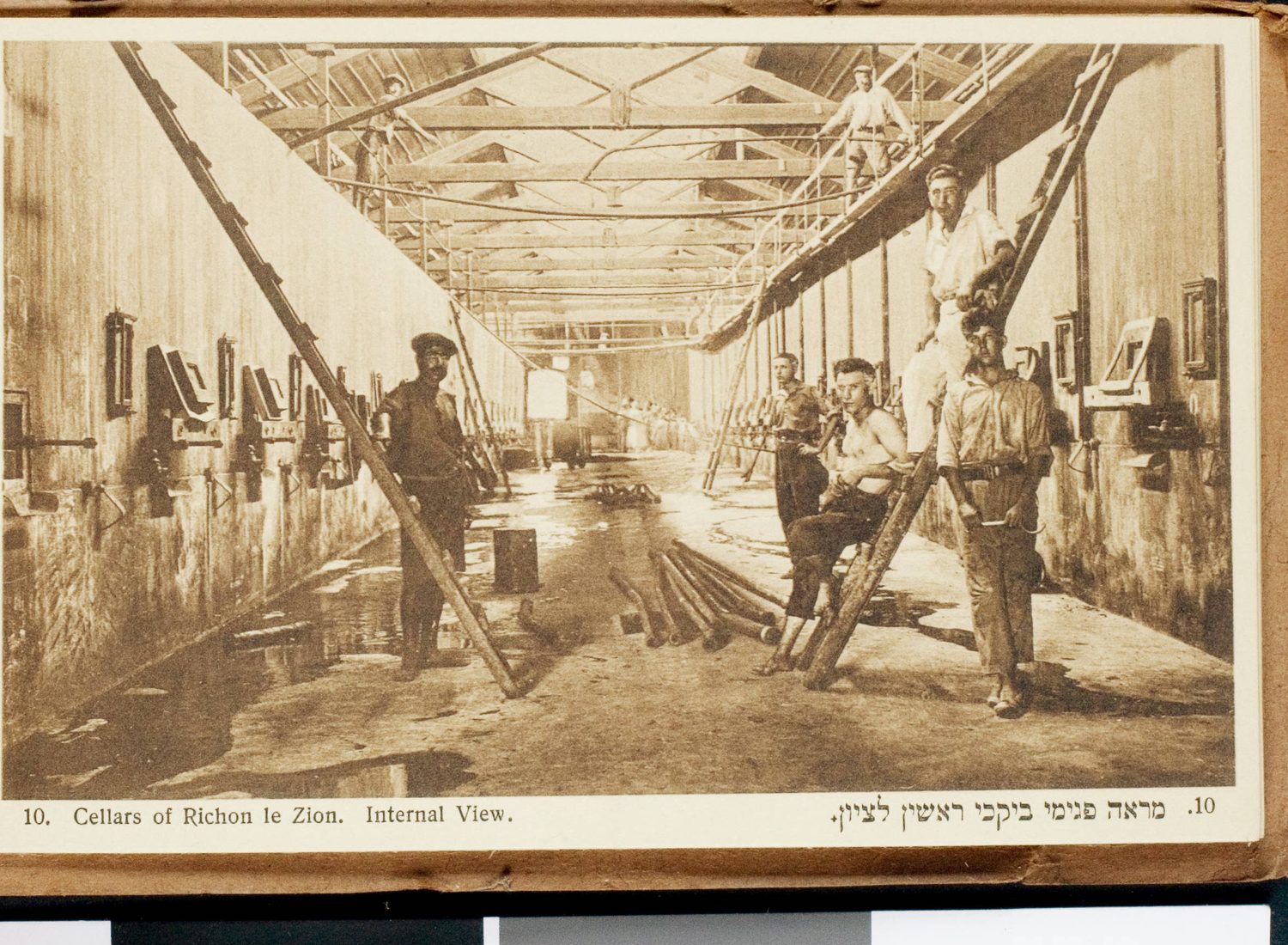
Beginning in 1881–82, in direct response to the Russian pogroms, organized waves of Jewish immigration to the land began. The First Aliyah (1882–1903) brought 25,000 to 35,000 Jews, mostly from the Russian Empire. The Second Aliyah (1904–1914) brought 35,000 to 40,000 more, including refugees from the 1903 Kishinev pogrom. These immigrants arrived as legal residents under Ottoman law, bought land through recorded transactions, and built agricultural settlements: Petah Tikva (1878), Rishon LeZion (1882), Zikhron Ya'akov (1882), Rosh Pinna (1882), Rehovot (1890).
The British Mandate · 1917 – 1948
The last of the ruling powers.
British forces took the territory from the Ottomans in 1917. The Balfour Declaration was issued in November 1917, and the British Mandate was formalized by the League of Nations in 1922. Britain governed the whole territory as a single administration under the name Palestine, deepened the port of Haifa, and laid new roads and rail.
Between 1922 and 1947 both populations roughly doubled: the Jewish population grew from about 84,000 to about 630,000 (mostly through immigration), the Arab population from about 670,000 to about 1,300,000 (mostly through natural increase, with some immigration). Both were growing, and the development of the territory under the Mandate sustained both.
On November 29, 1947, the United Nations General Assembly voted (33 to 13, with 10 abstentions) to partition the territory into an Arab state and a Jewish state: UN Resolution 181. On May 14, 1948, the Jewish provisional government declared the State of Israel. Five neighboring Arab states (Egypt, Syria, Lebanon, Iraq, and Transjordan) attacked. The 1948 war ended with Israel surviving and holding territory beyond the partition lines; Egypt holding the Gaza Strip; and Jordan annexing the West Bank, including East Jerusalem, where Jews were expelled from the Jewish Quarter, the Hurva Synagogue was destroyed, and Jewish access to the Western Wall was barred for the next nineteen years.
Weighing a famous quote
The “empty land” problem.
In 1869 Mark Twain visited the land and, in The Innocents Abroad, described a desolate, thinly peopled country. The passage is vivid, and it still gets quoted as proof that the land was empty before modern Jewish immigration. It makes a good test of how to read a source.
Twain was one traveler, on one route, in one dry season, writing to entertain readers back home. His impression is real evidence of what one man saw on one trip. It is not a headcount. Set it beside the Ottoman tax registers from the same century, the letters of the community itself, and the other travelers who described the same towns, and the impression of emptiness does not hold up as a population figure. A single striking quote can be true as description and wrong as demography. Telling the two apart is most of the historian's job.
The multi-confessional reality
A land of many communities.
The land has been inhabited by more than one community for the whole of recorded history. Arab Muslims, Christians (Greek Orthodox, Greek Catholic, Maronite, Armenian, and Latin), Druze, Bedouin, and Jews have all lived on it, in shifting proportions across the centuries. None is a recent arrival, and each has passed through major demographic change. The Jewish presence traced through this Topic ran alongside the land's Arab and other communities, not in place of them.
Old Yishuv and New Yishuv
1882 was not a beginning.
Historians divide the modern Jewish community of the land into two. The Old Yishuv is the traditional community that had been present all along, clustered in the four holy cities and supported in part by donations from Jews abroad. The New Yishuv is the modern immigration that began in 1882, which built farming villages, a Hebrew school system, and the institutions that would later become the State of Israel.
The distinction matters for one reason above all. When the first modern immigrants arrived in 1882, they arrived to a Jewish community that was already there, roughly twenty-five thousand strong. The wave that followed added to that community and reshaped it. It did not start it. The long record this page lays out is what 1882 was building on.
The record in brief
A continuous, documented presence.
Across every ruling power, the number of Jews in the land rose and fell, at times to almost nothing, but the presence never broke. The record survives period by period, in stone, in the archives of every empire, and in the texts written on the ground.
Object Spotlight
The Cairo Geniza.
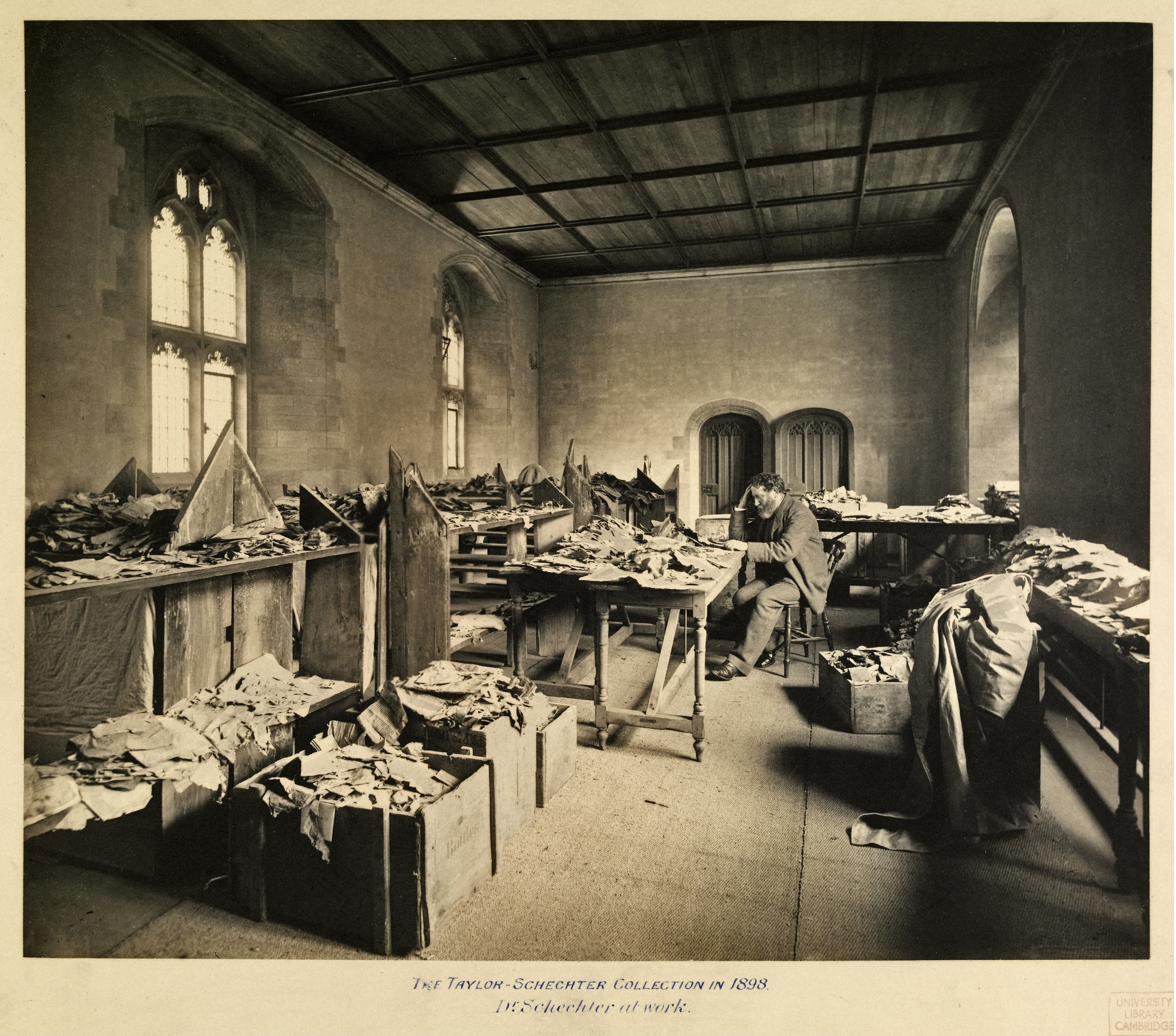
Look at the room before you know what is in it. A scholar sits alone at a wooden table in a tall, bright hall, one hand to his head, a single page in front of him. All around him, on every table and spilling out of open packing crates on the floor, are heaps of torn, browned paper and parchment. It looks less like a library than like the aftermath of one. The man is buried in fragments, and there are clearly tens of thousands of them.
Those fragments came from a geniza. In Jewish practice, any worn-out page that might carry the name of God is not thrown in the trash. It is set aside in a storeroom, a geniza, until it can be buried respectfully. One synagogue in particular, the Ben Ezra Synagogue in Fustat (Old Cairo, in Egypt), had a geniza that was almost never emptied. For roughly a thousand years the community kept dropping its used-up writings into that chamber and leaving them. By the time scholars opened it at the end of the 1890s, it held the everyday paper of a living world: not just sacred texts, but letters, contracts, court records, school exercises, even shopping lists.
Here is why a heap of scrap paper belongs at the center of this Topic. The Geniza answers with documents instead of arguments. Among its hundreds of thousands of fragments is the ordinary mail of Jewish communities, letters to and from Jerusalem, Ramla, Tyre, and Tiberias across the ninth through twelfth centuries. Nobody wrote these to prove a point to the future. They wrote them to do business and check on family. Continuous presence stops being a slogan and becomes a paper trail in the people's own handwriting.
A monument is built to persuade. A shopping list is not. The Geniza's value is precisely that it is unglamorous, the unguarded, day-to-day record of how people actually lived, traded, married, argued, and prayed. Historians can reconstruct a whole medieval society from it in a detail no monument could ever give.
And the afterlife of the storeroom is its own drama. In 1896 the Cambridge scholar Solomon Schechter, tipped off by two travelers who had bought fragments in Cairo, traveled there and carried away the bulk of the chamber's contents, around 190,000 pieces, to Cambridge, where the 1898 photograph was taken. Other portions ended up in libraries across Europe, America, and Israel, so the single Cairo storeroom is now scattered among institutions worldwide, slowly being reunited online. The most detailed surviving record of any medieval Jewish community survived because, for a thousand years, a community refused to throw its paper away.
Discussion questions
Working from the evidence.
These questions ask students to work from the evidence on this page and reach their own conclusions. Each is anchored in a specific fact the Topic documents.
- The simple version of the story has the Jewish people leaving the land in 70 CE and returning in 1948. This page answers it not with a story but with six independent kinds of evidence. Why does the “left and returned” version persist, and what does a record built from many kinds of sources change about it?
- No single source on this page proves the whole claim, yet six kinds of evidence gathered by different people for different reasons all point the same way. Why does agreement among sources that never coordinated make a historical claim strong?
- The Cairo Geniza preserves the ordinary correspondence of communities in the land: not monuments built to make a point, but letters, contracts, and court records. What can everyday documents show about a community that a monument or a chronicle cannot?
- In 1869 Mark Twain described a desolate Land, and the passage is still quoted as proof it was empty. How should a historian weigh one traveler’s vivid impression against tax registers and census records from the same period? When is a source true as description but wrong as demography?
- Why is it important to distinguish between documenting the historical record and arguing for a present-day political position?
- The same tools used here, dated documents, named sites, surviving inscriptions, and headcounts, are how historians establish the continuous history of any people anywhere. Is this the same depth the curriculum gives other peoples’ continuity on their land? Why or why not?
Classroom Connections
Where this Topic fits.
Teaching Connections
The disciplines and courses this Topic naturally supports, for any educator, anywhere.
- Historical Thinking & Historiography: how historians build a continuous record from many independent kinds of evidence. This is the core skill the page models.
- World History: a single community traced across successive empires, Roman through British.
- Archaeology: excavated synagogues, inscriptions, and the material record.
- Geography: the land across successive regimes and its shifting centers.
- World Religions: Jewish communal and religious life sustained across the periods.
- Museum & Archives Education: the Cairo Geniza, Ottoman registers, and census records as primary sources.
What students practice
Students learn to distinguish among archaeological, documentary, demographic, and narrative sources, and to weigh them together when evaluating historical continuity.
Standards Alignment
- C3 Framework: Dimension 2 (gathering, evaluating, and corroborating sources; continuity and change) and Dimension 3 (developing claims and using evidence).
- Common Core ELA-Literacy: Reading in History/Social Studies (RH), citing textual evidence and corroborating multiple primary and secondary sources.
- NYS Global History & Geography: 9.3 (the classical world and the post-70 CE shift).
Sources and citations
Primary sources come straight from the time: documents, letters, speeches, images, and objects created by the people involved. Secondary sources come later: books, articles, and analysis in which scholars study and interpret those primary sources.
Primary sources
- Benjamin of Tudela. The Itinerary of Benjamin of Tudela. Translated by Marcus Nathan Adler. London: Henry Frowde, 1907. (Twelfth-century travel narrative.)
- Nahmanides (Moses ben Nahman). Correspondence from Jerusalem and Acre, 1267 onward. Surviving in standard editions of Nahmanides's collected writings.
- Estori HaParchi. Kaftor va-Ferach. Completed 1322 at Beit She'an. Standard editions of the Hebrew topographical and geographical study of the land.
- Israel Antiquities Authority. iaa-archives.org.il. (archaeological documentation.)
- Beit She’arim National Park (UNESCO World Heritage Site, 2015). Israel Nature and Parks Authority. (The Galilean necropolis and its catacombs, including the carved menorah shown above.)
Secondary sources
- Avi-Yonah, Michael. The Jews of Palestine: A Political History from the Bar Kokhba War to the Arab Conquest. Oxford: Basil Blackwell, 1976.
- Schäfer, Peter. The History of the Jews in the Greco-Roman World. London: Routledge, 2003.
- Magness, Jodi. The Archaeology of the Holy Land: From the Destruction of Solomon's Temple to the Muslim Conquest. Cambridge: Cambridge University Press, 2012.
- Levine, Lee I. The Ancient Synagogue: The First Thousand Years. New Haven: Yale University Press, 2nd ed. 2005.
- Meyers, Eric M., and Mark A. Chancey. Alexander to Constantine: Archaeology of the land of the Bible, Vol. III. New Haven: Yale University Press, 2012.
- Gil, Moshe. A History of Palestine, 634–1099. Cambridge: Cambridge University Press, 1992. (The principal scholarly study of the early Islamic period.)
- Goitein, S. D. A Mediterranean Society: The Jewish Communities of the Arab World as Portrayed in the Documents of the Cairo Geniza. 6 vols. Berkeley: University of California Press, 1967–1993.
- Prawer, Joshua. The History of the Jews in the Latin Kingdom of Jerusalem. Oxford: Clarendon Press, 1988.
- Cohen, Amnon. Jewish Life under Islam: Jerusalem in the Sixteenth Century. Cambridge, MA: Harvard University Press, 1984.
- Cohen, Amnon, and Bernard Lewis. Population and Revenue in the Towns of Palestine in the Sixteenth Century. Princeton: Princeton University Press, 1978. (The principal demographic study of the early Ottoman Land.)
- Lev, Yaacov. State and Society in Fatimid Egypt. Leiden: Brill, 1991.
- Frankel, Jonathan. The Damascus Affair: "Ritual Murder," Politics, and the Jews in 1840. Cambridge: Cambridge University Press, 1997.
- Ben-Arieh, Yehoshua. Jerusalem in the 19th Century: The Old City. New York: St. Martin's Press, 1984.
- Ben-Arieh, Yehoshua. Jerusalem in the 19th Century: Emergence of the New City. New York: St. Martin's Press, 1986.
- Kark, Ruth. Jerusalem and its Environs: Quarters, Neighborhoods, Villages, 1800–1948. Detroit: Wayne State University Press, 2001.
- McCarthy, Justin. The Population of Palestine: Population History and Statistics of the Late Ottoman Period and the Mandate. New York: Columbia University Press, 1990.
- Schur, Nathan. History of Safed. Tel Aviv: Dvir, 1983. [Hebrew]
- Werblowsky, R. J. Zwi. Joseph Karo: Lawyer and Mystic. Oxford: Oxford University Press, 1962.
- Fine, Lawrence. Physician of the Soul, Healer of the Cosmos: Isaac Luria and his Kabbalistic Fellowship. Stanford: Stanford University Press, 2003.
- Yad Ben-Zvi, Jerusalem. ybz.org.il. (center for the history of Eretz Israel.)
- Bornblum Eretz Israel Synagogues Database, Kinneret College Institute for Galilean Archaeology. synagogues.kinneret.ac.il. (documentation of 137 excavated synagogues from the broader region.)
Finding these documents: many primary sources are free online. Good places to start are the Fordham Internet Jewish History Sourcebook, Yale’s Avalon Project (law and diplomacy), German History in Documents, the collections of the US Holocaust Memorial Museum and Yad Vashem, the National Library of Israel, and Sefaria (for Jewish texts). Search the document’s name and date.
The First and Second Temples of Jerusalem, what they were, where they stood, what survives, and how their destruction shaped Jewish life for 2,500 years.
Comments?
Write to editor@makorproject.org.
Last updated: August 2026.