Ritual Objects and Material Culture
A people can be expelled from a country, but its objects endure, in attics, in markets, in museums, and in homes and synagogues still in use today. A silver crown made for a Torah scroll in Venice. A marriage contract painted in Livorno. A wedding ring shaped like a tiny golden house, lent from one wedding to the next. Each one is a fingerprint of a Jewish community that lived, prayed, and married in that place, and of a tradition that never ended. The same kinds of objects are still made, and still used, by Jews around the world.
Why this Topic exists
Objects are evidence.
Most of this Unit is about ideas: a people, a faith, a homeland, a calendar. This Topic is about objects: the physical pieces that Jewish life has produced and still uses. They matter for a simple reason. Texts can be edited and memories can fade, but an object is stubborn. A silver Torah finial made in eighteenth-century Venice is dated, signed, and unmistakably Jewish; it cannot be argued away. The material record is one of the hardest forms of proof that a civilization has lived, continuously, across the whole map, and lives there still.
It also tells a particular story, one this platform returns to again and again: a dispersed people that stayed recognizably itself while absorbing the world around it. The rules of Jewish ritual are fixed (what a marriage contract must say, what adorns a Torah scroll) but the form those objects take was free, and Jewish artisans poured local style into them. A Kiddush cup from Germany carries Gothic lines; one from Morocco carries Islamic geometry. Same ritual, same blessing, two different worlds. The objects record both the thread that held and the places it passed through.
A note on the objects
Made to be used, not displayed.
It is easy to meet these objects as art behind glass, and they are often beautiful. But almost none were made for a museum. They were made to be used, held at a wedding, lifted in a synagogue, lit on a Friday night. The wear on a silver cup, the soot on a clay lamp, and the folds in a parchment contract are all part of what they record. This Topic treats them first as working objects of a living tradition, and second as art. Where an object now sits in a museum because the community that owned it was destroyed, that fact is part of its meaning too, and the Topic says so plainly rather than letting the beauty hide it.
What they are for
A week, a year, a life.
It can look like a lot of objects, and a lot of rules. It is neither. Almost everything here serves one of three simple, repeating moments: the week, the year, and a life. Learn those three and the objects fall into place, because each one is only a tool for marking a moment that comes around again.
The week: Shabbat. The most important of the three is also the most ordinary, because it happens every seven days. Shabbat (the Sabbath) runs from sundown on Friday to nightfall on Saturday: one day in seven set aside for rest. The idea is old and plainly stated. The Book of Genesis says that after making the world in six days, God rested on the seventh, and the Torah tells people to do the same; a second reason is given too, that a people once enslaved in Egypt was now free to stop working one day a week. So the goal is not complicated. For one day you put down ordinary work and errands, share unhurried meals with family and guests, and treat time itself as something worth pausing for. It is often called a taste of peace.
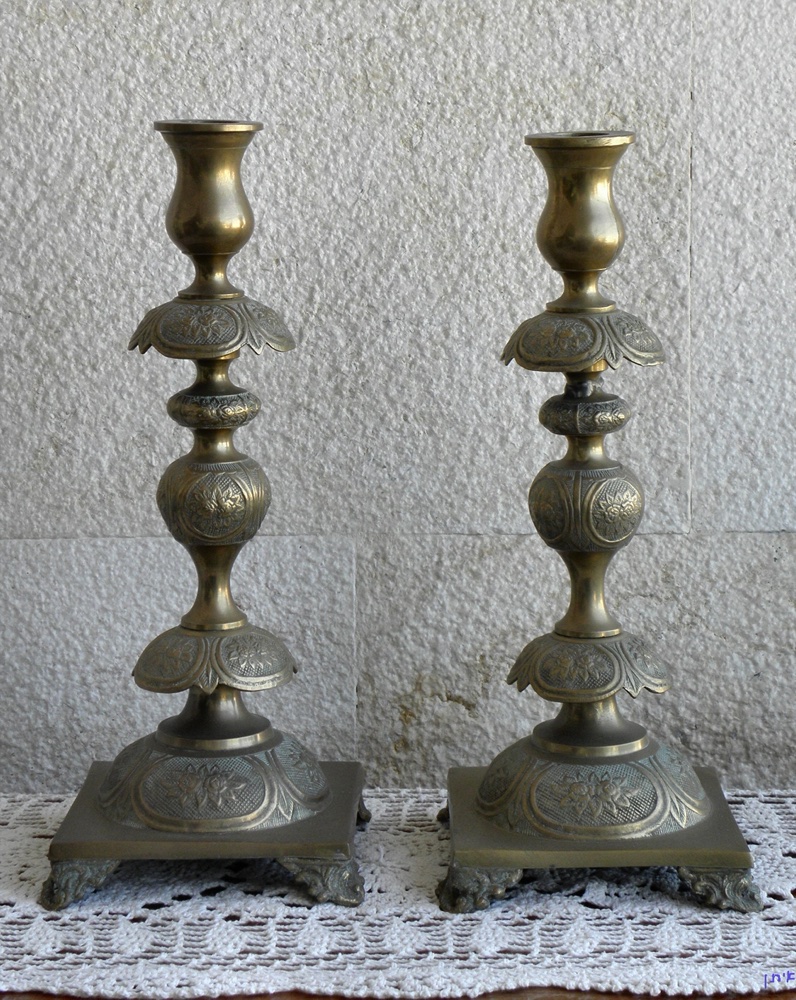
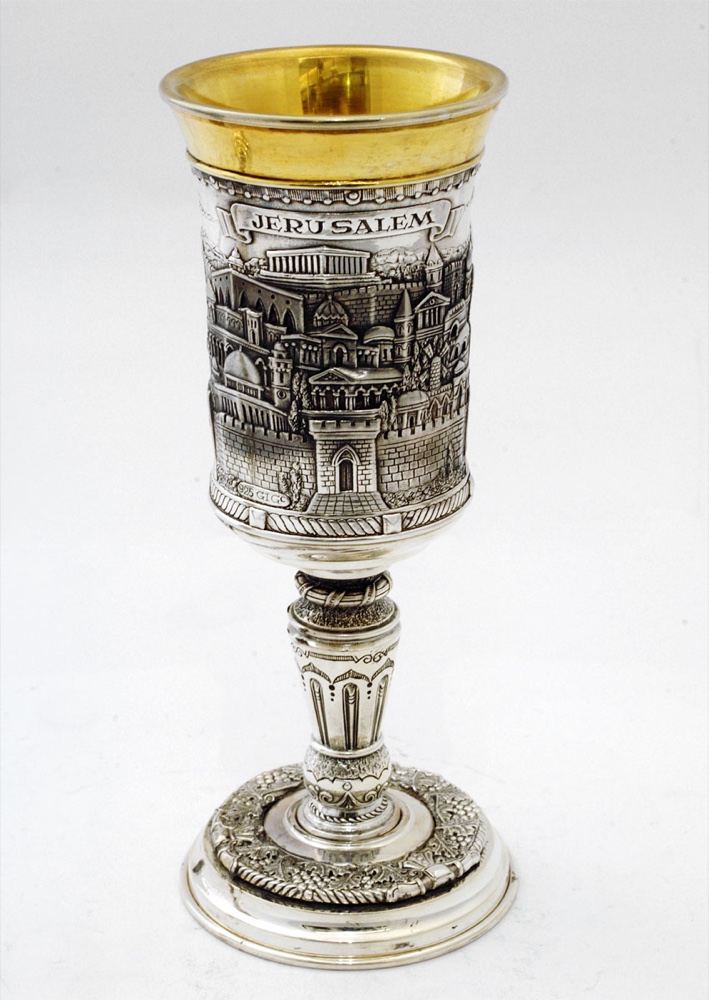
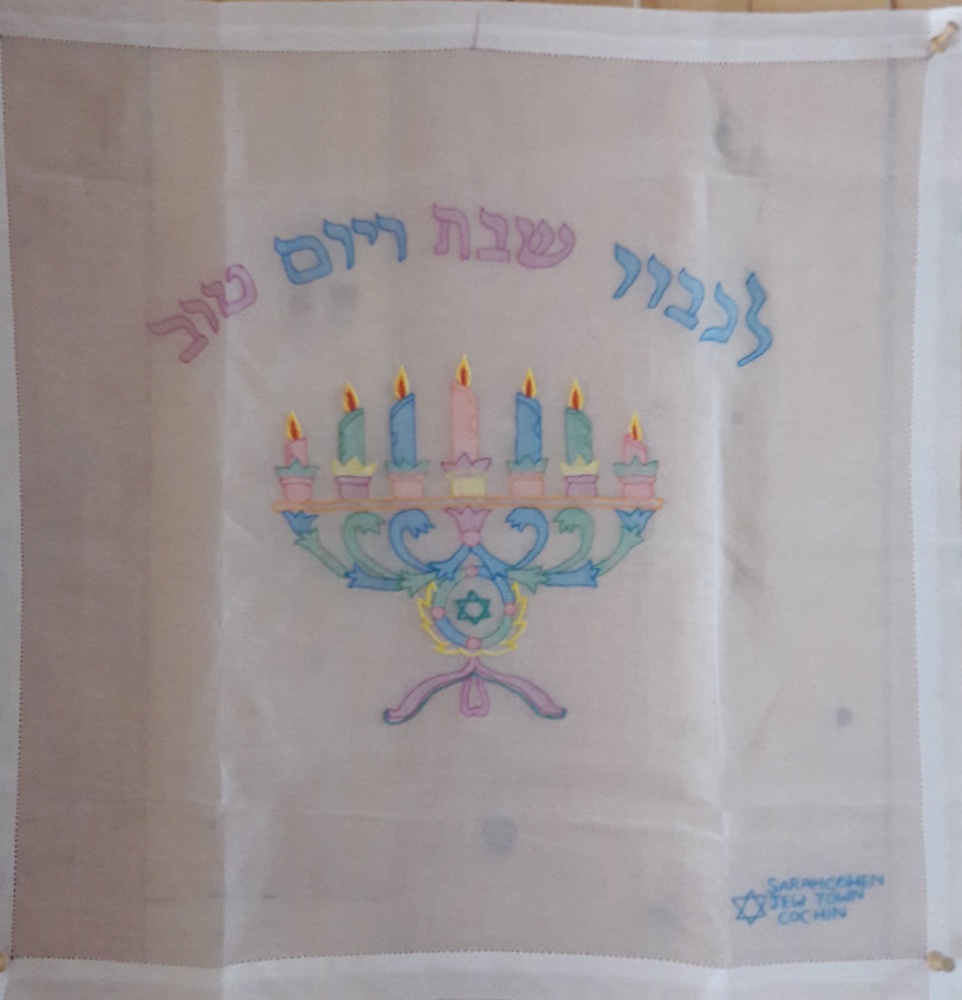
The way it is marked at home is just as simple. On Friday evening two candles are lit; a blessing is said over a cup of wine; two loaves of braided bread (challah), kept under an embroidered cover until they are blessed, are shared; and the family sits down to eat. A day later, when three stars appear, a short ceremony called Havdalah ends Shabbat with wine, a braided candle, and a sniff of sweet spices, carrying a little of the day's calm back into the working week. Nearly every Sabbath object (the candlesticks, the wine cup, the spice box) exists to serve those few quiet minutes. None of them is required to look any particular way, so families have always made them beautiful, and made them local: the spice box alone turns up as a tower, a flower, even a fish.
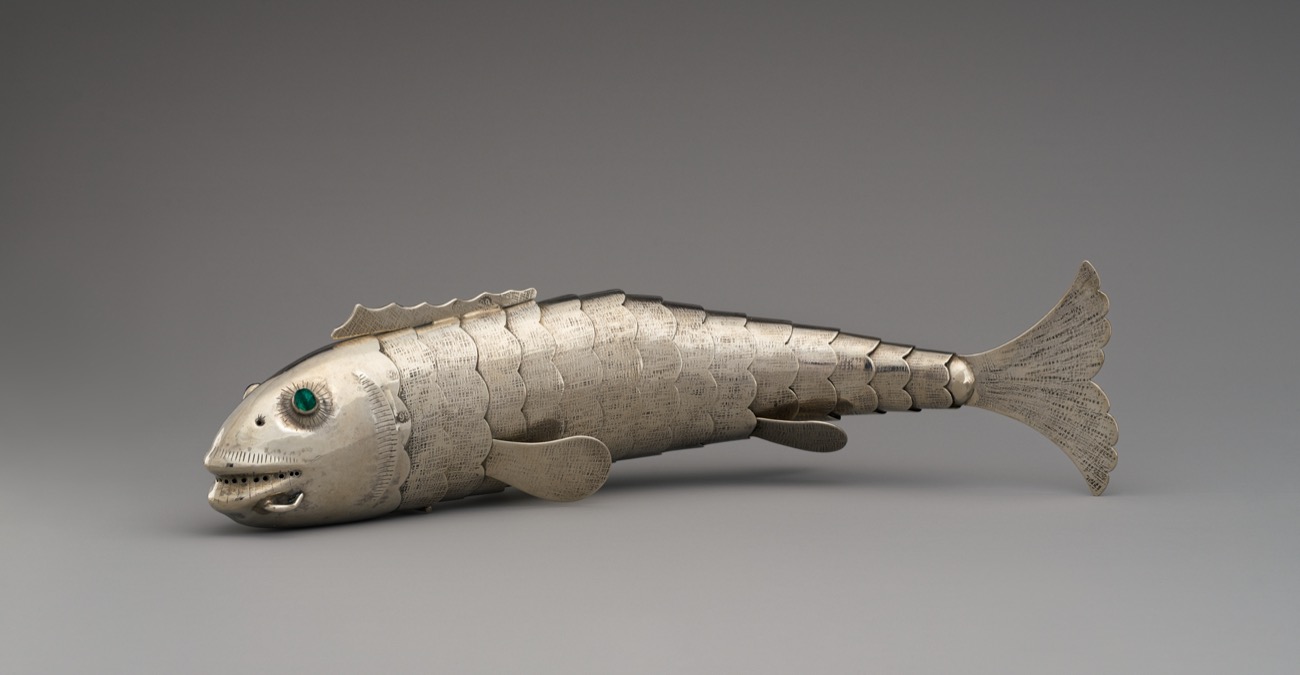
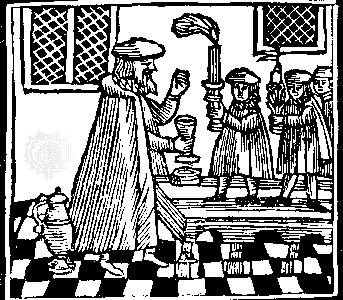
The year, and a life. The rest of the objects work the same way. Each yearly festival has an object of its own: the ram's horn (shofar) on the autumn high holidays, the eight lights of the Hanukkah lamp in winter, and the seder plate of the Passover meal in spring. And the milestones of a single life are marked in the same spirit, a contract and a ring at a wedding, a cup of wine at a baby's naming. None of it is meant to be elaborate or strange. It takes something a person already does, eating or marrying or marking time, and sets it apart, with an object you can hold while you do it.
The vocabulary
A short field guide.
A handful of terms unlock most of what follows. Judaica is the broad word for Jewish ritual objects, used in the home or the synagogue, across every era and material. They gather in a few places: around the Torah scroll in the synagogue, around the table at home, and at the turning points of a life.
In the synagogue, around the Torah scroll: the scroll itself is hand-written by a trained scribe under strict rules and is never decorated. Everything around it, though, is adorned. Rimonim (Hebrew for “pomegranates”) are the finials, the ornaments, often shaped like towers or crowns and hung with little bells, that cap the two wooden staves the scroll is wound on. A keter is a crown set over the whole scroll; a yad (“hand”) is the pointer used to follow the text without touching the parchment; a mantle is the embroidered cloth cover.
At the Sabbath table: more ritual objects cluster around Shabbat, the weekly day of rest, than around almost anything else, because Shabbat is marked at home. A pair of candlesticks holds the candles lit on Friday evening to begin it. The Kiddush cup (in Yiddish, a becher) holds the wine over which the blessing of sanctification is said. A challah cover (a challah dekel), often embroidered velvet, hides the two Sabbath loaves until that blessing is done. And at the close of Shabbat the Havdalah set comes out: a wine cup, a braided multi-wick candle, and a spice box (besamim, often shaped like a little silver tower) whose sweet scent marks the passage back to the ordinary week.
Through the year, at life's turning points, and every day: the festivals each bring an object, the Hanukkah lamp and its eight lights in winter (it is often loosely called a menorah, but it is not the seven-branched menorah of the ancient Temple, which has not been made for use since the Temple fell and survives now only as a symbol), the seder plate that arranges the symbolic foods of the Passover meal in spring, and the shofar, a ram's horn sounded on the autumn High Holy Days. Life's turning points have theirs: the ketubah is the marriage contract, and a ceremonial wedding ring was sometimes made oversized and crowned with a miniature building. Even an ordinary day is marked, a mezuzah, a tiny scroll in a small case, is fixed to the doorpost of a Jewish home, and tefillin, two small leather boxes holding words of scripture, are bound on the arm and head for weekday morning prayer (you can see them on the arms in the photograph at the top of this page). And one humble object carries one of Judaism's central values: the tzedakah box (in Yiddish, a pushke), a container for coins set aside for charity. It has a long lineage (the Mishnah describes thirteen collection boxes shaped like a shofar in the Second Temple) and synagogues long kept sets of labeled boxes for different causes. In many homes a child drops a coin into the box just before Shabbat, so that giving is built into the week. A tzedakah box can be a plain tin can or a worked silver treasure; either way it gives a value a shape you can hold.
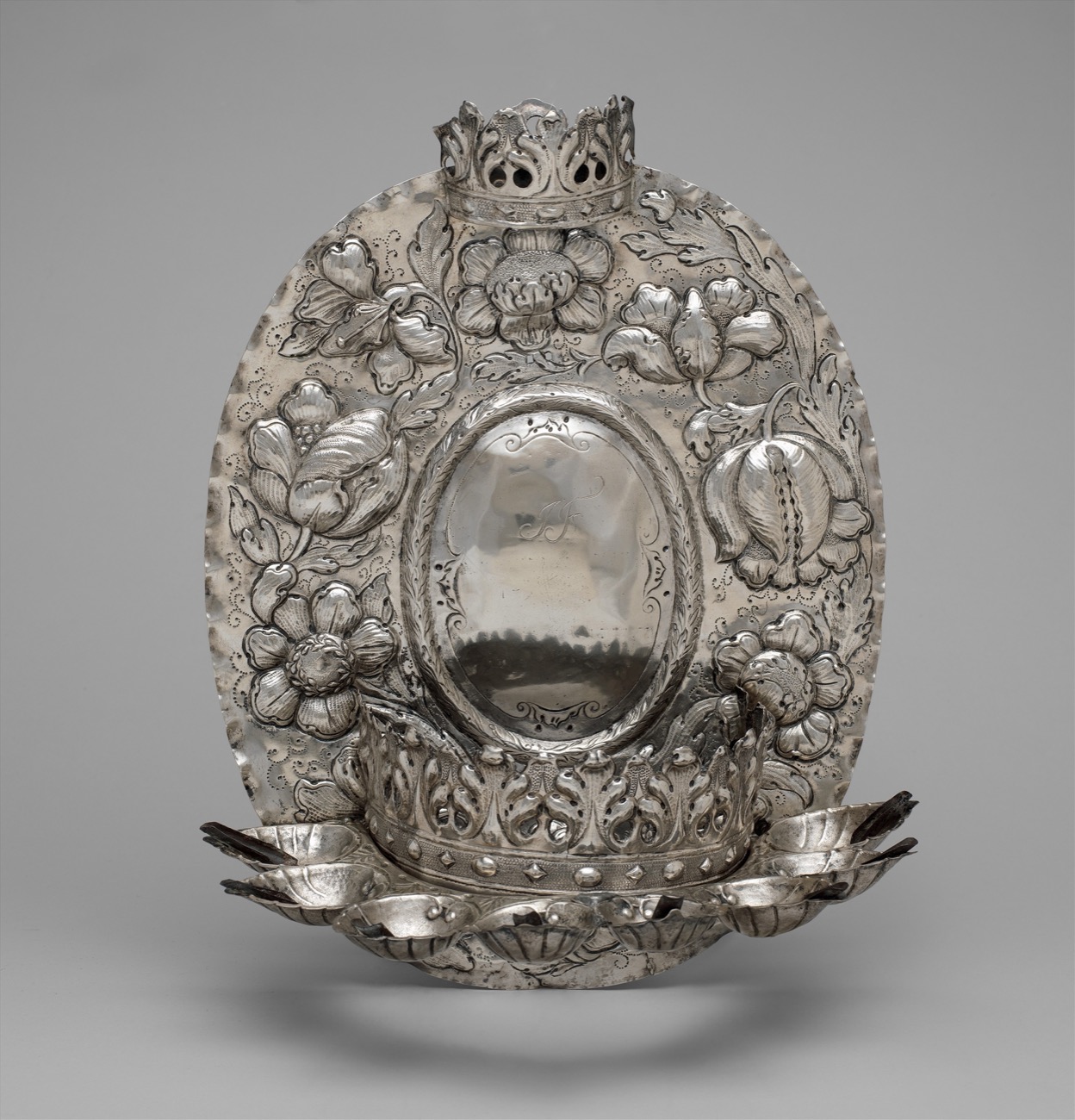
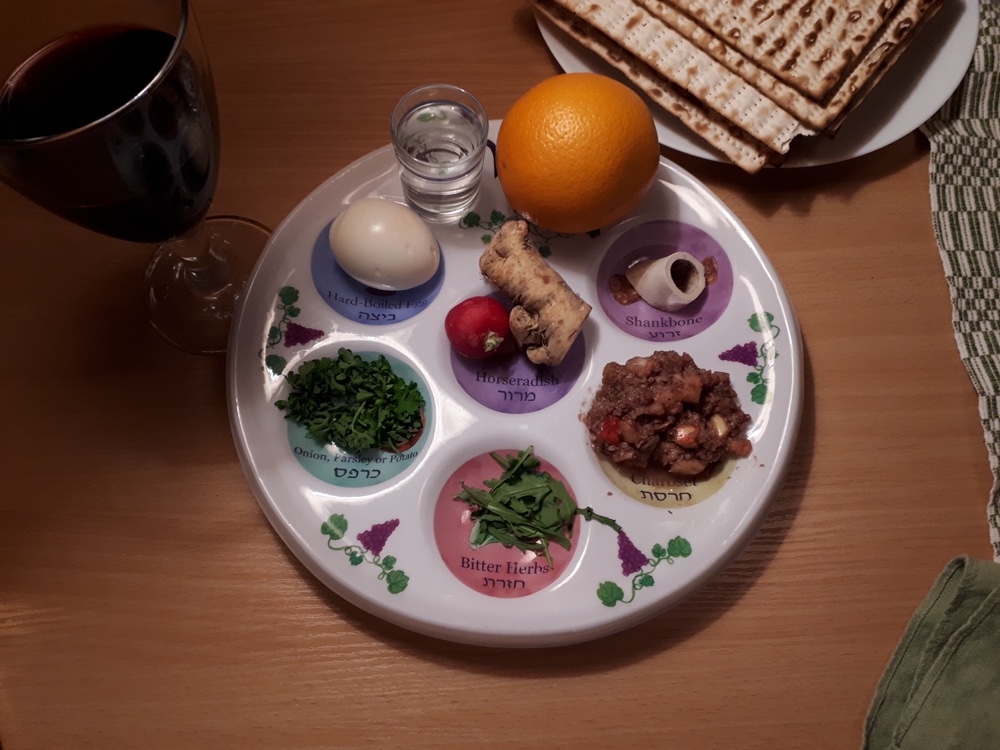
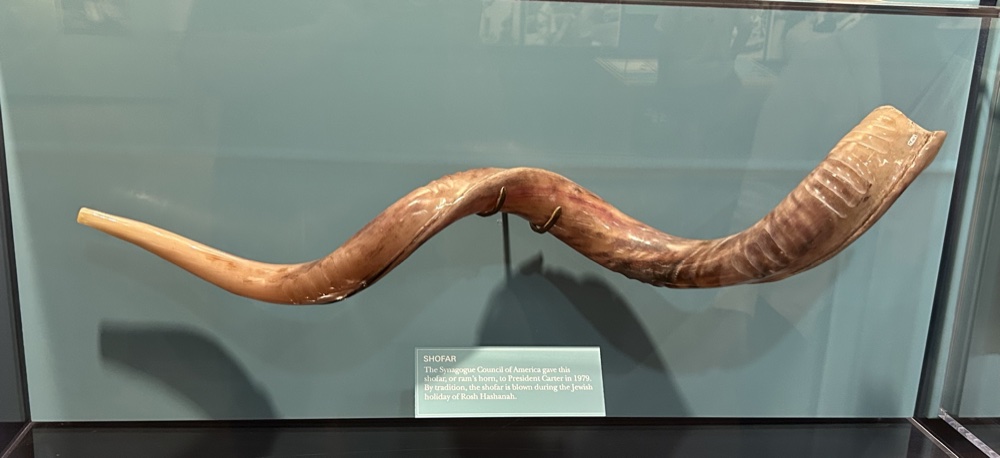
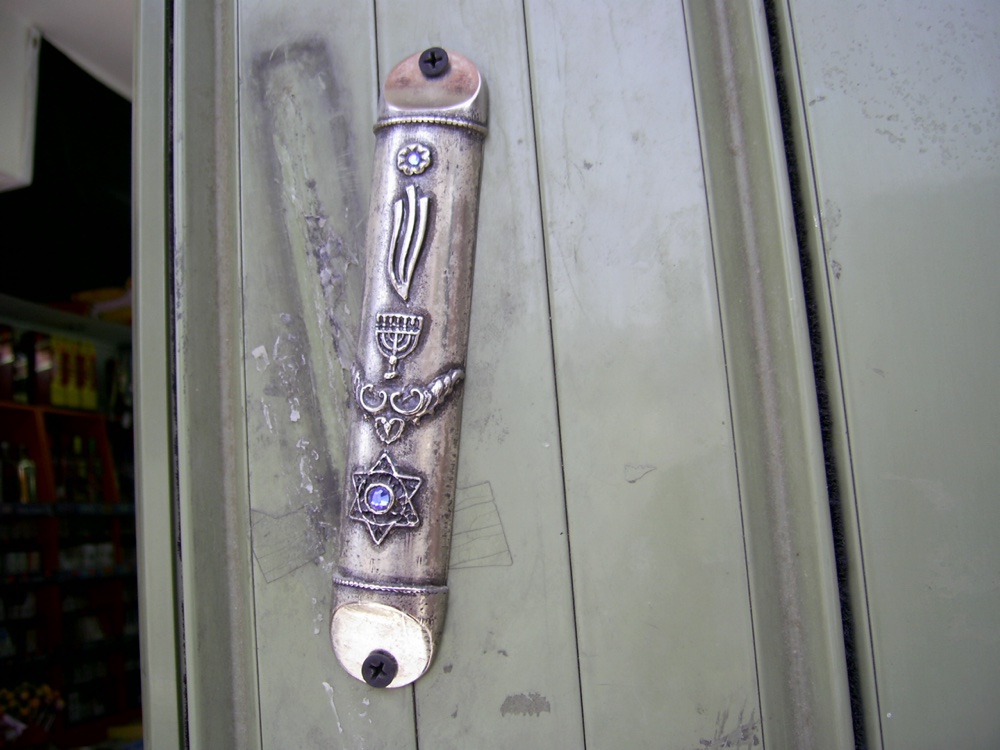
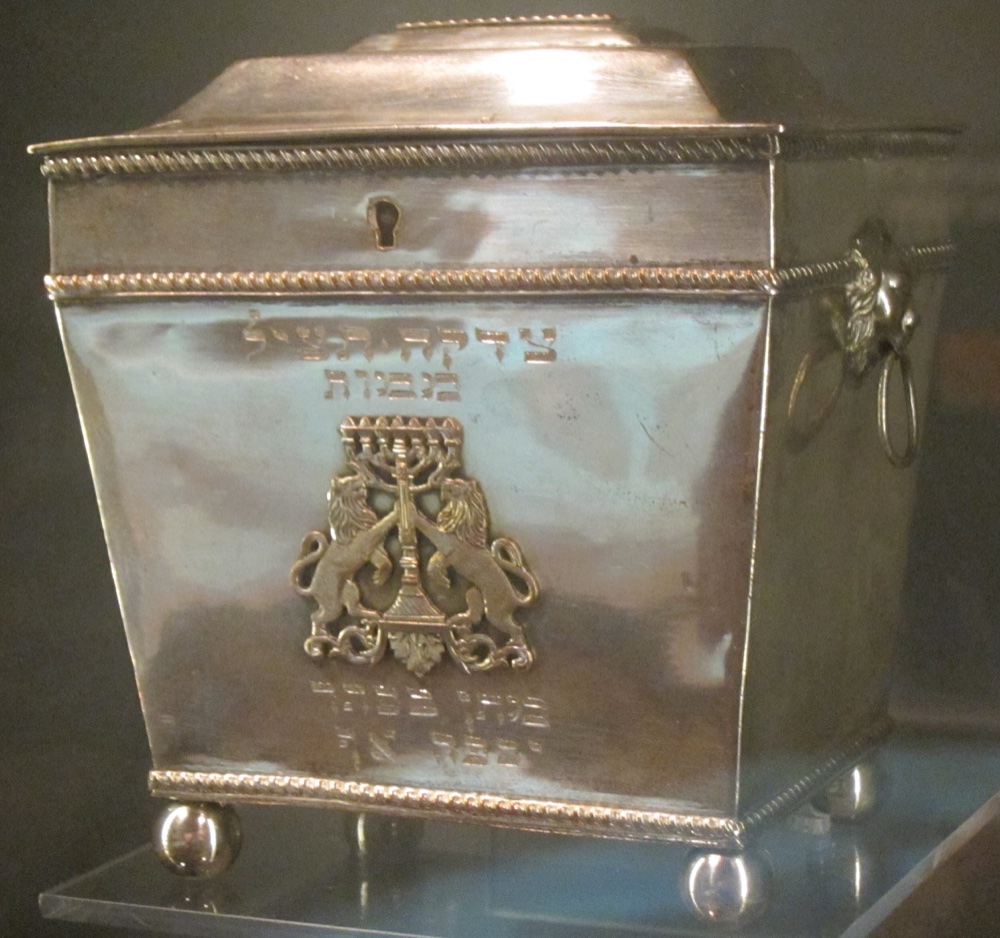
None of these forms is commanded by Jewish law (the law fixes the ritual, not the object) which is exactly why their shapes vary so widely and tell us so much.
A closer look
How a Torah is dressed.
The scroll of the Torah is the most honored object in any synagogue, and a community treats it that way: it is dressed, almost literally, like royalty. The scroll itself is plain, hand-written on parchment by a trained scribe under strict rules, never decorated, and never touched by a bare hand. Everything around it is the finery, and nearly every term from the field guide above turns up here at once.
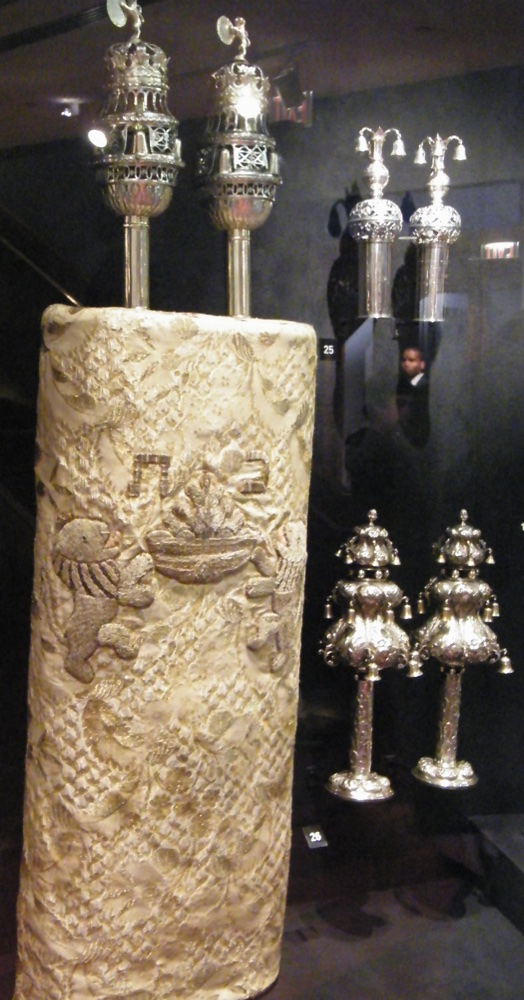
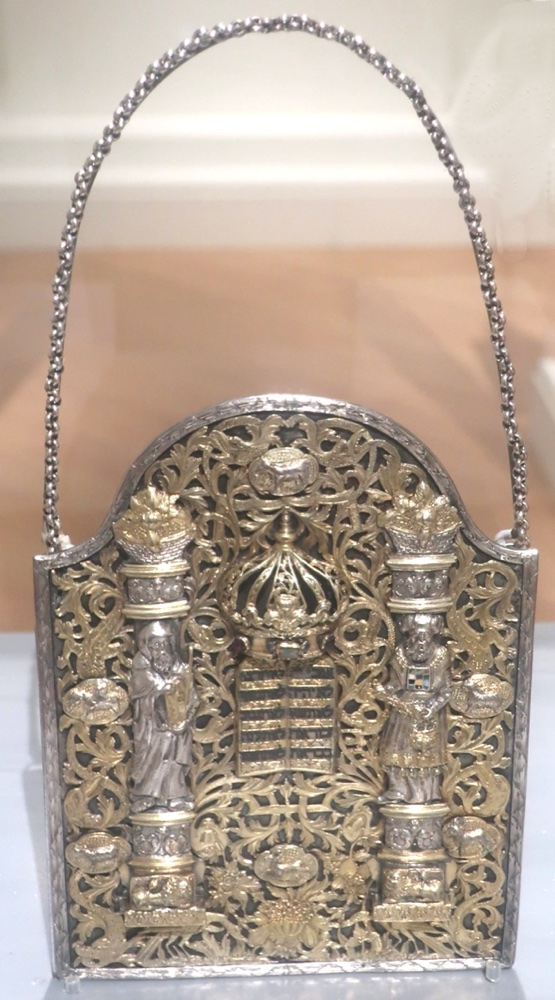
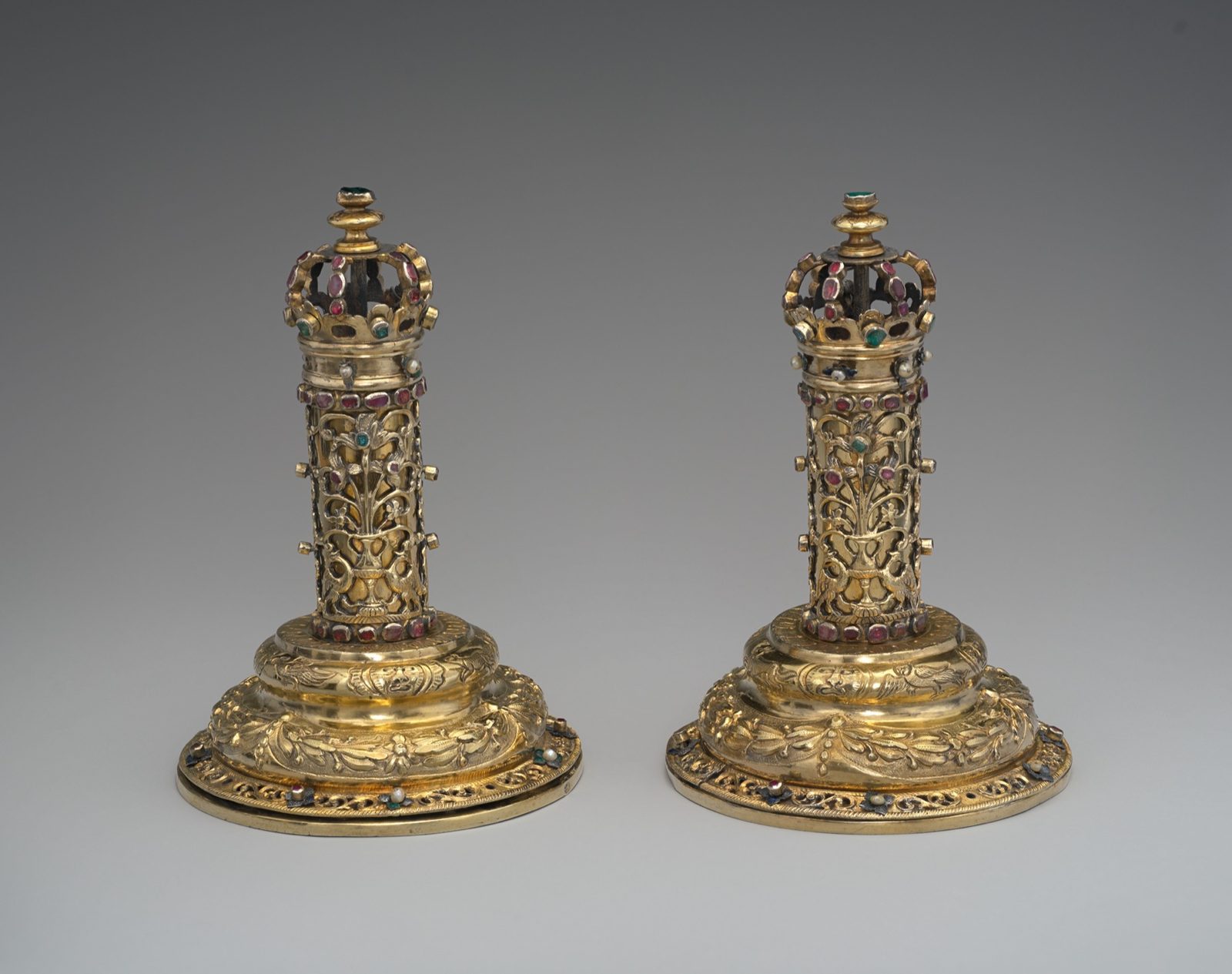
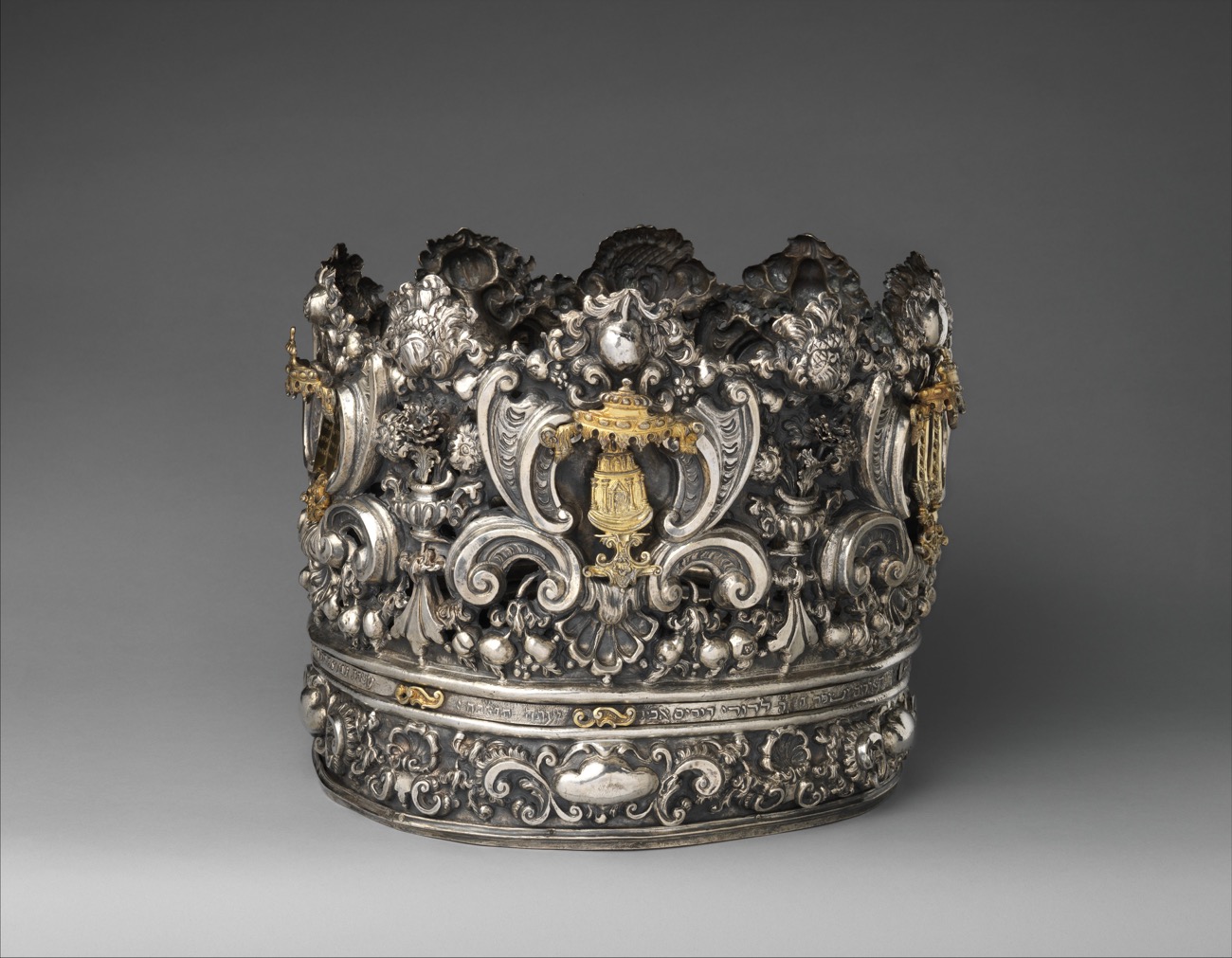
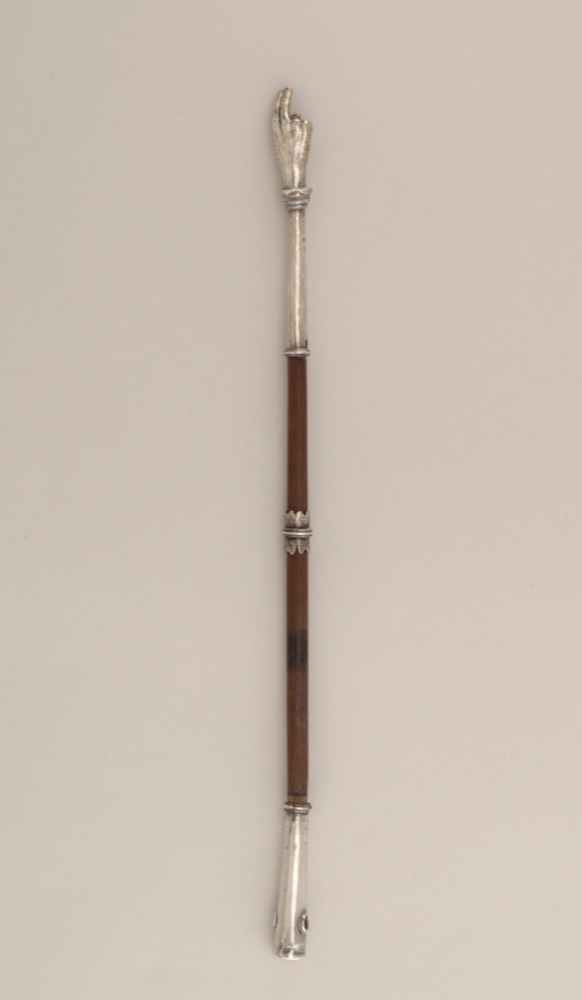
- The mantle (in Hebrew, me’il): an embroidered cloth cover slipped over the standing scroll like a robe. In many communities it is changed to white for the High Holy Days.
- The breastplate (tas): a silver shield hung on a chain in front of the scroll, recalling the breastplate worn by the high priest in the ancient Temple. Small interchangeable plaques often name the holiday the scroll has been rolled to.
- The finials (rimonim, “pomegranates”): the pair of ornaments that cap the two wooden staves, frequently hung with little bells.
- The crown (keter): a single silver crown set over the top of the scroll, instead of or above the finials.
- The pointer (yad, “hand”): a slim rod ending in a tiny pointing finger, used to follow the text without touching the parchment.
Put together, the meaning is simple. A cloth robe, a silver shield worn at the chest, a crown on top: these are the garments of a king, placed on a book. When the Torah is carried through the synagogue the bells on its finials ring and the congregation stands, the way a room rises for someone it honors. Then the ornaments come off, the scroll is opened on the reading table, and a reader follows the lines with the little pointing hand (never a finger) so the text being honored is never worn away by the honoring.
What the objects prove
A map drawn in silver and parchment.
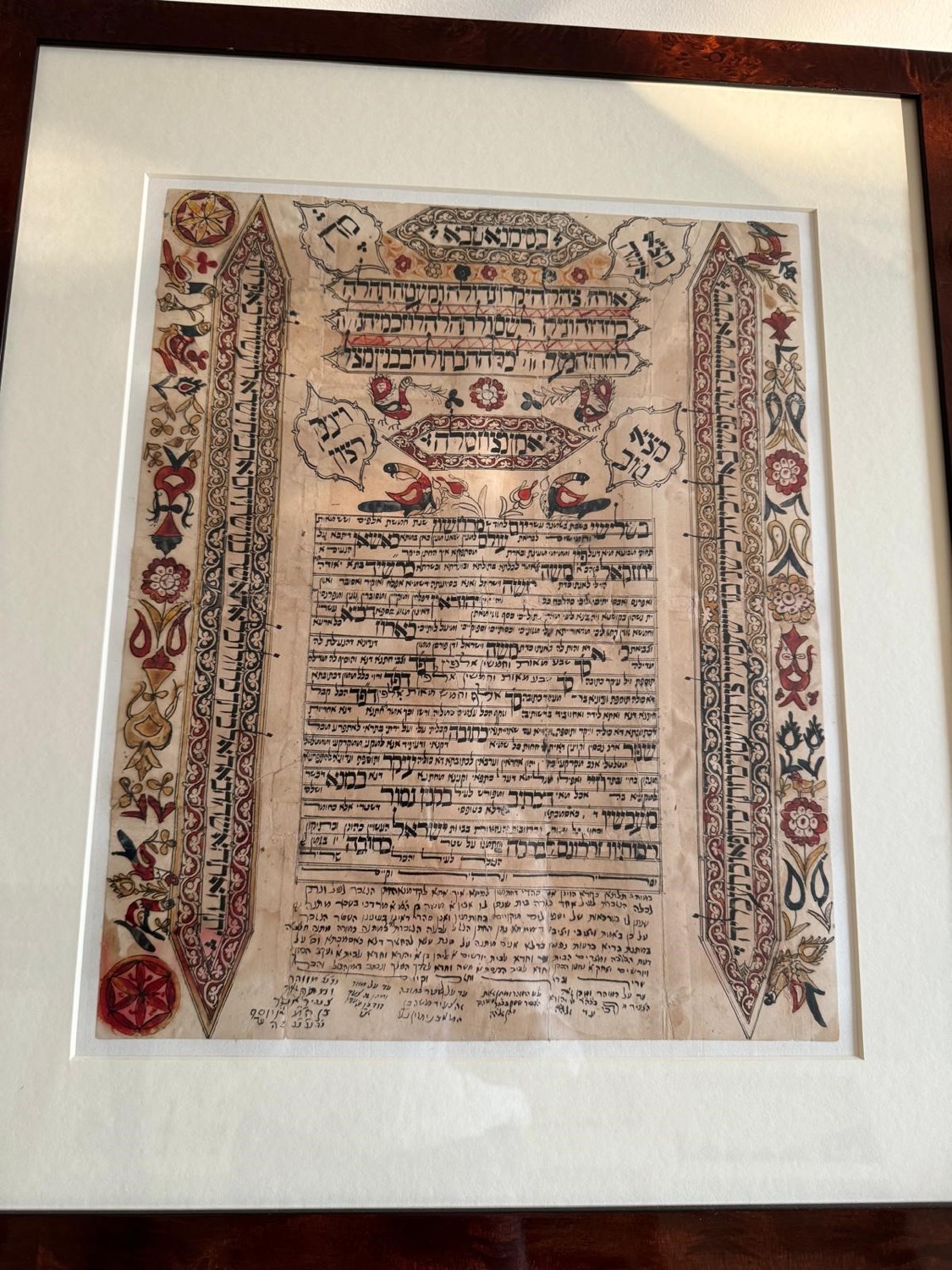
Set the objects of one ritual side by side from across the world and a pattern appears. The marriage contract is required everywhere, but a ketubah from Livorno borrows the carved marble look of an Italian church altar; one from Isfahan, in Iran, carries lions and a sun with a human face; one from Gibraltar in 1886 puts an American bald eagle and the motto E Pluribus Unum over the text. Torah finials from Yemen look nothing like finials from Poland, yet both crown the same scroll.
This is the material proof of the argument the platform makes in words elsewhere: Jews were a single people living in many worlds at once. The objects are not a contradiction of that unity; they are its signature. Each one is dated to a place and a moment, and together they trace a civilization present without a break from the Middle East to North Africa to Europe to the Americas, and present still: not a memory, but silver you can weigh, parchment you can read, and rituals kept this very week.
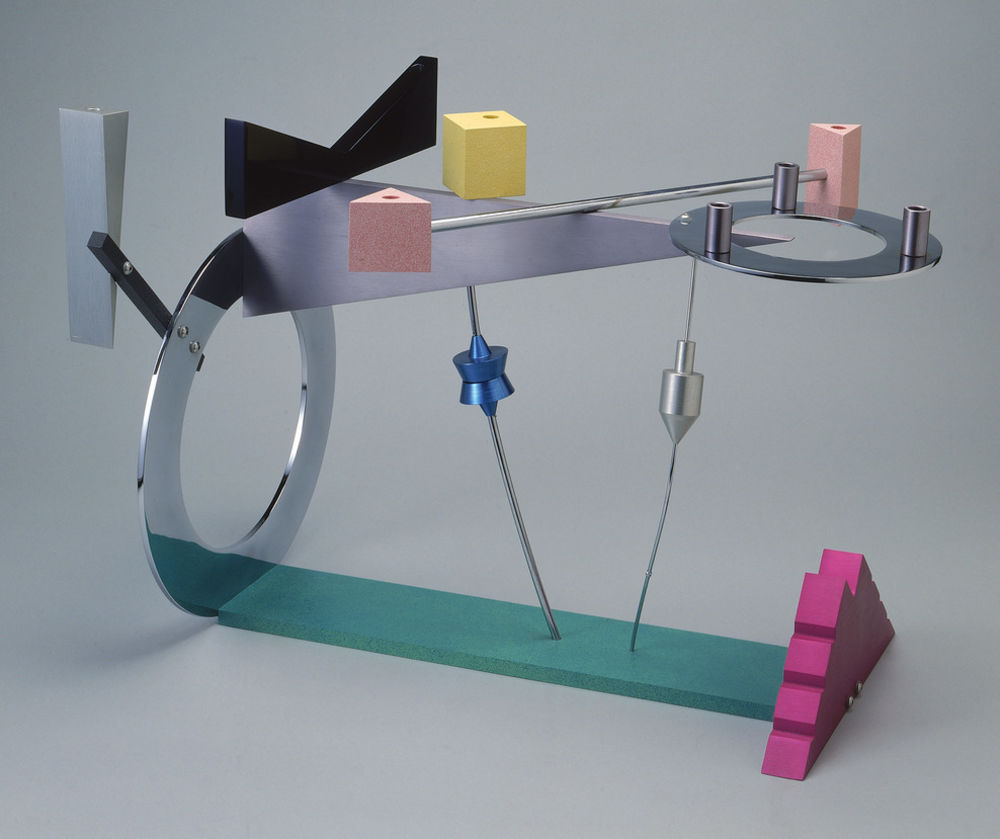
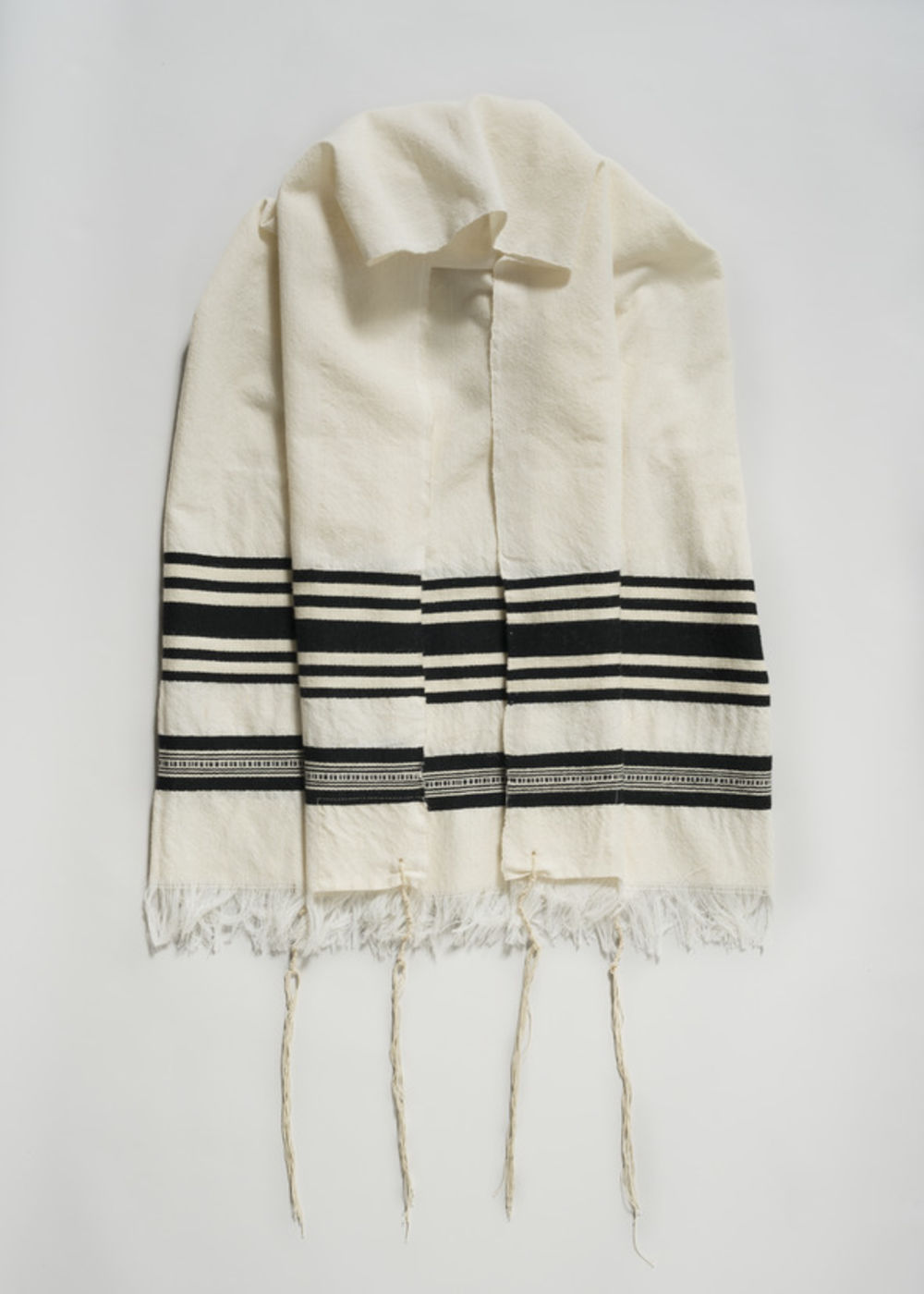
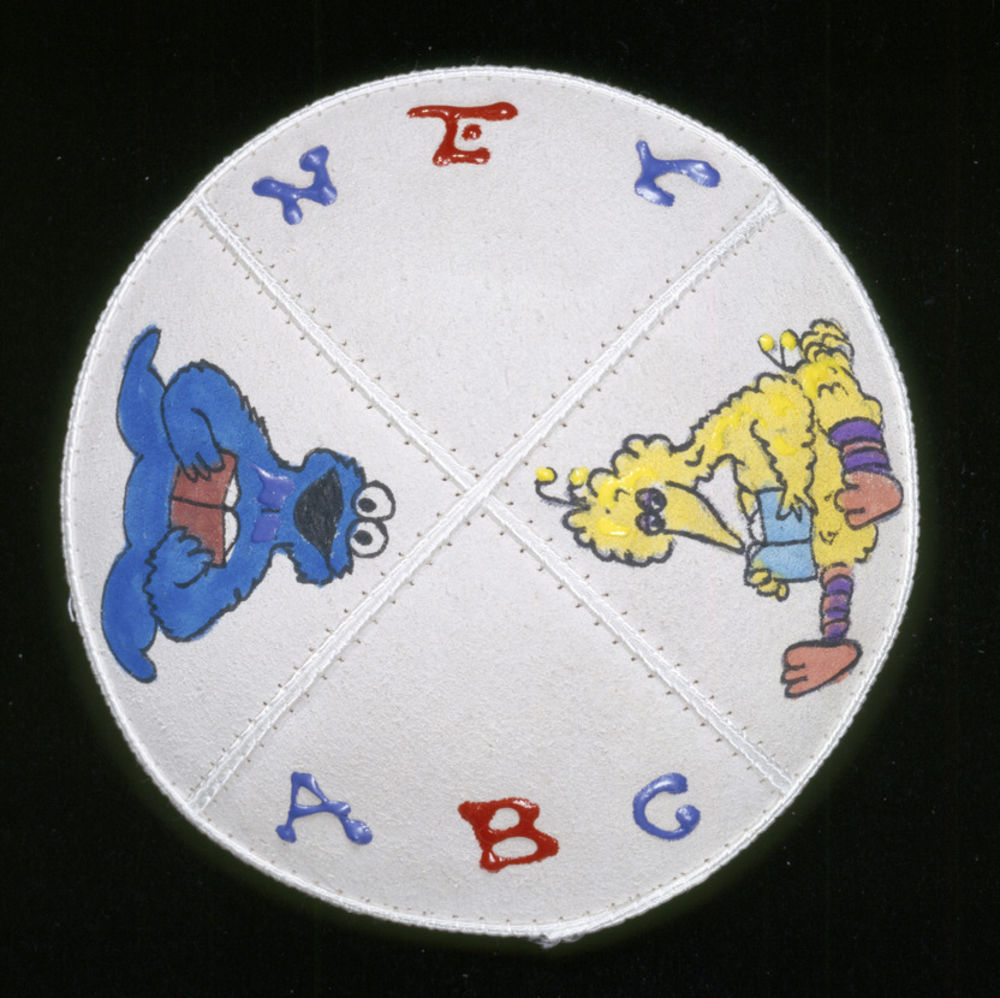
And the map is still being drawn. These three were made within living memory, in three different corners of the Jewish world (a menorah from Los Angeles, a prayer shawl from Djerba in Tunisia, a skullcap from the United States) each in a style all its own:
A closer look
Three objects, three stories.
The marriage contract (ketubah). The ketubah began as a piece of legal protection, not decoration: it set out a husband's obligations and protected a wife's status and property if the marriage ended in divorce or death. Contracts in this form survive from the first centuries of the common era. Over time families turned the required document into folk art, ringing the text with gates, lions, cities, and flowers, a way to broadcast status and to make the day beautiful. Because it had to record a specific place and date, every decorated ketubah is also a tiny dated portrait of its community's taste.
The Torah finials (rimonim). The scroll of the Torah is the most sacred object in the synagogue, and Jewish communities lavished their finest metalwork on the ornaments that crown it. Finials take the form of towers or crowns, hung with bells that announce the scroll as it is carried; they are decorated with the emblems of the ancient Temple, a menorah, the Tablets of the Law, priestly symbols. Their style follows wherever the community lived: an eighteenth-century Venetian pair carries Italian goldsmithing at its height; colonial American examples were made by the silversmith Myer Myers, who worked in New York before the Revolution.
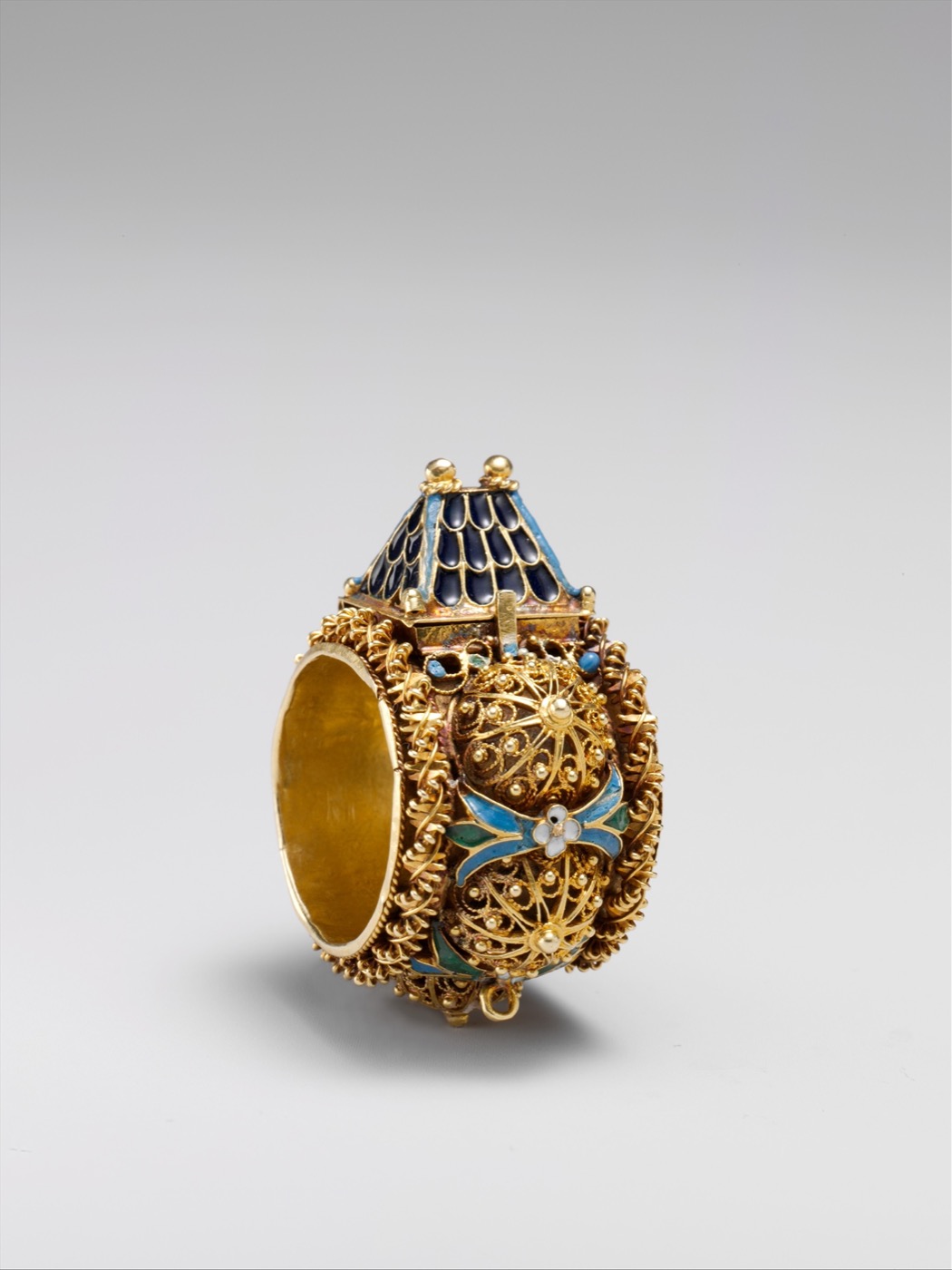
The wedding ring. Some medieval Jewish communities used an oversized ceremonial ring in the marriage rite, its bezel built into a miniature golden house or tower, a symbol, scholars suggest, of the home the couple would build or of the Temple in Jerusalem. These rings were community property, lent for the ceremony rather than worn daily, and kept afterward as a memento. Because they were reused for so long, they are famously hard to date: surviving examples have been placed anywhere from the medieval period to the nineteenth century.
Object Spotlight
A house you could wear.
What you are looking at. A ring, but not one made to wear on an ordinary day. The band is thick gold, wrapped in twisting filigree wire and dotted with tiny beads and enamel flowers. Where a stone would normally sit, there is instead a small building with a peaked, blue-tiled roof, a miniature house, perched on top of the ring like a charm.
What it is. This is a Jewish ceremonial wedding ring. In the marriage ceremony, the groom places a ring on the bride's finger and recites a declaration that consecrates the marriage. Most rings used for this were plain. But some communities kept an elaborate ceremonial ring like this one, far too large and ornate for daily wear. There is good evidence that rings of this kind were used in Italian Jewish weddings: the groom placed the ring on the bride’s finger, and afterward it was kept as a prized memento by the family or the temple community.
The little house. The building on top is the heart of the object. Curators read it two ways, and both may be true at once. It is the home the couple is about to build, the literal point of the marriage. And its gabled roof may stand for a building Jews carried in memory wherever they went: the Temple in Jerusalem, the lost center of the whole tradition. On this ring the roof opens to reveal the Hebrew words for “good luck.” A blessing hidden inside a house, inside a ring.
Why it matters. An object like this holds the whole point of the Topic in the palm of a hand. It is unmistakably Jewish, built for a Jewish rite, carrying a Jewish memory. It is also unmistakably of its place: the goldsmithing, the enamel, the architectural fantasy belong to the European world that made it. Same ritual everywhere; a different house on every ring.
Its afterlife. A ring like this was never really one person’s property. It was lent for the ceremony and then kept safe (by the family or by the synagogue) to be used again at the next wedding, passing through many hands across the generations. That is part of why these objects are hard to date and place: they traveled and were reused for a very long time. This one entered the Metropolitan Museum of Art in 1917 as a gift from the financier J. Pierpont Morgan, and survives now as both a beautiful object and a record of how a community marked its most important day.
Common misconceptions this Topic addresses
Material culture is easy to misread. Three assumptions get in the way of seeing what these objects actually prove.
- “Ritual objects are just decoration.” They are working tools of a living practice and dated historical evidence; the decoration is the least of what they record.
- “If the styles differ so much, it can't really be one tradition.” The opposite is true: the ritual is fixed everywhere, and only the style varies. The variation is the signature of one people adapting to many places.
- “A beautiful object in a museum is a happy story.” Often it is, but not always. Some of the most important Judaica survives only because its community was destroyed and its objects seized. The beauty and the loss have to be held together.
How to read an object
Questions that make an object talk.
Material culture is a skill, and it is teachable. Faced with any ritual object, a few questions turn it from decoration into a document. What was it for? Almost every piece here had a job in a specific ritual; naming the job explains the form. Where and when was it made? Most carry a date, an inscription, or a style that pins them to a place, and that single fact is historical evidence. What did the maker borrow from the surrounding culture, and what stayed fixed? The split between the two (local style over fixed ritual) is the pattern this whole Topic turns on. How was it used and worn? Soot, dents, and repairs are not damage to look past; they are the record of a life. And why does it survive? Sometimes the answer is pride and care, an object handed down because a family treasured it. Sometimes the answer is catastrophe: the object outlived the people who used it, and now it is a witness to them. A student who can ask that last question is reading the object the way a historian does.
Where the objects are
Reading the collections honestly.
These objects are gathered today in great collections, the Jewish Museum in New York, the Israel Museum in Jerusalem, the Met and the Museum of Fine Arts in Boston, and many more. Those collections are a gift to students: they make a dispersed civilization visible in one room. But they carry a hard history that this Topic does not skip. Some of the most important Judaica in the world sits in museums because the communities that made and used it were annihilated. The holdings of the Jewish Museum in Vienna, for instance, include ceremonial objects torn from synagogues across Austria in 1938. They are testimony in two directions at once: to a culture at its height, and to the attempt to destroy it. Learning to see both in a single object (the beauty and the loss) is part of what this Topic asks of a student.
Key takeaways
- Objects are evidence. A dated, signed ritual object is one of the hardest forms of proof that a Jewish community lived in a given place and time.
- Judaism is a living tradition, not a closed chapter. These are not relics: the Hanukkah lamp is still lit each winter, the ketubah still signed at weddings, the Torah still crowned in synagogues today.
- Jewish law fixes the ritual, not the object's form, so the shapes of ketubot, finials, lamps, and cups vary widely and record the local world each community lived in.
- The same ritual object made in different places (a ketubah from Livorno, Isfahan, or Gibraltar) shows a single people living in many worlds at once.
- These objects were made to be used, not displayed; their wear is part of the record.
- Much of the world's finest Judaica sits in museums because the communities that made it were destroyed, the objects are testimony to both a culture and its loss.
Discussion questions
Working from the evidence.
Grounded in the objects and sources above.
- The Topic argues that an object can be harder to argue away than a text. Why might a dated, physical object be a stronger kind of historical evidence than a written account? What can it not tell you that a text can?
- Jewish law fixes the ritual but not the form of the object. Pick one object (the ketubah, the finials, the wedding ring) and explain what stays the same across communities and what changes. What does the split reveal?
- The betrothal ring was lent out and reused across generations rather than owned by one couple. How does an object that belongs to a whole community, not a person, carry a different kind of history?
- Many great Judaica collections exist because communities were destroyed. How should a museum, or a student, present such an object honestly, as art, as evidence, or as both?
- If you had to choose one object from your own household to represent your family's life to someone five hundred years from now, what would it be, and what would it get wrong about you?
Classroom Connections
Where this Topic fits.
Teaching Connections
The disciplines and courses this Topic naturally supports, for any educator, anywhere.
- World History & Belief Systems: material culture as primary evidence for how a civilization lived and what it believed.
- Art History & Museum Education: the ritual objects (the marriage contract, the lamp, the scroll, the ring) and the meaning carried in their forms.
- Archaeology & Material Culture: reading an object as a historical document alongside text.
- Geography & Cultural Exchange: how Jewish objects absorbed local artistic styles while keeping fixed ritual forms, a clear case of cultural diffusion.
- Historical Thinking: using artifacts as evidence and mapping how a practice varies across place.
Standards Alignment
- NYS Global History & Geography: 9.1 (the development of civilization), 9.2 (Belief Systems), and 9.3 (the classical world).
- Common Core ELA-Literacy: RH.6–8.7 and RH.9–10.7 (integrating visual and material evidence): reading an object as a source alongside text.
- C3 Framework: Dimension 2 (using artifacts as evidence; the spread of cultural traits across place).
Further Teaching Resources
- The Metropolitan Museum of Art, “The Art of Love in the Ketubah”, the marriage contract as religious document, legal document, and folk art, with examples from Iran to Gibraltar to Shanghai.
- Museum of Fine Arts, Boston, Judaica collection, including the rare colonial Torah finials by the silversmith Myer Myers.
- Claims Conference, Worldwide Looted-Art Databases, a free directory linking the major provenance and looted-art databases, for tracing where a Jewish object came from.
Sources
Primary sources come straight from the time: documents, letters, speeches, images, and objects created by the people involved. Secondary sources come later: books, articles, and analysis in which scholars study and interpret those primary sources.
Primary sources
- The Metropolitan Museum of Art. The Art of Love in the Ketubah, and collection records for Torah finials (rimonim), Venice and Tiflis.
- Museum of Fine Arts, Boston. Judaica collection, including Torah finials by Myer Myers (1723–1795).
- The Jewish Museum, New York, and the Israel Museum, Jerusalem, collections of ceremonial art and illuminated marriage contracts.
- The Metropolitan Museum of Art. Jewish betrothal ring, Eastern European or Italian, 17th or 19th century (17.190.996), Gift of J. Pierpont Morgan, 1917. Met Open Access.
- Jewish Museum Vienna. Ceremonial objects from Austrian synagogues, on the history of the collection and 1938.
Secondary sources
- Sabar, Shalom. Mazal Tov: Illuminated Jewish Marriage Contracts from the Israel Museum Collection. Jerusalem: Israel Museum, 1993.
Finding these documents: many primary sources are free online. Good places to start are the Fordham Internet Jewish History Sourcebook, Yale’s Avalon Project (law and diplomacy), German History in Documents, the collections of the US Holocaust Memorial Museum and Yad Vashem, the National Library of Israel, and Sefaria (for Jewish texts). Search the document’s name and date.
The Jewish Life Cycle: birth and naming, bar and bat mitzvah, marriage, and death and mourning, the rituals that carry a Jewish life through its turning points, shared everywhere and shaped by each community.
Comments?
Write to editor@makorproject.org.
Last updated: August 2026.