Holocaust Denial and the Response
Six million murders. The Nazis recorded them. The Allied armies filmed the camps. The perpetrators confessed at Nuremberg, and survivors have testified ever since. No event in history is better proven, and people still deny it happened. Not because the evidence is weak, but because erasing the crime makes the hatred behind it sellable again.
Why this Topic exists
A crime recorded so it could not be denied.
In the photograph above, a survivor is showing General Dwight Eisenhower how prisoners were treated at Ohrdruf, a camp in Germany that American soldiers reached on April 4, 1945. It was the first Nazi camp the U.S. Army liberated. Eisenhower came to see it himself eight days later, with Generals Patton and Bradley, and what he found shook him. He did something deliberate in response: he ordered the scene photographed and filmed, and he brought in members of Congress and the press to look at it with their own eyes. He wrote that he wanted the evidence gathered firsthand, because he could foresee a day when someone would try to call the whole record propaganda.
That instinct turned out to be exact. The footage and photographs taken at Ohrdruf and the other camps were later used as evidence at the Nuremberg trials of the Nazi leadership. They are among the most reproduced images of the twentieth century. And within a few years, people were already at work claiming they were faked. This Topic is about that effort, what it is, where it came from, how it works, and how the historical record answers it.
How this Topic is built
Naming the denial without repeating it.
There is a real risk in teaching this subject: explaining a lie in detail can spread it. This page is built to avoid that. It does not lay out denialist arguments as though they were a side worth weighing, because they are not, every one has been examined and answered in open court and in the scholarly record. Instead it describes the shape of denial, so that a student meeting it later can recognize the move being made. The goal is the one the historian Deborah Lipstadt has urged: treat denial not as the other half of a debate but as a form of antisemitism with a documented purpose.
In plain terms
Denial and distortion are two different tactics.
The standard definitions come from the International Holocaust Remembrance Alliance (IHRA), an association of more than thirty member countries, which adopted a working definition in Toronto in 2013.
Denial is the claim that the Holocaust did not happen at all, or that its central facts are invented. In practice this means denying that there was a coordinated Nazi plan to murder the Jews of Europe, or denying the methods of murder, the gas chambers, the mass shootings, the deliberate starvation. The United States Holocaust Memorial Museum defines it simply as any attempt to negate the established facts of the Nazi genocide.
Distortion is subtler and, today, more common. It does not deny that the Holocaust happened; it minimizes, excuses, or misuses it. The IHRA lists forms of distortion that include grossly understating the number of victims, excusing the collaborators and allies who helped the Nazis, blaming the Jewish victims for their own murder, or invoking the Holocaust to score an unrelated point. Distortion keeps the event and bends its meaning.
Lipstadt, the scholar later appointed U.S. Special Envoy to Monitor and Combat Antisemitism, draws a further line between hardcore denial, the flat claim that the genocide never occurred, and softcore denial, which accepts that something happened but chips away at the numbers, the methods, or the intent. The softcore version is harder to spot, which is the point of it.
The core that gives it away
Every version carries the same accusation.
What makes Holocaust denial a form of antisemitism, rather than a mistaken reading of history, is the claim hidden inside it. To deny the Holocaust, a person has to explain why the entire documented record (German, Allied, and survivor) would tell the same lie. The denialist answer is always a version of the same charge: that the Jews invented or inflated the genocide for money and to justify a state. That is not a neutral historical doubt. It is the old conspiracy myth that Jews secretly manipulate the world, applied to the very crime committed against them. Lipstadt has put the underlying motive plainly: there is, she argues, only one reason to deny or distort these facts, and that is to foster antisemitism.
Scholars who study denial describe two ideas at its core, and both are old antisemitic charges in new dress. The first inverts the victim and the criminal: the Jews, in this telling, were not murdered but were themselves the schemers. The second declares the evidence itself a fraud, the photographs staged, the confessions coerced, the records forged. Hold the two together and the purpose is clear: not to correct the history, but to turn the most documented crime against the Jews into one more proof of a Jewish conspiracy.
There is a further purpose, and it is the reason denial keeps being manufactured rather than fading away. The bodies that study it, including the International Holocaust Remembrance Alliance, describe the goal plainly: denial works to rehabilitate open antisemitism and to clear the ground for the kind of politics that produced the genocide in the first place. If the Holocaust can be erased, then the ideology behind it loses its great warning label, and can be sold again as something ordinary. That is what the factory is for. It is also why denial rises alongside the movements that have the most to gain from a past with no lesson in it.
Where it came from
Built on purpose, almost from the start.
Denial has a history, and it is worth seeing how the machine was assembled. The older myths this platform traces (the poisoner, the conspirator, the Christ-killer) were each built and put to work by people who wanted them. Denial is the same pattern, applied now to the genocide those myths helped cause.
Denial did not begin with the internet. Networks of deniers formed in the early postwar years, first in France, where a handful of writers set out to argue that the murders had not really happened, not because the evidence was thin, but because they wanted the conclusion. In Germany and Austria, authors with their own reasons to whitewash the Nazi period worked to rehabilitate its leaders. Small publishing houses appeared specifically to print and distribute this material.
In 1978 the effort took on the costume of scholarship. A network of deniers founded the Institute for Historical Review in the United States, an organization built to look like an academic body, it held conferences, issued a journal, and used the vocabulary of research. Its methods were the opposite of research: circular reasoning, quotations stripped of context, and claims that fell apart the moment they were checked against the record. The disguise mattered, because it let denial travel into places that would have rejected open antisemitism. That was the intent all along: not to weigh the evidence, but to make an old hatred sound like new research.
The Trial
The day a court tested denial against the evidence.
The clearest answer to denial came not from a museum but from a courtroom. In 1996 the British writer David Irving, who had spent years casting doubt on the scale and intent of the Holocaust, sued the American historian Deborah Lipstadt and her publisher, Penguin Books, for libel. Lipstadt had called him a Holocaust denier who deliberately misrepresented evidence. Irving denied it, insisting he was an honest historian and that Hitler had neither ordered nor known about the extermination.
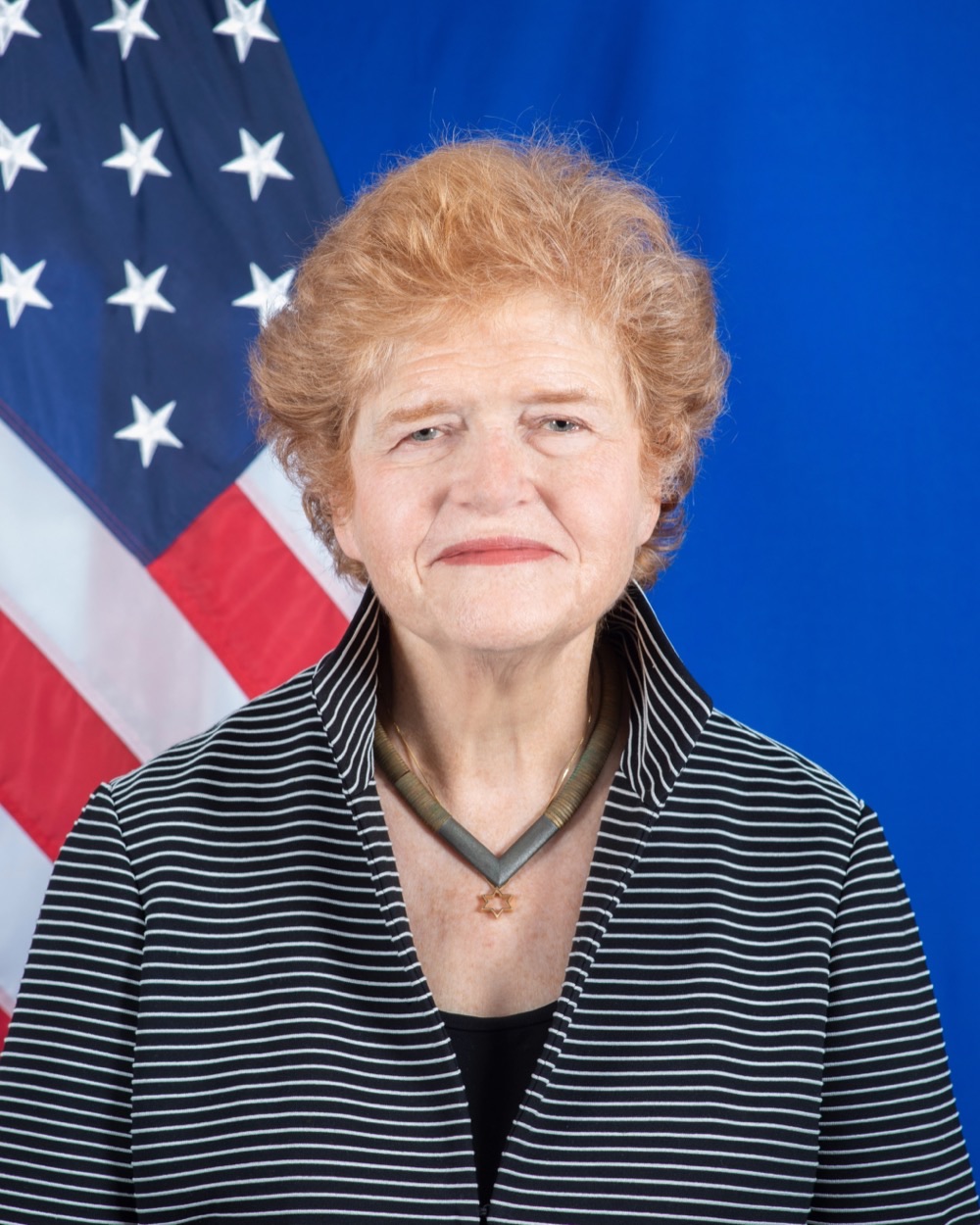
Because the case was brought in England, where the burden in a libel suit falls on the defendant, Lipstadt and her team had to prove that her description of Irving was true. That forced something rare: a trial in which the actual evidence of the Holocaust, and Irving's handling of it, was examined point by point in open court, with expert historians on the stand. The trial ran in 2000.
The court ruled against Irving. The judgment found that he had, in the words the case turned on, deliberately distorted the historical evidence, misrepresenting documents, mistranslating, and falsifying figures to fit his conclusion. The ruling did not merely clear Lipstadt of libel; it established, in a court of law and on the public record, that the leading English-language denier had falsified history on purpose. The trial became its own kind of documentation: a step-by-step demonstration of how denial is built, and how it fails when the evidence is put in front of it. The full evidence presented in court was later published online, in plain view, through the Holocaust Denial on Trial archive, and the case reached a wide audience again in the 2016 film Denial. The lesson the trial left is the one this Topic rests on: denial does not survive contact with the record, which is exactly why the record is kept.
Common misconceptions this Topic addresses
Denial works in part by being underestimated. The three beliefs below are the ones that let it spread; each is answered in the sourced record above, and the related entries in the Misconceptions reference go further.
- “Denial is just a fringe opinion, harmless cranks.” It is the deliberate engine of organized antisemitism, promoted by governments and movements, not a harmless eccentricity. See the entry →
- “Distortion isn’t really denial, so it’s a smaller problem.” Distortion (halving the death toll, blaming the victims, misusing the word) bends the same history toward the same end, and is the more common form today. See the entry →
- “There are two sides, and students should hear both.” There are not two sides to whether a documented genocide occurred. Staging denial as one half of a debate is itself the goal of the “just asking questions” pose. See the entry →
How to recognize it
The moves are repeatable, which is what makes them catchable.
Denial and distortion reuse a small set of techniques. Naming them is the practical skill this Topic offers. Manufactured doubt: a single ambiguous detail is treated as if it overturns the whole, while the mountain of corroborating evidence is ignored. The closed loop: the documentation itself is recast as the forgery, so that every piece of proof becomes, circularly, more evidence of the supposed plot, the signature of a conspiracy theory rather than an argument. The pose of inquiry: denial dresses as “just asking questions,” borrowing the language of open research to smuggle a settled conclusion. Minimization by degree: the softcore move that concedes the event but shaves the numbers, the methods, or the intent until little is left. False equivalence: Lipstadt calls this the move of “immoral equivalencies”, a denier grants that the Nazis had camps, then adds that everyone committed atrocities in wartime, so why single out the Germans. The point is to drain the murder of any particular meaning, because a genocide treated as ordinary wartime cruelty is one that no longer demands a reckoning.
None of these requires a student to debate whether the Holocaust happened. They are tools for seeing the technique at work, the same recognition skill the platform builds on the It Didn’t End and Contemporary Antisemitism Topics, applied here to one specific lie.
The response
The record is defended, not assumed.
The answer to denial is the same instinct Eisenhower had at Ohrdruf: document, preserve, and make the evidence public. That work continues. The United States Holocaust Memorial Museum maintains an extensive public record and education series on denial and distortion. The IHRA's working definition gives governments and educators a shared tool for naming the problem, and underpins the international #ProtectTheFacts campaign. In 2022 the United Nations General Assembly adopted a resolution condemning denial and distortion of the Holocaust. The Irving trial, the museum archives, the survivor testimonies, and the perpetrators' own records together form a defense that does not depend on belief: it can be checked.
This is why the Topic sits at the end of Unit 6, after the liberation, the trials, and the long work of memory. A student who has followed that arc can see denial for what it is, not a competing account of the past, but an attack on the record itself, and the reason that record was built to last.
Key takeaways
- The Holocaust is the most thoroughly documented genocide in history, recorded by the perpetrators, the Allied armies, and the survivors, and confirmed under oath at Nuremberg.
- Holocaust denial claims the genocide did not happen; distortion accepts that it did but minimizes, excuses, or misuses it. Both are forms of antisemitism.
- Every version carries the same hidden charge, that Jews invented or inflated the genocide, which is why denial is an attack on Jews, not a mistaken reading of history.
- The 2000 Irving v. Lipstadt trial tested denial against the evidence in open court and found that the leading English-language denier had falsified history on purpose.
- Denial reuses a small set of recognizable techniques, which is what makes it a teachable case in how to defend a documented record.
For the classroom
Where this Topic fits the standards.
- World History, NY Global History 10.10 (Human Rights, Genocide, and the Postwar World). Holocaust denial and its refutation (the IHRA working definition, the 2022 UN resolution, and the documented record from liberation and Nuremberg that they defend) belong to the postwar history of how genocide is documented, contested, and protected.
- NYS Holocaust Education Mandate, Education Law §801. Supports Holocaust instruction by teaching how the documented record answers denial and distortion, the evidence skills the mandate’s purpose depends on.
- Common Core RH.11–12.6 & RH.11–12.9. Students analyze denialist texts, the documentary record, the findings of Irving v. Lipstadt, and historical scholarship while evaluating purpose, perspective, and the deliberate misrepresentation of sources.
- C3 Framework, D2.His.1 & D2.His.14. Students investigate chronology, causation, and evidence-based interpretation while examining how historians and courts establish and defend the historical record.
- Classroom Applications. Students can:
- distinguish historical revision from denial and distortion;
- evaluate documentary evidence;
- analyze propaganda techniques;
- compare primary sources with denialist claims;
- understand how courts, historians, archives, and museums establish the historical record;
- construct evidence-based historical arguments.
- International Classroom Relevance. Because this Topic examines disinformation, evidence evaluation, and the defense of the historical record, it supports Holocaust education, media-literacy and civic education, genocide studies, and source-based historical inquiry.
Questions for discussion
Grounded in the sourced record above. Each asks students to read the sources rather than restate a conclusion.
- Eisenhower ordered the camps photographed and brought in Congress and the press because he could foresee the evidence being called propaganda. What does it mean that the documentation of the Holocaust was created, in part, as a defense against future denial?
- The Irving trial put the burden on Lipstadt to prove her description of him was true, which forced the evidence itself into open court. How is a courtroom different from a debate as a way of testing a claim about history?
- Distortion is described as more common today than outright denial, and harder to spot. Why might minimizing or misusing the Holocaust travel more easily than flatly denying it?
- The page argues there are not two sides to whether a documented genocide occurred. Where is the line between teaching students to question sources, a core historical skill, and staging a settled fact as an open debate?
- Holocaust denial recycles the older conspiracy claim that Jews secretly manipulate the world. Why would a person who wants to promote that claim find the Holocaust specifically useful to deny?
Learn more · take this further
Verified resources from outside organizations for teachers and students. Where a dedicated classroom resource does not yet exist, The Makor Project is developing one.
Sources
Primary sources come straight from the time: documents, letters, speeches, images, and objects created by the people involved. Secondary sources come later: books, articles, and analysis in which scholars study and interpret those primary sources.
Primary sources
- International Holocaust Remembrance Alliance. Working Definition of Holocaust Denial and Distortion. Adopted Toronto, October 10, 2013.
- Irving v. Penguin Books Ltd and Deborah Lipstadt. High Court of Justice, Queen’s Bench Division, judgment of April 11, 2000.
- United States Department of State, Office of the Special Envoy for Holocaust Issues. Defining Holocaust Distortion and Denial.
- Dwight D. Eisenhower Presidential Library. World War II Holocaust Images (Ohrdruf, April 1945; U.S. Army Signal Corps photographs).
- United Nations General Assembly. Resolution A/76/L.30, condemning denial and distortion of the Holocaust. Adopted January 20, 2022.
Secondary sources
- United States Holocaust Memorial Museum. Holocaust Denial and Distortion (education series), and Explaining Holocaust Denial. Washington, D.C.
- Lipstadt, Deborah E. Denying the Holocaust: The Growing Assault on Truth and Memory. New York: Free Press, 1993.
- Anti-Defamation League. A Short History of Holocaust Denial in the United States.
- Facing History & Ourselves. Holocaust Denial: How Teachers Can Turn the Tide.
Finding these documents: many primary sources are free online. Good places to start are the Fordham Internet Jewish History Sourcebook, Yale’s Avalon Project (law and diplomacy), German History in Documents, the collections of the US Holocaust Memorial Museum and Yad Vashem, the National Library of Israel, and Sefaria (for Jewish texts). Search the document’s name and date.
Medieval churches still carry carvings made to degrade Jews.
Comments?
Write to editor@makorproject.org.
Last updated: August 2026.