The Expulsions
“We order all Jews and Jewesses … to depart from all of our kingdoms and dominions … and that they dare not return.”
Ferdinand and Isabella, the Alhambra Decree (Edict of Expulsion), March 31, 1492, quoted as the order, never as justice
Why this Topic exists
Expulsion was a policy, not an accident.
This Topic answers one question: why did medieval and early-modern rulers repeatedly invite, tax, restrict, exploit, and then expel Jewish communities, and how did those expulsions reshape Jewish history? It is also the bridge between two Units. The communities introduced in Unit 2 did not appear where they did by accident: many of them (in the Ottoman Empire, North Africa, Italy, the Balkans, and Amsterdam) were created or enlarged by the expulsions traced here. And the hostility examined across the rest of Unit 3 is, in this Topic, caught in the act of becoming law.
Between 1290 and 1492, one Western European kingdom after another expelled its entire Jewish population: England, France, Spain, and a long list of German and Italian cities and territories. Taught as a string of separate dates, the expulsions can look like a series of unrelated outbursts. They were not. They were a recurring instrument of medieval and early-modern rule, used by governments that had first invited Jewish communities in, taxed them, restricted them, and drawn on their money, and then expelled them when it became politically or financially useful to do so.
This Topic treats expulsion as a recurring mechanism rather than a series of isolated events. Its purpose is not to catalogue every banishment, but to uncover the political, legal, religious, and economic logic that made the same process appear across kingdoms and centuries. Understanding that recurring logic explains why, by 1500, the center of Jewish life in Europe had shifted decisively east and south toward the regions that welcomed the communities Western Europe expelled.
Expulsion as a mechanism
What an expulsion actually was.
A medieval Jewish community did not live in a kingdom as ordinary subjects did. In much of Latin Christendom, Jews held a special legal status: they were, in the German imperial phrase, servi camerae regis, "serfs of the royal chamber," belonging directly to the king or emperor rather than to a town or a lord. The ruler protected them, and in exchange taxed them at will. That arrangement made a Jewish community uniquely valuable to a crown and uniquely exposed: their security was a royal asset that could be revoked.
Expulsion was the revocation. When a ruler issued an edict of expulsion, three consequences usually followed at once. The community was given a short deadline to leave. It was forbidden to take most of its movable wealth, gold and silver especially. And the debts that Christians owed to Jewish lenders, together with the houses and land the community left behind, passed to the crown. An expulsion was therefore not only an act of religious exclusion. It was, very often, a financial transaction in which the state cleared its own and its subjects' debts and pocketed the confiscated property in a single stroke.
Keeping these realities together is essential. Religious belief genuinely shaped medieval Christian attitudes toward Jews and supplied the moral language used to justify expulsion. At the same time, the surviving financial records, royal decrees, and administrative documents show that fiscal and political interests repeatedly influenced when expulsions occurred and how they were carried out. The historical record reveals both forces working together.
Common misconceptions this Topic addresses
The expulsions were not single tragic events but repeated political, religious, legal, and economic mechanisms, and they reshaped a Jewish diaspora that already existed rather than creating one from nothing.
- “The Spanish Expulsion was unique.” It was the largest and most consequential, but England (1290), France (1306 and 1394), and a long list of German and Italian cities had expelled their Jews for two centuries before 1492. See the entry →
- “Jews were expelled only because of religion.” Religion shaped the climate, but royal finance, debt cancellation, confiscation, and political calculation drove the timing as much as faith did. See the entry →
- “Jews were expelled because they were all wealthy moneylenders.” Most Jews were not wealthy; the stereotype masked a population that had been taxed and restricted into a narrow economic role, then blamed for filling it. See the entry →
- “Expulsion ended Jewish life in those regions completely.” Some communities were submerged rather than removed (the forced converts of Iberia), and many regions saw Jews return in later centuries; expulsion redirected Jewish life more than it ended it. See the entry →
- “The Sephardic diaspora began from nothing in 1492.” The expelled carried a centuries-old language, liturgy, and learning into Jewish communities that already existed across the Mediterranean; 1492 reshaped a diaspora, it did not invent one. See the entry →
Patterns across the expulsions
Every kingdom differed; the expulsions rhyme.
No two expulsions were identical, the dates, the rulers, and the local pressures all varied. But read across the cases, the same elements recur often enough that historians treat them as a pattern rather than a string of coincidences. Most expulsions drew on some combination of these:
- Rulers first benefited from Jewish settlement. Crowns invited and protected Jewish communities for what they offered, long-distance trade, a literate urban class, and above all credit and taxable wealth in economies where the Church restricted Christian lending.
- Jews held a protected but vulnerable status. As property of the crown (servi camerae), their security was a royal asset, which meant it could be taxed heavily and revoked at will.
- Royal finance drove the timing. Taxation, debt, and confiscation mattered as much as belief: an expulsion let a crown seize property and cancel the debts owed to Jewish lenders in a single stroke, giving rulers and Christian debtors alike a direct interest in it.
- Church pressure shaped the climate. Canon law, the friars, the disputations, and later the Inquisition supplied the religious justification and the social temperature in which expulsion became thinkable.
- Political legitimacy was often at stake. Expelling Jews let a ruler perform Christian piety and national-religious unity, Spain’s “one faith” project at the close of the Reconquista is the clearest case.
- Forced conversion and expulsion overlapped. They were alternative tools for the same end, the disappearance of a Jewish community, and a ruler could choose between them, as Portugal did in 1497.
- The expelled rebuilt elsewhere. Banishment did not end Jewish life; it relocated it, seeding and enlarging communities across the Mediterranean and beyond.
Read across the cases, then, the expulsions were not a series of unrelated outbursts but repeated uses of the same political, legal, religious, and economic mechanism, one that, kingdom by kingdom, redrew the map of Jewish life.
Map · where it happened
The geography of the expulsions.
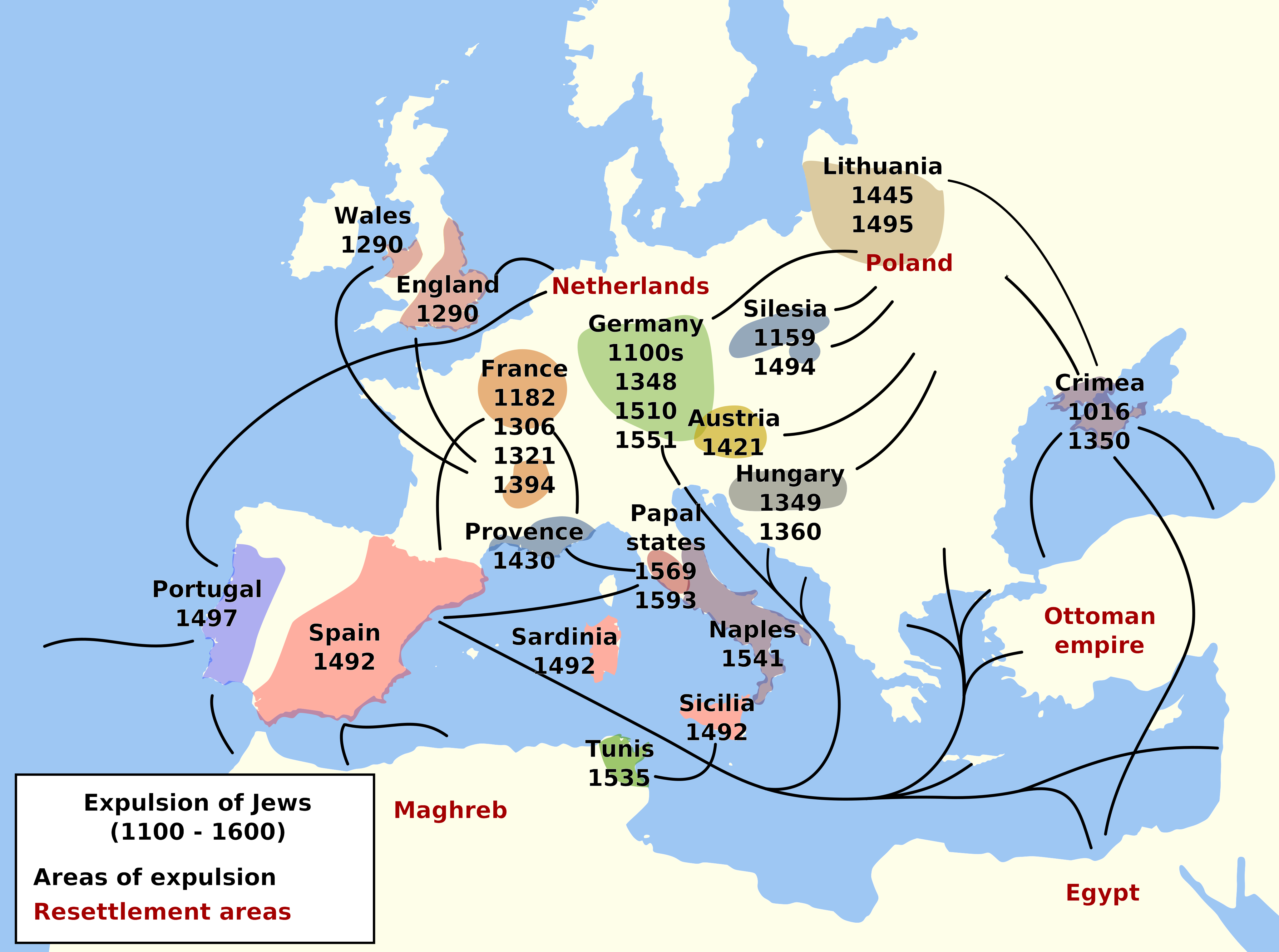
How to read this map
- Shaded territories: the kingdoms and cities that expelled their Jewish communities, each marked with the year.
- AaNames in red: the resettlement areas, where the expelled rebuilt: Poland, the Ottoman Empire, North Africa.
- →Arrows: the routes of flight, tracing where the displaced communities went.
The national expulsions, in sequence: England (1290) → France (1306, and definitively 1394) → Spain (1492) → Portugal (by forced conversion, 1497): with a long sequence of German and Italian city expulsions running alongside them.
The pattern to notice: across four centuries one kingdom after another expelled its Jews, and the displaced moved east into Poland–Lithuania and south and east into the Ottoman Empire and North Africa, the demographic shift the next map traces in detail.
England · 1290
The first national expulsion.
England was the first European kingdom to expel its entire Jewish population by royal decree. The community had been brought to England after the Norman Conquest of 1066 and was small, perhaps two to three thousand people by the late thirteenth century, but heavily taxed and administered through a dedicated royal office, the Exchequer of the Jews. Across the thirteenth century the crown drained the community through repeated tallages until its taxable wealth was largely exhausted.
The legal groundwork came first. The Statute of the Jewry of 1275, issued under Edward I, banned Jewish lending at interest, the community's principal livelihood, and tried to redirect Jews into trade and craft from which guild rules largely excluded them. In 1278 came mass arrests on charges of coin-clipping, followed by executions. With the community no longer a reliable source of revenue, and with Edward seeking a tax grant from Parliament, the Edict of Expulsion of July 18, 1290 ordered every Jew out of England by November 1. Their houses and the debts owed to them passed to the crown. No openly practicing Jewish community would live legally in England again until the 1650s. England provides perhaps the clearest illustration of the recurring process traced throughout this Topic: a community invited and protected, heavily taxed, restricted by law, deprived of its principal livelihood, and finally expelled through the ordinary machinery of government.
Object Spotlight
England, 1290: what one royal order shows about state policy.
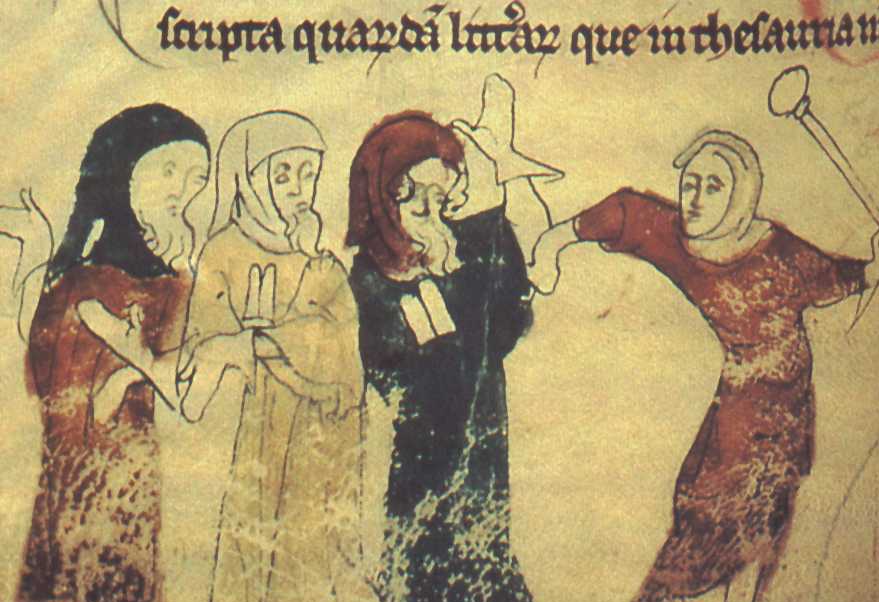
Collection of the British Library, London (Cotton MS Nero D. II). Public domain, via Wikimedia Commons.
Look first. A line of figures, bundled and moving, each marked on the chest with a badge, the sign English law required Jews to wear. They are leaving. The image is not the decree itself: Edward I’s 1290 edict of expulsion survives only as an event in the record, its original text lost. What survives instead is this, a marginal drawing in a monastic chronicle, made within living memory of the expulsion it shows.
So what can one royal order show us about expulsion as state policy? England in 1290 is the clearest case, because it was the first: no European kingdom had expelled an entire religious community by a single royal command before. The order needed no riot to carry it out. It needed a deadline, every Jew gone by November 1, a chancery to issue the writs, sheriffs to enforce them, and an Exchequer to absorb the houses and debts the community left behind. The badge in the picture is part of the same machinery: the state had already marked the population it would later remove. Expulsion, in other words, was administration, something a government could decide, document, and execute.
That is why this image sits at the center of the Topic. It turns the abstraction “expulsion” back into what it was: a royal order, carried out through the ordinary instruments of the state, that ended a community’s life in a kingdom with a date on a calendar.
France · 1306 and 1394
Expel, recall, expel again.
France shows the same underlying dynamic run repeatedly, because the French crown discovered that a community could be expelled for its assets and then readmitted for its tax revenue, and the cycle could turn more than once. Philip II Augustus expelled the Jews of the royal domain in 1182 and readmitted them in 1198. The pattern then hardened under his successors.
In July 1306, Philip IV ("the Fair"), deeply in debt, had the Jews of France arrested on a single day, their property and outstanding loans seized for the crown, and the community, perhaps a hundred thousand people, expelled. His son Louis X recalled them in 1315, by formal contract, to restore the revenue. They were expelled again, recalled again, and finally, after years of instability, the community was expelled definitively by Charles VI on September 17, 1394. France makes the governing logic especially visible. The crown expelled Jewish communities, recalled them when their economic value became apparent, and expelled them again when political and financial priorities shifted. The repetition itself demonstrates that expulsion functioned as an instrument of government rather than as a single extraordinary act.
The German lands
A thousand small expulsions.
The Holy Roman Empire had no single crown that could expel its Jews in one act, and so the German-speaking lands produced not one national expulsion but a long sequence of local ones, city by city, principality by principality, across more than two centuries. Jews here held the imperial status of Kammerknechtschaft, chamber-serfdom, which made them the emperor's taxable property but left day-to-day power with hundreds of local rulers and town councils.
The local expulsions clustered around moments of crisis and opportunity: the massacres and banishments that followed the Black Death of 1348–1350, when Jews were accused of poisoning wells (treated in the Blood Libel Topic); the Vienna Gesera of 1420–1421; and a wave of late-medieval urban expulsions, Cologne in 1424, Augsburg in 1440, Nuremberg and Ulm in the 1490s, Regensburg in 1519. Each expulsion was local, but together they produced one of the most significant demographic shifts in Jewish history. Rather than a single royal decree, hundreds of municipal decisions gradually redirected the center of Ashkenazi Jewish life eastward into Poland-Lithuania, where rulers offered new charters of protection.
Spain · 1492
The largest expulsion, and the Inquisition behind it.
The expulsion from Spain is the most consequential of all, and it followed a different logic from the English and French cases. The Iberian Jewish community (the largest and oldest in Western Europe, with roots reaching back to Roman and Visigothic times and a long flowering under both Muslim and Christian rule) was not expelled mainly to clear a crown's debts. It was expelled to resolve a problem the Spanish monarchy had created itself: the problem of the conversos.
Across the fourteenth and fifteenth centuries, waves of violence and pressure, above all the massacres of 1391, had driven large numbers of Spanish Jews to convert to Christianity. These converts and their descendants, the conversos or "New Christians," were legally Christian, yet many were suspected of secretly continuing Jewish practice. In 1478 Ferdinand and Isabella secured a papal bull establishing the Spanish Inquisition, whose specific charge was to detect judaizing among the conversos. The Inquisition's leadership argued that conversos could not be kept Christian so long as a practicing Jewish community lived among them as an example and a temptation. On March 31, 1492, weeks after the fall of Granada completed the Christian reconquest of the peninsula, the monarchs issued the Alhambra Decree, ordering every Jew to accept baptism or leave Spanish territory by the end of July.
Historians continue to debate how many Jews chose exile and how many accepted baptism, but the larger historical significance is not in dispute. The Alhambra Decree brought more than a thousand years of openly practiced Jewish life in Spain to an end and dispersed one of Europe's oldest Jewish communities across the Mediterranean world.
Portugal · 1497
Forced conversion instead of exile.
Portugal shows that expulsion was not the only tool, and not always the one a ruler preferred. Many Jews expelled from Spain in 1492 crossed into neighboring Portugal, paying for entry, and the Portuguese Jewish community swelled. In 1496 King Manuel I ordered their expulsion, a condition of his marriage alliance with the Spanish crown. But Manuel did not actually want to lose a population so valuable to his kingdom. So in 1497, rather than let them leave, he had them forcibly converted: Jewish children were seized for baptism, ports of departure were closed, and the adult community was driven into mass forced conversion.
The result was a kingdom with almost no professing Jews but a very large population of forced converts, the Portuguese "New Christians", many of whom continued Jewish practice in secret across the following generations. That hidden population would later supply one of the most important strands of the Sephardic diaspora: the Western Sephardim who emerged into open Jewish life in Amsterdam, Hamburg, London, and the Americas once it became safe to do so. Portugal demonstrates that forced conversion and expulsion were alternative methods of pursuing the same political objective: eliminating openly Jewish communities while retaining, when useful, the population itself. The result was not disappearance but concealment, followed generations later by the remarkable re-emergence of Sephardic communities across Western Europe and the Atlantic world.
The Italian lands
Expulsion in the south, enclosure in the center.
Italy was not one state, and it did not follow one policy. In the south (Sicily, Sardinia, and the Kingdom of Naples) Jews fell under the rule of the same Spanish crown that had expelled them from Iberia, and the 1492 edict was extended there: Sicily and Sardinia in 1492–1493, the mainland Kingdom of Naples in stages culminating in 1510 and 1541. The old and substantial Jewish communities of southern Italy were effectively ended.
The center and north took a different path. Rather than expel its Jews, the Papal States and several northern cities increasingly enclosed them. Pope Paul IV's bull Cum Nimis Absurdum of 1555 confined the Jews of Rome to a walled, locked quarter, the institution this Unit treats in the Ghetto System Topic. Italy illustrates that Christian governments pursued different legal solutions to the same question. Some expelled their Jewish communities entirely. Others confined them within walled ghettos. Together these approaches demonstrate that exclusion could take different legal forms while pursuing many of the same religious, political, and social objectives.
Conversion or exile
The choice the edicts forced.
The Iberian expulsions, unlike the earlier English and French ones, were framed as a choice: convert and stay, or remain Jewish and leave. That framing is essential to understanding what the expulsions did and did not do. Because conversion remained an exit, the edicts of 1492 and 1497 did not aim at the destruction of a people; they aimed at the disappearance of a religion from a territory. A Jew who accepted baptism ceased, in the eyes of the law, to be the problem the edict addressed.
Keeping this distinction clear is essential. Medieval and early-modern expulsions targeted the public practice of Judaism within a kingdom. Conversion, however coercive, remained a legal exit because Jewish identity was still understood primarily in religious terms. Nineteenth-century racial antisemitism rejected that possibility by redefining Jewish identity as hereditary rather than religious. That transformation marks one of the most important shifts between the medieval and modern worlds and helps explain why the Holocaust belongs to a different historical category.
A new Jewish geography
How the expulsions remade the map.
The cumulative effect of two centuries of expulsions was to move the Jewish world. By 1500, the great medieval communities of England, France, Spain, Portugal, and much of the German west were gone or submerged, and Jewish life had relocated to the places that would take it in. The Sephardic Jews expelled from Iberia carried a distinct culture (their Judeo-Spanish language (Ladino), their liturgy, their rabbinic tradition) into a new map:
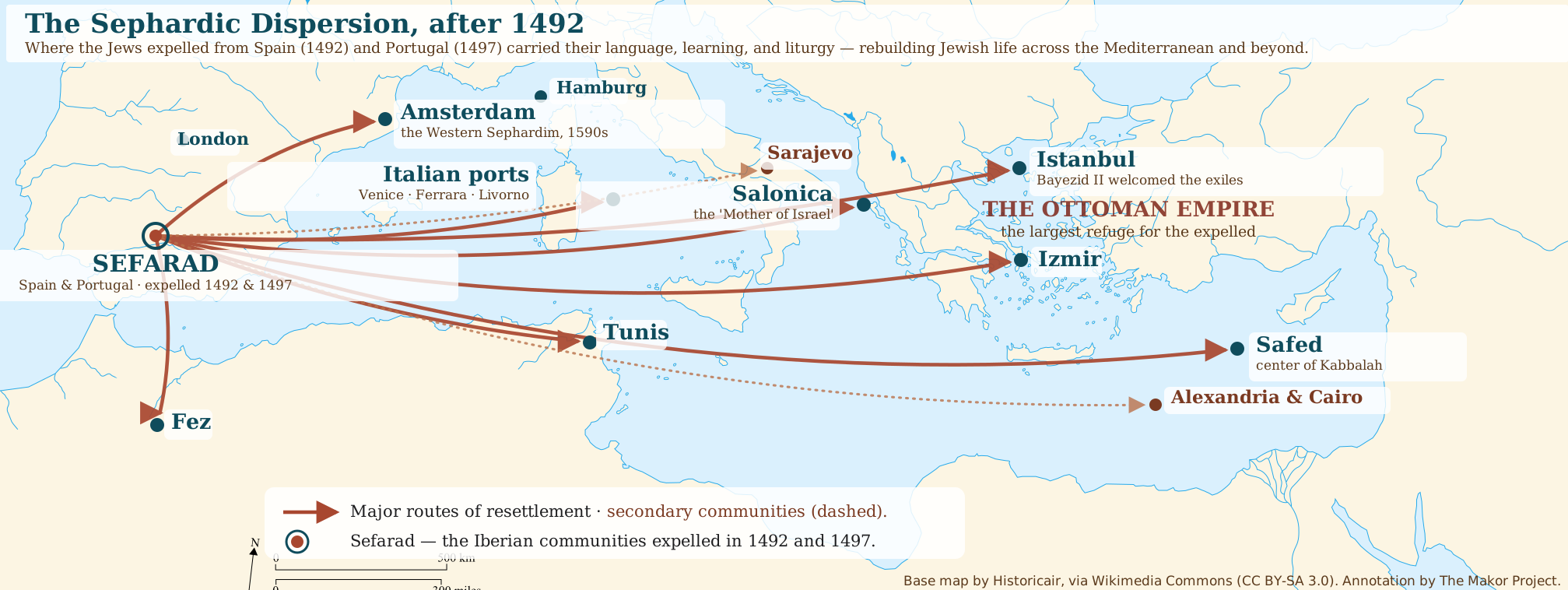
- The Ottoman Empire. Sultan Bayezid II welcomed the exiles, and the Ottoman lands became the largest center of post-expulsion Sephardic life. Salonica (Thessaloniki) became a majority-Jewish city, sometimes called the "Mother of Israel"; Istanbul, Izmir, and other ports developed major communities; and the Galilean town of Safed, in Ottoman Palestine, became a center of Jewish legal and mystical scholarship, the home of Joseph Caro's Shulchan Aruch and of the Kabbalah associated with Isaac Luria.
- North Africa. Fez, Tlemcen, Tunis, and other cities received Sephardic refugees who joined long-established Jewish communities, reshaping them and sometimes straining them.
- Italy. Ferrara, Venice, Ancona, and later the free port of Livorno drew Sephardic settlers and became points of exchange between the Mediterranean and the wider Jewish world.
- Amsterdam and the Atlantic. From the late sixteenth century, descendants of the Portuguese forced converts re-emerged into open Jewish life in Amsterdam, then Hamburg, London, and the Americas, the Western Sephardim, whose Atlantic networks would shape early-modern Jewish commerce and thought.
This relocation is the lasting consequence this Topic is designed to explain. The expulsions did not end Jewish history. They redirected it. Communities disappeared from some kingdoms while flourishing in others, carrying with them languages, scholarship, religious traditions, commercial networks, and legal culture. The map of Jewish life for the next four centuries was shaped, in large measure, by the expulsions traced here. Many of the communities introduced in Unit 2, from Salonica and Istanbul to Fez, Livorno, and Amsterdam, owe their early-modern character to this remarkable movement of people.
Following the evidence
What the documents and objects tell historians.
This page opens on a government document, and the Object Spotlight above turns one royal order into a picture of expulsion as administration. The rest of the record lets historians reconstruct the whole arc, the maps show where the expulsions happened and where the expelled went; the documents and objects below carry the policy and the rebuilding that followed. Each piece answers a historian’s question.
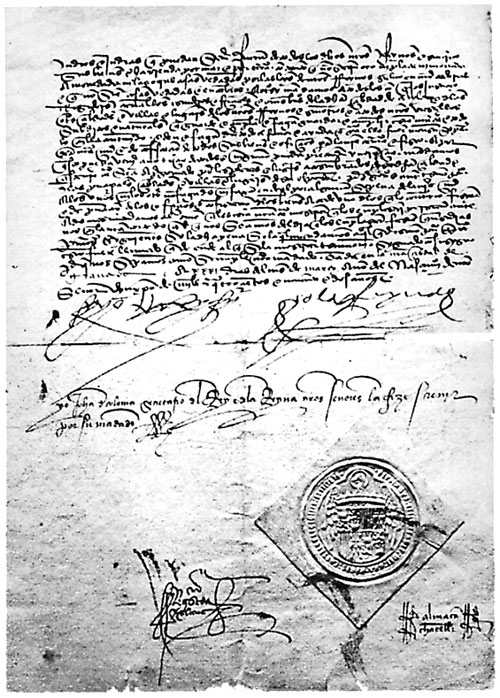
Surviving copies of the 1492 edict are held in the Spanish royal archives. Public domain, via Wikimedia Commons.
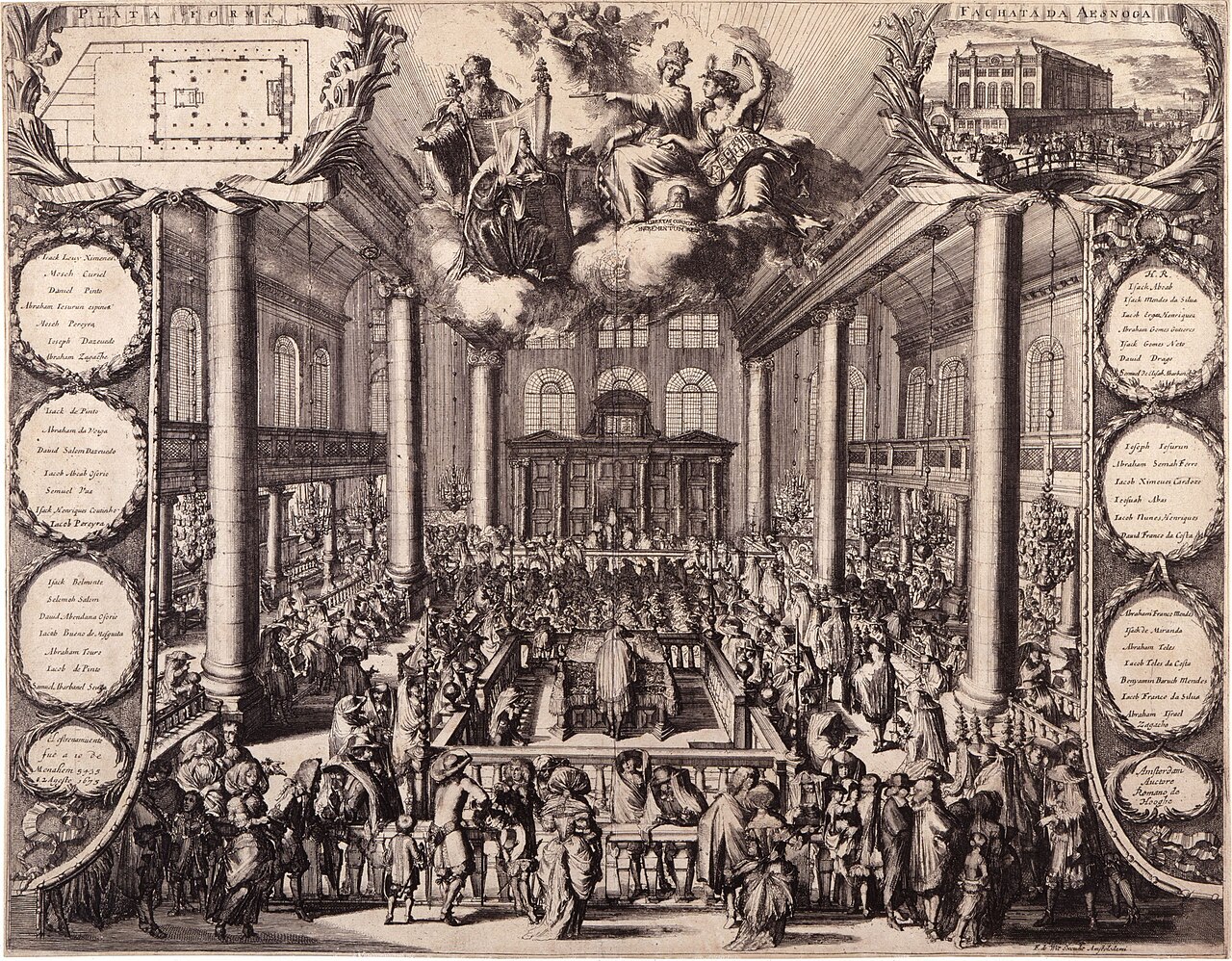
Collection of the Jewish Historical Museum (Joods Historisch Museum), Amsterdam (inv. 05419). Public domain, via Wikimedia Commons.
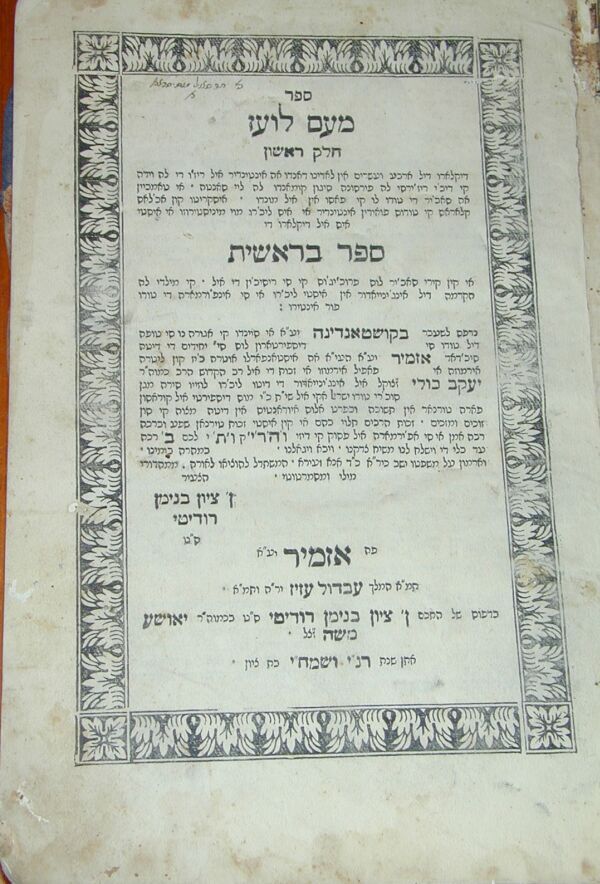
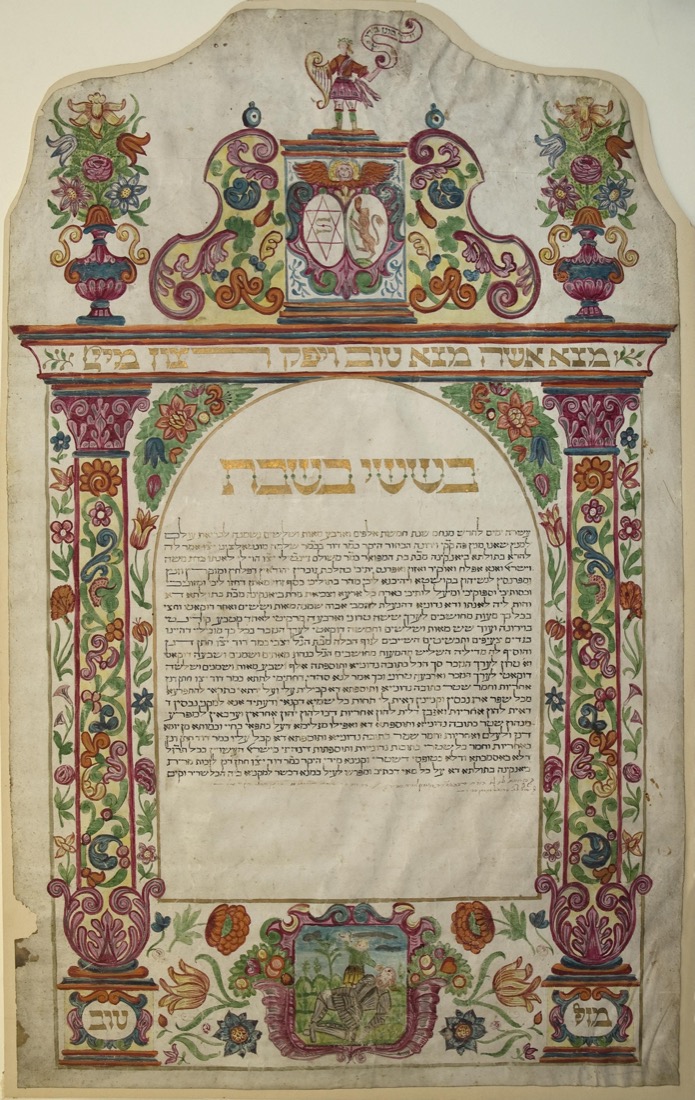
Collection of the Jewish Museum, London (JM 467). Public domain, via Wikimedia Commons.
Taken together, these sources illustrate one of the central principles of historical research. No single document or object explains the past by itself. Royal decrees reveal government policy. Maps reveal demographic change. Synagogues, books, marriage contracts, and community records reveal the lives people rebuilt after expulsion. Historical understanding emerges only when these different forms of evidence are read together.
Key takeaways
- Between 1290 and 1492, Western European rulers expelled their Jewish communities in a recurring pattern: invite and settle, tax and exploit, restrict by law, and then expel and confiscate.
- Expulsion was frequently a financial transaction, the crown seized the community's property and absorbed the debts Christians owed it, which gave debtors a direct interest in banishment.
- England (1290) was the first national expulsion; France expelled, recalled, and re-expelled across the fourteenth century, exposing the fiscal logic; the German lands produced a long sequence of local expulsions that pushed Ashkenazi life eastward into Poland-Lithuania.
- Spain's expulsion of 1492 was driven by the Inquisition and the converso question; Portugal in 1497 chose mass forced conversion over expulsion, producing a hidden population that re-emerged later as the Western Sephardim.
- Because the edicts offered conversion as an exit, they targeted a religion in a territory, not a people by blood, the distinction that separates them from the later racial antisemitism that closed that exit.
- The expulsions permanently reshaped the geography of Jewish life, relocating major centers of Jewish civilization to the Ottoman Empire, North Africa, Italy, and eventually the Atlantic world, where new communities preserved and developed the traditions carried from medieval Europe.
Discussion questions
Working from the evidence.
These questions ask students to work from the evidence on this page and reach their own conclusions. There are no single right answers; each is anchored in a specific source or distinction the Topic documents.
- The Topic argues that expulsion was a recurring mechanism rather than a series of separate outbursts. Using two cases from the page, what evidence supports treating the expulsions as a pattern? What would count as evidence against it?
- When a community was expelled, the debts Christians owed it often passed to the crown or went uncollected. How might that single fact help explain why expulsions were frequently popular? Whose interests did banishment serve?
- France expelled its Jews, recalled them, and expelled them again. What does the recall tell you that the expulsion alone would not? Why does the repetition matter for understanding the rulers' motives?
- Spain expelled its Jews while Portugal forcibly converted them. Compare the two outcomes a century later. What does the difference suggest about the relationship between a policy and its long-term historical effect?
- The page insists that the expulsions, however brutal, were not the same as later racial antisemitism, because conversion remained an exit. Why is the distinction worth keeping precise? What is gained, and what might be lost, by drawing it?
Classroom Connections
Where this Topic fits.
Teaching Connections
The disciplines and courses this Topic naturally supports, for any educator, anywhere.
- Medieval European History: the legal status of Jews as royal property, and expulsion as an instrument of medieval statecraft and finance.
- Early-Modern History: the Spanish Inquisition, the converso question, and the 1492 and 1497 Iberian edicts.
- Economic History: royal finance, credit and debt, confiscation, and the fiscal logic of expulsion.
- Geography & Migration: how the expulsions redrew the map of the Jewish diaspora across the Mediterranean and Atlantic worlds.
- Historical Thinking & Source Analysis: reading an expulsion edict as evidence of both religious justification and financial motive; and keeping religious expulsion distinct from later racial antisemitism.
- Connects to The Ghetto System: enclosure as the alternative to expulsion, and the Sephardic communities the dispersion created.
Standards Alignment
- NYS Global History & Geography: 9.7 (the medieval and early-modern world: the legal status of Jewish communities, the Iberian expulsions, and the resulting migration).
- Common Core ELA-Literacy: RH.11–12.6 and RH.11–12.9 (source perspective, and integrating evidence to distinguish stated religious justification from documented financial motive).
Further Teaching Resources
- Jewish Virtual Library · The Expulsion from Spain, the Alhambra Decree and its context, with primary-text excerpts.
- USHMM Holocaust Encyclopedia · Antisemitism, situates the medieval expulsions within the longer history.
Sources and citations
Primary sources come straight from the time: documents, letters, speeches, images, and objects created by the people involved. Secondary sources come later: books, articles, and analysis in which scholars study and interpret those primary sources.
Primary sources
- Statute of the Jewry. England, 1275. Edict of Expulsion. England, July 18, 1290.
- Expulsion of the Jews from France, decreed by Philip IV. 1306.
- Edict of Expulsion of the Jews from France, decreed by Charles VI. September 17, 1394 (the final French expulsion).
- Edict of Expulsion of the Jews (the Alhambra Decree). Granada, March 31, 1492. English translation in Edward Peters, "Jewish History and Gentile Memory: The Expulsion of 1492," Jewish History 9, no. 1 (1995).
- Decree of Expulsion of the Jews from Portugal, decreed by Manuel I. December 1496, followed by forced conversion in 1497.
Secondary sources
- Chazan, Robert. The Jews of Medieval Western Christendom, 1000–1500. Cambridge: Cambridge University Press, 2006.
- Chazan, Robert. Medieval Jewry in Northern France: A Political and Social History. Baltimore: Johns Hopkins University Press, 1973.
- Mundill, Robin R. England's Jewish Solution: Experiment and Expulsion, 1262–1290. Cambridge: Cambridge University Press, 1998.
- Mundill, Robin R. The King's Jews: Money, Massacre and Exodus in Medieval England. London: Continuum, 2010.
- Baron, Salo W. A Social and Religious History of the Jews. 2nd ed. 18 vols. New York: Columbia University Press, 1952–1983.
- Kamen, Henry. The Spanish Inquisition: A Historical Revision. 4th ed. New Haven: Yale University Press, 2014.
- Pérez, Joseph. History of a Tragedy: The Expulsion of the Jews from Spain. Translated by Lysa Hochroth. Urbana: University of Illinois Press, 2007.
- Roth, Norman. Conversos, Inquisition, and the Expulsion of the Jews from Spain. Madison: University of Wisconsin Press, 1995.
- Tartakoff, Paola. Between Christian and Jew: Conversion and Inquisition in the Crown of Aragon, 1250–1391. Philadelphia: University of Pennsylvania Press, 2012.
- Ray, Jonathan. After Expulsion: 1492 and the Making of Sephardic Jewry. New York: New York University Press, 2013.
- Gampel, Benjamin R. The Last Jews on Iberian Soil: Navarrese Jewry, 1479–1498. Berkeley: University of California Press, 1989.
- Yerushalmi, Yosef Hayim. From Spanish Court to Italian Ghetto. New York: Columbia University Press, 1971.
- Benbassa, Esther, and Aron Rodrigue. Sephardi Jewry: A History of the Judeo-Spanish Community, 14th–20th Centuries. Berkeley: University of California Press, 2000.
- Roth, Cecil. A History of the Marranos. Philadelphia: Jewish Publication Society, 1932.
- Soyer, François. The Persecution of the Jews and Muslims of Portugal: King Manuel I and the End of Religious Tolerance (1496–7). Leiden: Brill, 2007.
- Museum of Jewish Heritage, New York. Recorded panel discussion, "The History of Antisemitism: The Alhambra Decree." mjhnyc.org →
Finding these documents: many primary sources are free online. Good places to start are the Fordham Internet Jewish History Sourcebook, Yale’s Avalon Project (law and diplomacy), German History in Documents, the collections of the US Holocaust Memorial Museum and Yad Vashem, the National Library of Israel, and Sefaria (for Jewish texts). Search the document’s name and date.
The late-nineteenth-century shift that recast anti-Jewish hatred from a religious charge into a biological one, its figures, its texts, and the framework it left for the twentieth century.
Comments?
Write to editor@makorproject.org.
Last updated: August 2026. Makor is the Hebrew word for source.