When the Babylonians destroyed Jerusalem in 586 BCE and marched the Jews into exile, they created what would become the longest-lasting Jewish community outside the Land of Israel, in the place we now call Iraq. It lasted more than 2,500 years. In the 1940s it was still there: roughly 135,000 people, a quarter of Baghdad. Within about a decade, almost all of them were gone.
Why this Topic exists
The community the textbook never mentions, and never says goodbye to.
Most school histories of the Jewish people move from ancient Israel straight to Europe: to the ghettos, to Eastern Europe, to the Holocaust. The Jews of Iraq fall through that gap entirely. And yet this was not a minor community. For long stretches of history it was the center of the Jewish world. It was the place where the most important book in Judaism after the Bible was assembled, and the place distant communities wrote to for answers. It was home to a continuous Jewish presence that outlasted the Babylonians, the Persians, the Greeks, the Romans, the Arab caliphs, the Mongols, and the Ottomans.
Then, in the middle of the twentieth century, it ended, not slowly, but in a few short years. A community that had lived along the Tigris and Euphrates since before the founding of Rome was almost entirely uprooted within a single generation. This Topic tells both halves: the long, deep life of the community, and the sudden way it closed. You can't understand the second half without the first. A people who had been somewhere for 2,500 years did not simply "leave."
How to read this Topic
Three points to set straight first.
Common misconceptions this Topic addresses
A few assumptions get in the way of seeing this community clearly. Naming them up front helps.
- "Jews in the Middle East were a small, recent, or marginal presence." See the entry →
- "Jewish history happened in Europe; the Middle East is where Jews came from long ago." The Iraqi community was continuous and central for over 2,500 years, far longer than the Jewish presence in most of Europe.
- "The Jews of Arab lands simply emigrated to Israel by choice." The reality involved violence, mass dispossession, and the stripping of citizenship, a forced ending, not a simple move.
The oldest exile
It began with the first exile, in 586 BCE.
The story starts with a catastrophe. In 586 BCE the Babylonian Empire, centered in what is now Iraq, conquered the Kingdom of Judah, destroyed the First Temple in Jerusalem, and deported much of the population to Babylonia. This is the event the Bible mourns; it is where the word "exile" enters Jewish history.
But here is the turn that makes Iraq's story remarkable. When the Persians conquered Babylon about fifty years later and allowed the exiles to return to Jerusalem, many chose to stay. They had built lives, businesses, and communities along the rivers. The community that began as a forced exile became a permanent home, and it never left. For the next 2,500 years, through empire after empire, there were Jews in the land between the Tigris and the Euphrates. By the time the Second Temple was destroyed in 70 CE, Babylonia was already a thriving alternative center of Jewish life, ready to carry the tradition forward.
Where the Talmud was made
The book that shaped world Judaism was written here.
For roughly the first thousand years CE, Babylonia was the intellectual capital of the Jewish world. In two towns, Sura and Pumbedita, sat the great academies, the most important centers of Jewish learning anywhere. Their scholars produced the single most influential Jewish work after the Bible itself: the Babylonian Talmud.
The Talmud is a vast compilation of law, interpretation, and debate, compiled across centuries and completed in these academies around 500 CE. To grasp its importance: for the next 1,500 years, in every Jewish community on earth: Spain, Germany, Yemen, India, anywhere, when people studied Jewish law, the foundation they studied was the book made in Iraq. A single community produced the text that bound the entire scattered Jewish world together.
The academies' reach went further. From about 600 to 1040 CE, the heads of these academies were known as the Geonim. Jewish communities across the diaspora sent legal and religious questions to the academies of Babylonia. The responses of the Geonim shaped Jewish practice for centuries. (This network of letters is the subject of the Diaspora Topic in Unit 1.) For four centuries, the Jewish world's center of authority sat in the towns of Babylonia.
A thousand years of depth
Through every empire, the community held.
Empires rose and fell across Iraq, and the Jewish community persisted through all of them. When Baghdad was founded in 762 CE and became the dazzling capital of the Islamic world under the Abbasid caliphs, its Jewish community flourished alongside it: in trade, in scholarship, in medicine, in finance. Jewish merchants were part of networks that reached from the Mediterranean to India and China.
The community had its own internal leader, recognized by the Muslim rulers: the Exilarch (in Hebrew, Resh Galuta, "head of the exile"), traditionally said to descend from the royal line of King David. For centuries the Exilarch governed the Jews of the region as a kind of prince, collecting taxes and appointing judges. Like every Jewish community under Islamic rule, the Jews of Iraq lived as dhimmis, a protected but second-class status, with special taxes and restrictions, and periods that were better and worse. (That framework is explained in the Diaspora Topic.) But across the long run, Iraq was one of the great centers of Jewish life, generation after generation, for well over a thousand years.
The modern community
By the twentieth century, a quarter of Baghdad.
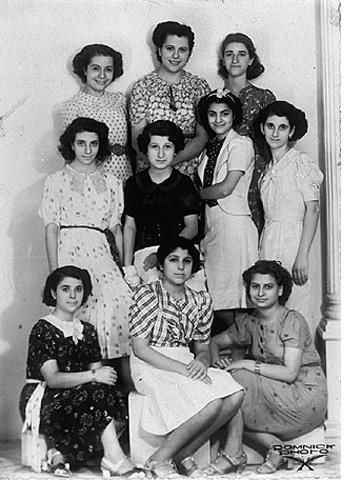
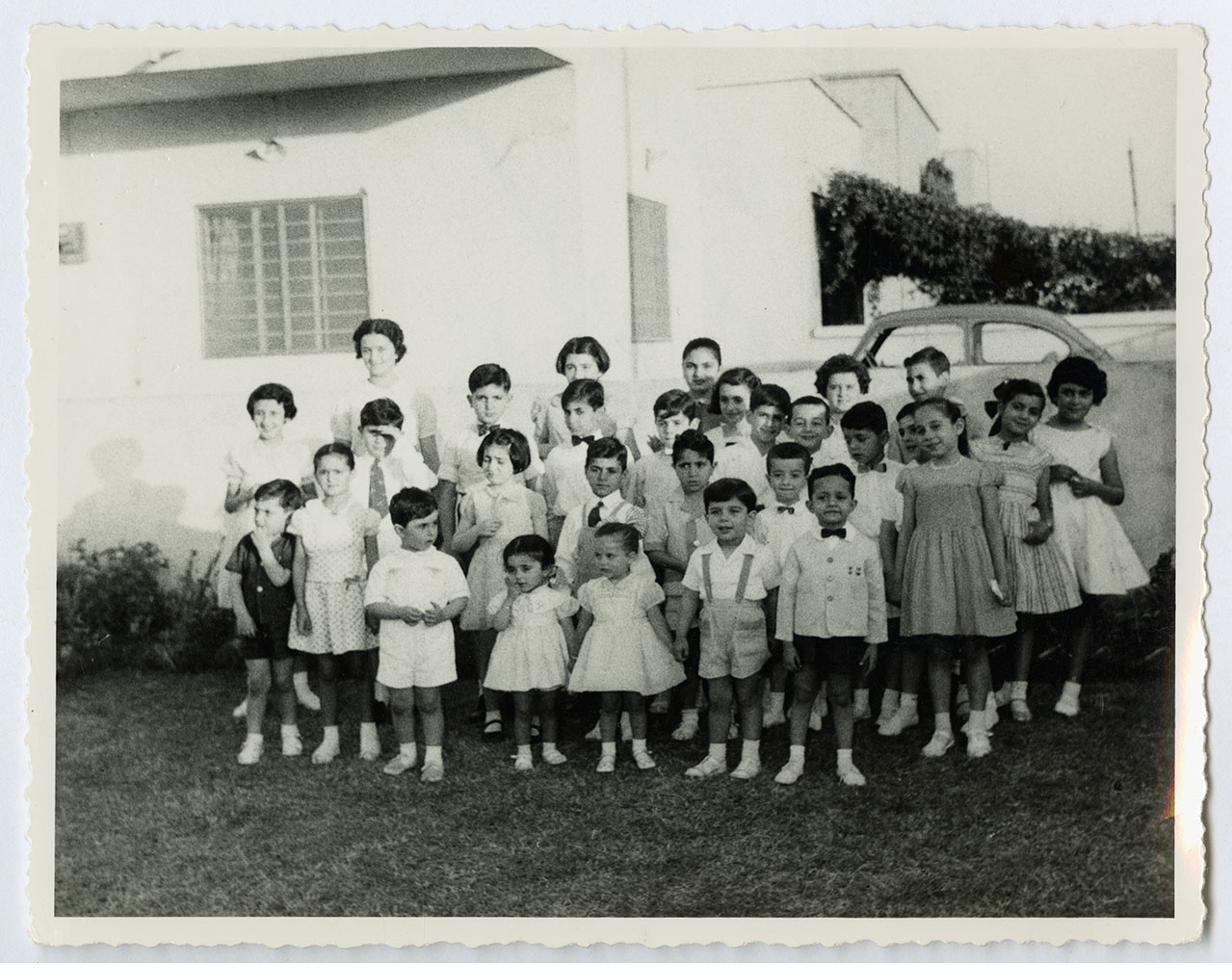
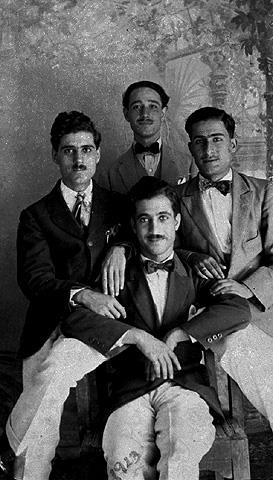
Step into the early twentieth century and you find a community that is anything but a relic. The Jews of Baghdad were a large, modern, urban population, by some counts about a quarter of the city. They were merchants and bankers, doctors and lawyers, musicians and government officials. When Iraq's first finance minister was appointed in 1920, he was Jewish. Jewish musicians were so central to Iraqi music that the country's broadcasting orchestra was made up mostly of them.
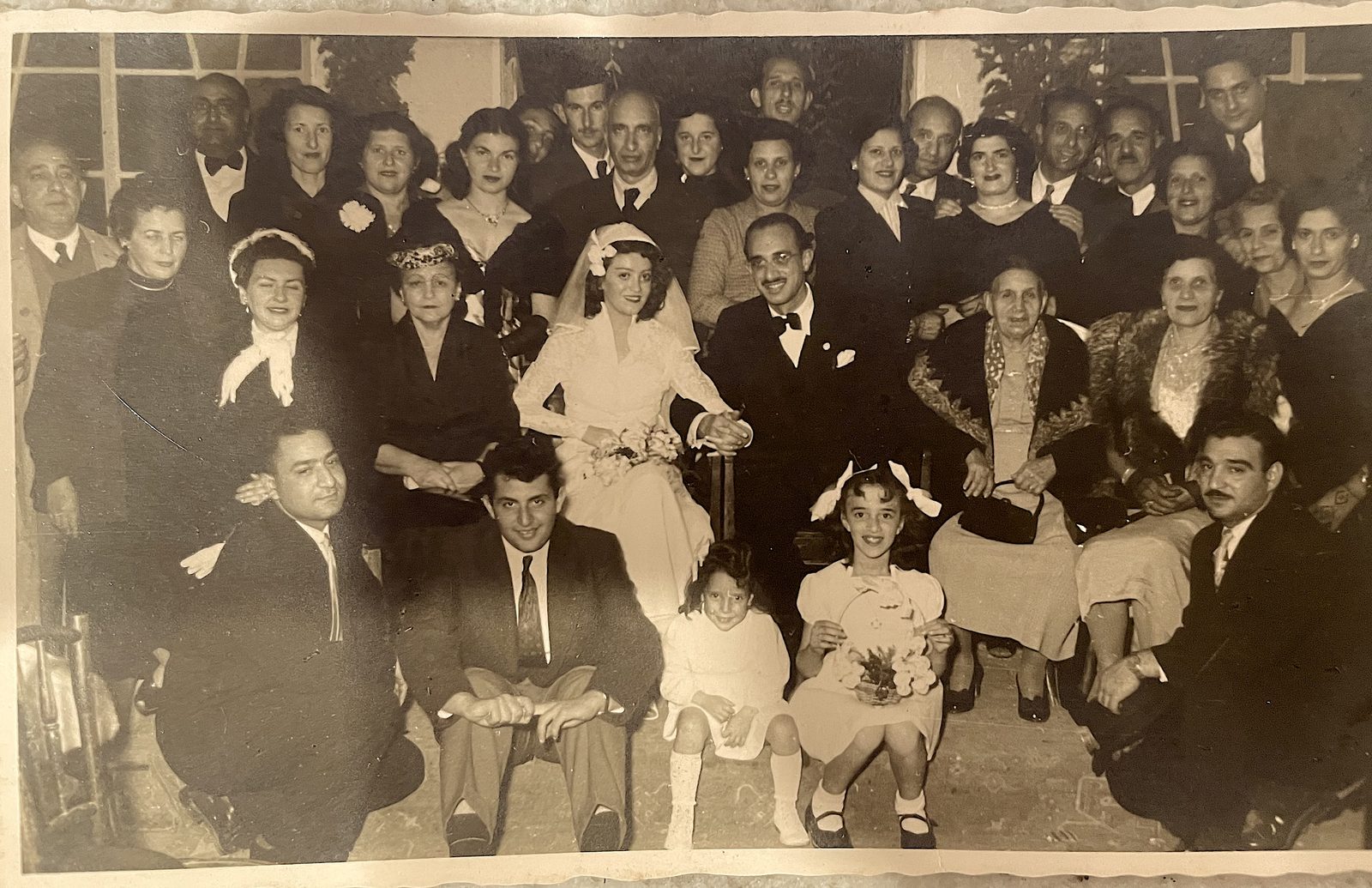
It was a world with its own schools, including the Alliance Israélite Universelle schools, which brought modern education to Jewish children across the Middle East, its own newspapers, hospitals, and synagogues. Families spoke Judeo-Arabic, the local Jewish language. Children went to school, families picnicked along the Tigris, weddings filled halls with three generations. This was not a community waiting to leave. It was at home, and had been for longer than almost anyone else anywhere.
Object Spotlight
A family on the Tigris, October 1957.
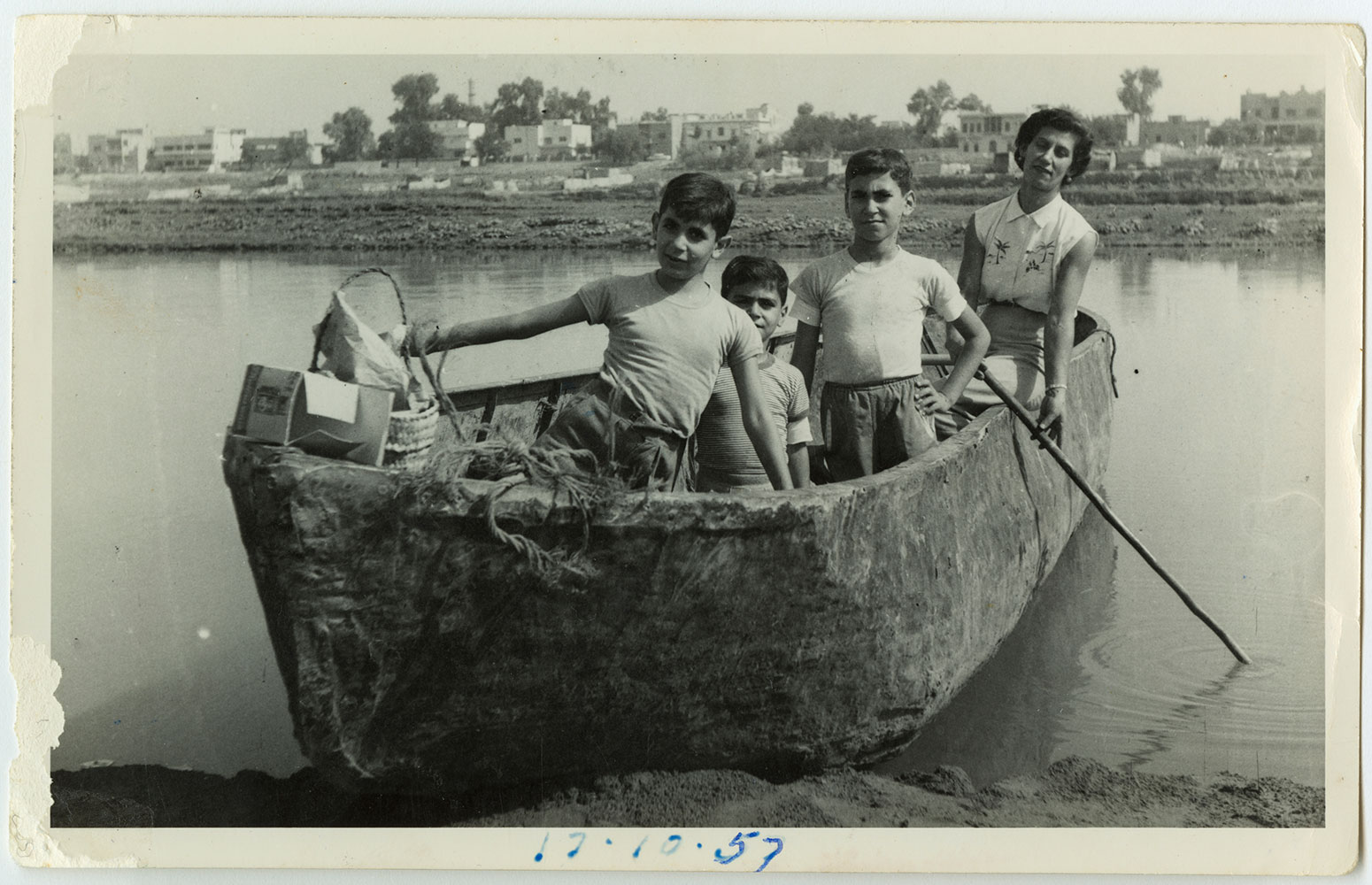
Three boys and a young woman stand in a small boat pulled up on a sandbar, its hull patched and worn. Behind them the Tigris stretches flat and calm, and across the water you can see the low rooflines of Baghdad, ordinary buildings, palm trees, a city going about its day. In the bow sits a picnic basket. Someone has written the date in blue ink along the bottom: 13 · 10 · 57.
What it is. A family snapshot, the kind anyone might take on a good afternoon. There is nothing remarkable in it, and that is exactly why it matters. It was taken by an Iraqi Jewish family, in Baghdad, in October 1957.
When and where. The Tigris, with the Euphrates, is one of the two rivers that define Iraq, and that the Jewish community had lived beside since 586 BCE. October 1957 places this photograph at a particular moment. The great wave of departure had already come and gone in 1950–1951. This family is part of the small remnant who stayed, still living along the river, still here.
Why it matters. Almost everything we learn about the end of a community comes as numbers and disasters, expulsions, pogroms, statistics. The other fact, true at the same time, is that people kept living. They were not waiting in fear every moment; they were home, doing what people at home do. The photograph holds the ordinary life the history books skip straight past, and makes the loss real in a way a statistic cannot. These were not abstractions. They were a family in a boat.
Look closer. Notice how relaxed they are, the boy with his hand on his hip, the woman half-smiling. Notice the city behind them, close and unremarkable, theirs. And notice the date, written by hand. Someone cared enough about this afternoon to mark exactly when it happened. Within a few years, almost no Jews would remain in Baghdad. This was one of the last ordinary afternoons of a 2,500-year-old world.
Afterlife. This photograph survived because it was kept, carried out of Iraq by a family who left and later shared it through the Iraqi Jewish Archive, the recovered records of a vanished community. Most of what that community photographed, wrote, and built did not survive. That we can look at this exact afternoon, in this exact boat, on this exact date, is itself a small rescue from the near-total loss of a world.
The Farhud, 1941
A warning, in the middle of the war.
The end did not come all at once, but there was a moment that marked the beginning of it. On June 1–2, 1941, during the Jewish holiday of Shavuot, a mob attacked the Jewish community of Baghdad. It is known as the Farhud, an Iraqi-Arabic word meaning roughly "violent dispossession." Over two days, rioters killed around 180 Jews, injured hundreds more, and looted and destroyed hundreds of Jewish homes and businesses. It was the deadliest single attack in the 2,500-year history of the community.
To understand how it happened, you have to look at two stories at once: what was happening in Iraqi politics, and what was coming over the radio. Two months earlier, in April 1941, a group of Iraqi officers led by the politician Rashid Ali al-Gaylani seized power in a coup and sought military backing from Nazi Germany. Britain sent in forces and, by the end of May, the pro-German government had collapsed and its leaders had fled. The Farhud broke out in the short, lawless gap between that government falling and British-backed authority returning, and British troops, positioned just outside the city, did not move in to stop it.
But the ground had been prepared. Since 1939, Nazi Germany had been broadcasting Arabic-language propaganda into Iraq over its Berlin radio service, carrying antisemitic messaging into a country where the German legation in Baghdad had been cultivating it for years. The attackers themselves were Iraqi, soldiers from the disbanded coup army, members of a pro-Nazi youth movement called the Futuwwa, and others who joined as the violence spread. No German forces were in Baghdad. The Nazi role was not the hand that struck; it was the atmosphere that had been built, deliberately, over years. Historians weigh these causes differently: some emphasize the imported Nazi influence, others the local political collapse, and both belong in the picture. (This history is treated in full, including the role of the Mufti of Jerusalem in Berlin, in the Unit 3 Topic The Holocaust in the Middle East and North Africa.)
For a community that had felt secure for generations, the Farhud was a shock that did not fade. Many historians mark it as the turning point, the moment when the long confidence of Iraqi Jewry began to crack, and the question of whether there was a future in Iraq became real for the first time.
The end, 1948–1952
Gone in a single generation.
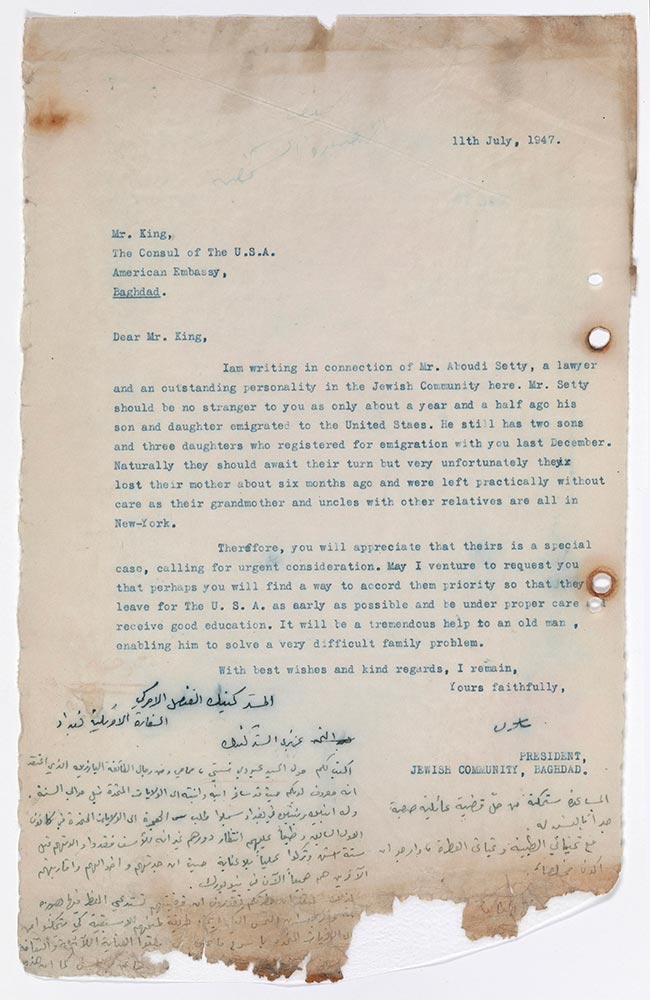
After the State of Israel was founded in 1948, the position of Jews across the Arab world grew rapidly worse, and Iraq was among the harshest cases. Zionism was made a crime; Jews were dismissed from government jobs, barred from many professions, arrested, and in some cases publicly executed. The pressure became unbearable.
In 1950 the Iraqi government passed a law allowing Jews to emigrate, on the condition that they renounce their Iraqi citizenship. The following year, a second law froze the assets of those who registered to leave. In other words: you could go, but you had to give up your nationality, and then your property would be taken. In a vast airlift known as Operation Ezra and Nehemiah (1951–1952), roughly 120,000 to 130,000 Iraqi Jews were flown out, mostly to Israel, leaving nearly everything behind.
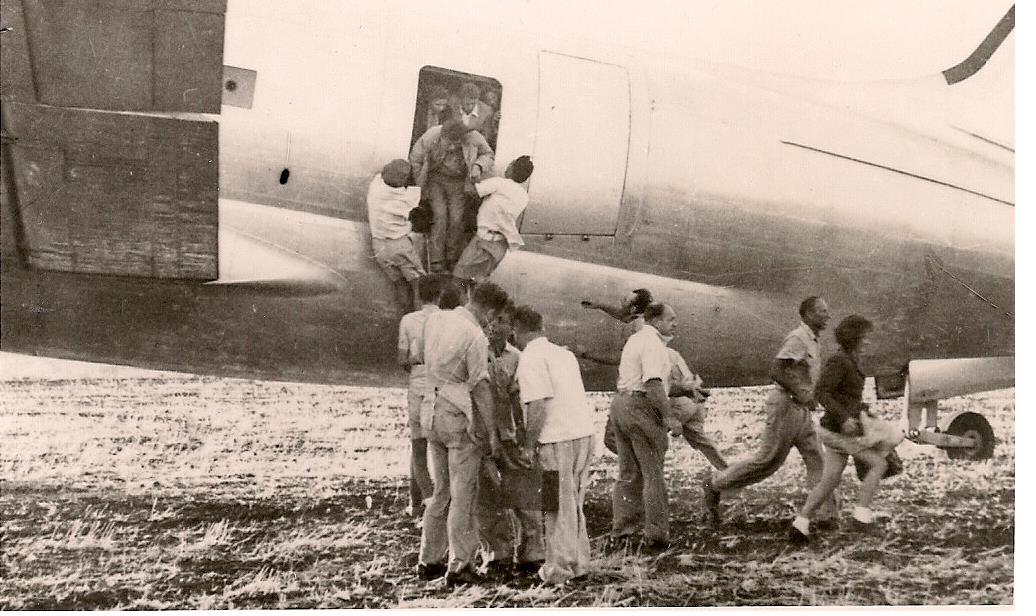
A community of more than 135,000 people shrank to a few thousand, and then to almost none. A presence that had lasted 2,500 years, older than Rome, older than Christianity, older than Islam, was effectively over within about four years. Today only a tiny handful of Jews remain in Iraq. This is the human story behind the broader account in the Departure from MENA Topic.
The Iraqi Jewish Archive
What was left behind, and nearly lost.
There is a strange and powerful coda to this story. In 2003, in the basement of the Iraqi secret-police headquarters in Baghdad, a group of American soldiers found a flooded room. Floating in several feet of water were thousands of Jewish documents and books: community records, school papers, religious texts, personal letters, photographs, that the former regime had seized from the Jewish community over the years and stored away.
These waterlogged, mold-covered materials were the surviving paper trail of a 2,500-year-old community. They were shipped to the United States, where the National Archives undertook a painstaking effort to dry, clean, and preserve them. The recovered collection, known as the Iraqi Jewish Archive, was digitized and exhibited, so that the records of a community that no longer exists in Iraq could be read again. The photograph in the Object Spotlight above is one of the items that survived this way.
The archive is now the subject of an ongoing question about where it belongs and who it belongs to, the Iraqi state from which it was recovered, or the community whose lives it records. However that is resolved, the collection stands as the rescued memory of a vanished world.
Key takeaways
- The Jewish community of Iraq began with the Babylonian exile in 586 BCE and lasted more than 2,500 years, far longer than the Jewish presence in most of Europe.
- For roughly the first thousand years CE, Babylonia was the center of the Jewish world: the academies of Sura and Pumbedita produced the Babylonian Talmud and answered questions sent from communities thousands of miles away.
- By the early twentieth century the Jews of Baghdad were a large, modern, urban community, about a quarter of the city, woven into Iraqi trade, music, medicine, and government.
- The Farhud of 1941, a violent two-day attack on Baghdad's Jews, marked the beginning of the end. After 1948, discrimination and dispossession made life untenable.
- In a vast airlift in 1951–1952, roughly 120,000–130,000 Iraqi Jews left, mostly for Israel, stripped of citizenship and property. A 2,500-year-old community ended within a few years.
Films & video
See the community on screen.
Several documentaries tell the story of the Jews of Iraq through the people who lived it. All appear in the full Films & Video collection.
- Remember Baghdad: a documentary tracing five families across a century of Iraqi-Jewish life. rememberbaghdad.com →
- The Last Jews of Baghdad: first-hand accounts of the community's final decades. UK Jewish Film →
- Forget Baghdad: four men reflect on leaving Iraq and the identities they carried with them. See the Films & Video page for details.
Discussion questions
Working from the evidence.
Each question is anchored in something this Topic documents. Students should answer from the evidence on the page.
- The community began as a forced exile in 586 BCE, yet when the Jews were later allowed to return to Jerusalem, many chose to stay. Why might a community that started in catastrophe become a permanent, even thriving, home?
- The Babylonian Talmud, made in Iraq, became the foundation of Jewish law in every community on earth for 1,500 years. What does it mean for one place to produce something that shapes a whole world that far away?
- The Object Spotlight is an ordinary family photo from 1957, a picnic on the river. Why might an ordinary snapshot tell you something about the end of a community that a list of laws and dates cannot?
- A community that lasted 2,500 years ended in about four. What does the speed of that ending tell you, and what questions does it raise about how secure any long-established community really is?
- The Iraqi Jewish Archive is now contested, should it belong to the Iraqi state it was recovered from, or to the community whose lives it records? Make the strongest case you can for each side.
Classroom Connections
Where this Topic fits.
Teaching Connections
The disciplines and courses this Topic naturally supports, for any educator, anywhere.
- World History: the Classical World: the Babylonian academies and the making of the Talmud; how a religious tradition is transmitted and organized.
- World History, Human Rights: the uprooting of a 2,500-year-old minority and the 1950–51 mass departure as a documented case of population displacement.
- World History, WWII & the Holocaust: the Farhud (Baghdad, June 1941) within the wider wartime assault on Jewish communities.
- Historical Thinking: continuity and rupture: a community that lasted 2,500 years and ended in about four.
- Source Analysis & Archives Education: the Iraqi Jewish Archive (photographs, documents, and personal records).
- Geography: Jewish life across Babylonia and Iraq and the wider Middle East.
Standards Alignment
- NYS Global History & Geography: 9.3 (the classical world), 10.5 (the global conflicts of 1914–1945 (the Farhud), and 10.10 (human rights) the 1950–51 departure).
- Common Core ELA-Literacy: RH.6–8.7, RH.9–10.7, and RH.11–12.7 (integrating multiple sources): the Iraqi Jewish Archive.
Further Teaching Resources
- The Iraqi Jewish Archive, online exhibit on the discovery and recovery of the collection, the documents themselves, with the story of how they were saved.
Learn more · take this further
Verified resources on the Jews of Iraq, for students and teachers. Where a dedicated classroom resource does not yet exist, The Makor Project is developing one.
Sources
Primary sources come straight from the time: documents, letters, speeches, images, and objects created by the people involved. Secondary sources come later: books, articles, and analysis in which scholars study and interpret those primary sources.
Primary sources
- The Babylonian Chronicle recording Nebuchadnezzar II's capture of Jerusalem, 597 BCE. Cuneiform tablet, The British Museum.
- The Jehoiachin ration tablets, Babylon, c. 592 BCE. Cuneiform lists of rations issued to “Jehoiachin, king of Judah” and his sons in exile. Vorderasiatisches Museum, Berlin.
- The Al-Yahudu tablets, 6th–5th centuries BCE. Some 200 cuneiform records of everyday life in “the town of Judah” in Babylonia, the exile community's own documentary trace, published 2014.
- The Babylonian Talmud, compiled in the academies of Sura and Pumbedita in Iraq, c. 500–700 CE. The community's monumental primary text; free digital edition at Sefaria.
- The Epistle of Rav Sherira Gaon, written from the academy of Pumbedita to the community of Kairouan, 987 CE. The Gaon's own account of how the Talmud was composed and of the Babylonian academies.
- The Iraqi Jewish Archive (U.S. National Archives). ijarchive.org →
Secondary sources
- Stillman, Norman A. The Jews of Arab Lands: A History and Source Book. Jewish Publication Society, 1979.
- Bashkin, Orit. New Babylonians: A History of Jews in Modern Iraq. Stanford University Press, 2012.
- Meir-Glitzenstein, Esther. Zionism in an Arab Country: Jews in Iraq in the 1940s. Routledge, 2004.
- Gat, Moshe. The Jewish Exodus from Iraq, 1948–1951. Frank Cass, 1997.
- Rejwan, Nissim. The Jews of Iraq: 3000 Years of History and Culture. Weidenfeld & Nicolson, 1985.
- Simon, Reeva Spector, et al., eds. The Jews of the Middle East and North Africa in Modern Times. Columbia University Press, 2003.
- Black, Edwin. The Farhud: Roots of the Arab-Nazi Alliance in the Holocaust. Dialog Press, 2010.
- The Babylonian Jewry Heritage Center, Or Yehuda. bjhc.org.il →
- Diarna Geo-Museum. diarna.org →
- ANU, Museum of the Jewish People, Tel Aviv. anumuseum.org.il →
Finding these documents: many primary sources are free online. Good places to start are the Fordham Internet Jewish History Sourcebook, Yale’s Avalon Project (law and diplomacy), German History in Documents, the collections of the US Holocaust Memorial Museum and Yad Vashem, the National Library of Israel, and Sefaria (for Jewish texts). Search the document’s name and date.
From the mountains of Morocco to the island of Djerba, Jewish communities lived across North Africa for more than two thousand years, a living world of cities, traditions, and depth that was almost entirely uprooted within a single generation.
Comments?
Write to editor@makorproject.org.
Last updated: August 2026.