Moses Mendelssohn
In 1743, a poor fourteen-year-old student of the Talmud, the central text of Jewish law, walked into Berlin, a city where a Jew entering paid a special head tax of the kind levied on cattle. Forty years later, that boy was one of the most famous philosophers in Europe, the man his contemporaries called the German Socrates, and the question he spent his life on is still open: can you belong fully to your people and fully to the modern world at once?
Moses Mendelssohn, 1729–1786, and the beginning of the modern Jewish condition
Why this Chapter exists
The bridge between the walled Jewish quarter and the modern world.
Between Joseph Karo, the sixteenth-century law codifier of the previous Chapter, and Theodor Herzl, the nineteenth-century political founder two Chapters ahead, stands a doorway, and Mendelssohn is the man in it. He was the first Jew to become a celebrated figure of the European Enlightenment, the eighteenth-century movement that put reason and open debate above inherited authority while remaining an observant Jew, and the movement he led, the Haskalah, the Jewish Enlightenment, opened the questions that every modern Jewish life still negotiates: language, citizenship, education, and how much of the surrounding world to let in.
The emancipation debates he set in motion, whether Jews could and should become equal citizens of European states, ran for a century through every parliament in Europe.
1729–1763
From Dessau to the Berlin Academy.
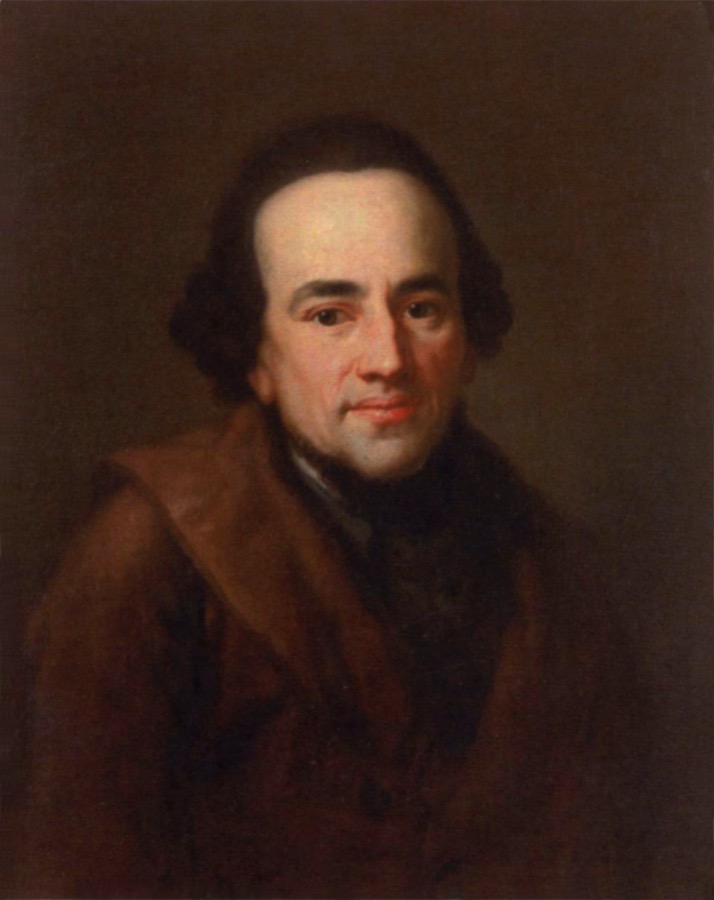
Mendelssohn was born in Dessau in 1729, the son of a Torah scribe, and followed his teacher to Berlin in 1743 at fourteen, poor, frail, and speaking Hebrew and Yiddish, the everyday language of central and eastern European Jews. The capital of Prussia, the German kingdom ruled from Berlin, admitted Jews grudgingly and taxed them at the gates; a famous legend has a gatekeeper logging his entry alongside livestock, and while the Jewish Museum Berlin cautions that the story cannot be documented, the head tax it satirizes was real law. Inside the city, a teenager who had studied only Bible and Talmud, the central texts of Jewish law, he taught himself German, Latin, Greek, French, English, and mathematics while working as a tutor and then a bookkeeper in a silk factory, the trade that fed him all his life. Philosophy was the night shift.
The night shift won Europe. His Phaedon of 1767, on the immortality of the soul, became one of the century’s bestsellers and earned him the nickname the German Socrates. Four years earlier, the Royal Berlin Academy had awarded him first prize in its philosophy essay competition; the runner-up that year was Immanuel Kant, later counted among the greatest philosophers who ever lived. (Stanford Encyclopedia of Philosophy; Jewish Museum Berlin.)
1754–1779
A friendship that became a play.
In 1754 Mendelssohn met the playwright Gotthold Ephraim Lessing, and the two became the century’s emblem of friendship across the Christian-Jewish line. Lessing published Mendelssohn’s first work; Mendelssohn sharpened Lessing’s philosophy. And in 1779 Lessing gave the friendship to the world: his drama Nathan the Wise, whose wise Jewish merchant, modeled on Mendelssohn, answers a trap question about which religion is true with the parable of three indistinguishable rings. The Nazi regime banned the play. When the war ended, Nathan the Wise was the first play staged in Germany, at Berlin’s Deutsches Theater in September 1945.
1778–1783
The Torah in German, and the argument for the open door.
Mendelssohn’s most consequential project looks, at first glance, like a book for children: a translation of the Torah, the first five books of the Hebrew Bible, into German, printed in Hebrew letters, with a Hebrew commentary, published in full in 1783. Its purpose was a door. A Jewish student who learned Torah from it learned German in the same motion, and with German came the university, the professions, and the surrounding civilization. Traditional opponents saw the danger precisely; the Haskalah that gathered around Mendelssohn saw the same door and called it the future. Both were describing the same fact, and the argument between them is still running.
That same year he published Jerusalem, or On Religious Power and Judaism, his answer to a demand made publicly in 1769 by the Swiss pastor Johann Caspar Lavater (the confrontation shown in this page’s banner): refute Christianity or convert. The book argues two ideas at once, decades ahead of their time: that the state has no business coercing anyone’s conscience, and that Judaism is a religion of law rather than forced belief, fully compatible with reason and citizenship. Two years earlier, the Prussian official Christian Wilhelm von Dohm had published, at Mendelssohn’s prompting, the first major state paper arguing for Jewish civil equality. The emancipation debates were open, and they would run for a century, through every parliament in Europe. (Leo Baeck Institute; Deutsche Biographie, on Dohm.)
After 1786
What the door let in, both ways.
Mendelssohn died in Berlin in January 1786, observant to the end, famous across Europe, and certain the two halves of his life could be held together. History complicated the certainty. Within a generation, four of his six surviving children had left Judaism; his grandson Felix Mendelssohn, baptized in childhood, became one of the century’s great composers as a Christian. The emancipation his movement fought for arrived across the nineteenth century, and Unit 3 documents what arrived alongside it: a new, racial antisemitism that cared nothing for baptism. He asked whether a Jew could enter the modern world whole. Every Jewish community in this site’s Unit 2 is, in its own way, an answer.
Object Spotlight
A Torah that taught German.
The object of this Chapter is the Bi’ur itself: German words in Hebrew letters, the two civilizations printed into a single line of type. The Leo Baeck Institute, the archive of German-speaking Jewry, preserves early editions.
The analytical question
The question he opened.
Every figure in this Unit contributed something to the world; Mendelssohn’s contribution was a question, and it has outlasted every answer given to it. Enter the surrounding culture, or keep apart from it? Translate, or preserve? His own century answered with emancipation; some of his own children answered with baptism; Herzl, two Chapters ahead, watched emancipation’s promise fail in Paris (the Dreyfus affair, 1894) during the Dreyfus affair of 1894 and answered with a state; the communities of Unit 2 answered in a dozen languages. The question is live in every immigrant family of any background: enter, keep apart, translate, preserve.
Key takeaways
- Moses Mendelssohn (1729–1786) entered Berlin as a poor Talmud student subject to Prussia’s Jew tax and became a celebrated Enlightenment philosopher, the “German Socrates,” beating Kant for the Berlin Academy’s 1763 prize.
- He led the Haskalah, the Jewish Enlightenment, and his Torah translation, German in Hebrew letters, was built as a door between the two worlds.
- His Jerusalem (1783) argued for freedom of conscience and the separation of religious and state power, and he prompted Dohm’s 1781 state paper that opened Europe’s emancipation debates.
- Lessing modeled Nathan the Wise on him; the Nazi regime banned the play, a fact that belongs to Unit 3’s story.
- He remained observant his whole life while his question, how to be fully Jewish and fully modern, outlived him, his family’s choices, and every century since.
Discussion questions
Working from the evidence.
Grounded in the sourced record above. Each asks students to read the documents rather than restate a conclusion.
- The Bi’ur printed German in Hebrew letters. Why is the physical design of that book an argument in itself, and what did its opponents correctly see in it?
- Mendelssohn paid a special tax to enter the city that later celebrated him as its Socrates. What does holding those two facts together tell you about his era?
- Jerusalem argues the state must not coerce conscience. Where do you see that idea in founding documents you already know, and why might a Jewish philosopher have reached it early?
- Four of his children left Judaism; his movement’s emancipation arrived alongside a new racial antisemitism. Can a thinker be judged by consequences he neither chose nor lived to see?
- The Chapter says his question is “live in every immigrant family of any background.” State his question in your own words and test that claim against a community you know.
Classroom Connections
Where this Chapter fits.
Teaching Connections
The disciplines and courses this Chapter naturally supports, for any educator, anywhere.
- European History: the Enlightenment, religious toleration, and the emancipation debates from Dohm (1781) onward.
- Philosophy & Ethics: Jerusalem on conscience and state power; Phaedon; the 1763 Academy prize essay.
- Jewish History: the Haskalah as the opening of the modern Jewish condition, bridging Units 2 and 3.
- Literature: Nathan the Wise, the ring parable, and the play’s twentieth-century banning and return.
- Immigration & Identity Studies: the translate-or-preserve question as a universal immigrant dilemma.
Standards Alignment
- NYS Global History & Geography: 10.1–10.2 (the Enlightenment and its political consequences).
- Common Core ELA-Literacy: RH.9–10.4 (meaning of terms like emancipation and toleration in context) and RH.11–12.9 (integrating primary texts with later histories).
Further Teaching Resources
- Stanford Encyclopedia of Philosophy, “Moses Mendelssohn”, the scholarly overview.
- Jewish Museum Berlin, the biography, the legends, and the documents, told at the site of his city.
- German Historical Institute, Dohm’s 1781 text in English.
Sources and citations
Primary sources
A primary source is a record from the time. It was made by people who were there. Examples: letters, diaries, photos, decrees, trial records, and newspapers.
- Mendelssohn, Moses. Sefer Netivot Hashalom (the Bi’ur), German translation of the Pentateuch in Hebrew characters with commentary. Berlin, 1780–83. Editions preserved by the Leo Baeck Institute.
- Mendelssohn, Moses. Jerusalem, or On Religious Power and Judaism. Berlin, 1783.
- Mendelssohn, Moses. Phaedon, or On the Immortality of the Soul. Berlin, 1767.
- Dohm, Christian Wilhelm von. Concerning the Amelioration of the Civil Status of the Jews. Berlin, 1781. English text at the German Historical Institute.
- Lessing, Gotthold Ephraim. Nathan the Wise. 1779.
Secondary sources
A secondary source was written later. It is a book or article by a historian who studied those records and explains what they mean.
- Stanford Encyclopedia of Philosophy. “Moses Mendelssohn.” plato.stanford.edu.
- Jewish Museum Berlin. “Moses Mendelssohn” topic and feature pages. jmberlin.de.
- Deutsche Biographie (Historical Commission, Bavarian Academy of Sciences). Entry on C. W. von Dohm. deutsche-biographie.de.
- Feiner, Shmuel. Moses Mendelssohn: Sage of Modernity. New Haven: Yale University Press, 2010.
A finding note. The famous gatekeeper story of Mendelssohn’s 1743 entry into Berlin is treated here as the Jewish Museum Berlin treats it: a legend that cannot be documented, attached to a head tax that was documented law. Where legend and record diverge on this page, the page says so.
A century after Mendelssohn opened the door to the modern world, an American poet answered the pogroms with fourteen lines that gave the Statue of Liberty its voice.
Comments?
Write to editor@makorproject.org.
Last updated: August 2026.