The Dhimma
A rabbi named Samuel ibn Naghrela commanded the armies of Granada, a Muslim kingdom in Spain; a decade after his death, in 1066, a mob murdered his son, who had risen to the same office, and destroyed the city’s Jewish community in a single day. Twelve centuries of Jewish life under Islamic rule sit inside that contradiction, and this Chapter explains the system that produced it.
Twelve centuries under one legal contract, documented from its own texts
Why this Chapter exists
Half the story happened outside Europe.
This Unit has traced how anti-Jewish ideas evolved in Europe: the theology, the libels, the ghettos, the expulsions, the race science. Before its final Chapters turn to the modern Middle East, the story has to widen. For roughly five centuries after the rise of Islam, most of the world’s Jews did not live in Europe at all. They lived under Muslim rule, in lands stretching from Spain to Persia (today’s Iran). That world had its own legal system, its own documents, and its own record. A history of antisemitism that skips that system has skipped most of the world’s Jews for centuries.
Classrooms usually meet this subject through one of two myths. The first is a golden age of untroubled harmony, ended only by modern politics. The second is an unbroken persecution, no different from Europe’s. Both myths are popular because each contains true episodes. Both fail as history, because the record contains the other’s episodes too. The Misconceptions page takes up the underlying question directly. This Chapter does the fuller work. It reads the system from its own documents: a legal contract, a ruler’s decree, a tax list a family once needed, and the reform decrees that ended the system in law.
A note on scope. This Chapter describes laws and documented events. It makes no claim about a religion or a people. The same discipline this site applies to the Church’s legal record, where doctrine is quoted and events are dated, applies here.
Before and during the conquests
The world the conquests entered.
Islam began in Arabia in the early 600s CE. By then, Jews had lived in the region for centuries, split between two empires. The Land of Israel, Egypt, and North Africa lay under Christian Rome, the Roman Empire after it adopted Christianity. Rome’s laws barred Jews from public office and restricted their synagogues; the Adversus Judaeos Chapter traces those laws. Babylonia, in today’s Iraq, lay under Persia, where Jewish scholars had just completed the Talmud, the vast written record of Jewish law and debate. The Diaspora Chapter follows both worlds in detail.
Arabia itself was different again, and Jews held real power there. In Yemen, the kings of Himyar adopted Judaism in the fourth century. The last of them, Dhu Nuwas, massacred the Christians of Najran, an oasis city, around 523. The atrocity brought Ethiopian armies into Arabia and ended his kingdom. Jewish tribes farmed the oases of the northwest, including Yathrib, the city later called Medina. It was a world where Jews owned land, bore arms, and sometimes ruled, and where religious violence ran in more than one direction.
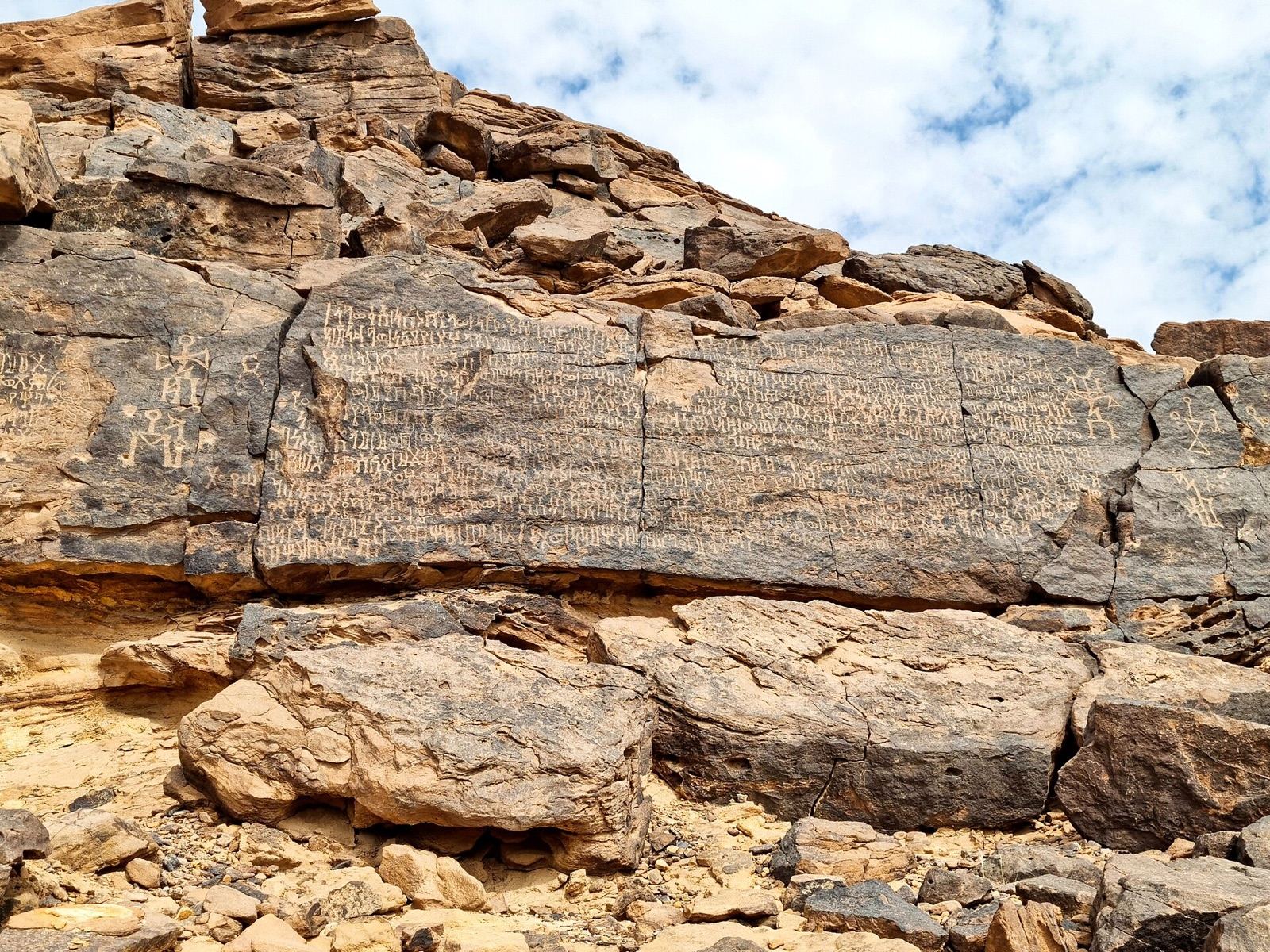
Into this world Islam was born. Around 610, a merchant of Mecca named Muhammad began to preach that there is one God and that he was God’s messenger. His recitations became the Quran, Islam’s scripture, and his followers became the first Muslims. Mecca’s leaders turned on them, and in 622 Muhammad led his followers north to Medina. The Muslim community’s early years there included conflict with the city’s three Jewish tribes. The earliest Islamic biographies of Muhammad, written down in the eighth and ninth centuries, record the outcome. Two tribes were expelled. In 627, after a failed siege of the city known as the Battle of the Trench, came the harshest judgment. The men of the third tribe, the Banu Qurayza, were executed, and the women and children were enslaved. Ibn Ishaq, the earliest of those chroniclers, puts the number of men killed at six or seven hundred, adding that some said as many as eight or nine hundred. The following year Muhammad’s forces besieged Khaybar, a Jewish farming oasis north of Medina. Its people kept their land and their faith in exchange for half of every harvest: the first arrangement of its kind, and a template for what came later. The rulers who followed Muhammad carried the title caliph. Around 642, the caliph Umar expelled most of the remaining Jews from the Hejaz, the region around Mecca and Medina. Historians debate details in these accounts, but they are the tradition’s own record, and the legal system this Chapter follows begins with them. Fourteen centuries later, the name Khaybar survives in a chant used against Jews today; the Hate Symbols page documents it.
Then came the conquests. Muslim armies took the Persian empire whole and stripped Christian Rome of Syria, Egypt, and North Africa. Within little more than a century of Muhammad’s death in 632, Muslim rule ran from Spain to the edge of India. With it came a question every empire faces: what to do with the people already there. For the Jews and Christians of the conquered lands, the answer was a contract.
The contract
Protection, for a price, on conditions.
Islamic law called them ahl al-dhimma, “the people of the pact,” and one protected person was a dhimmi: a Jew, a Christian, or, in Persia, a Zoroastrian, a follower of Persia’s older religion. Jews and Christians qualified because Islam counted them as “People of the Book,” communities holding genuine earlier scriptures; the Zoroastrians were extended the same treatment by later precedent. The dhimma itself was a standing contract. The state protected their lives, property, and worship. In exchange they paid the jizya, a yearly tax on every adult male, with its basis in the Quran (chapter 9, verse 29). And they accepted a set of conditions that marked them as lesser. The most famous statement of those conditions is a document known as the Pact of Umar. It is written, strangely, in the voice of the conquered: a letter in which the Christians of Syria promise their own restrictions to the caliph. Among them:
We shall not build in our cities or in their vicinity any new monasteries, churches, hermitages, or monks’ cells. We shall not restore, by night or by day, any of them that have fallen into ruin…
We shall not hold public religious ceremonies. We shall not seek to proselytize anyone. We shall not prevent any of our kin from embracing Islam if they so desire.
We shall show deference to the Muslims and shall rise from our seats when they wish to sit down.
We shall not ride on saddles… We shall not wear swords or bear weapons of any kind… We shall not build our homes higher than theirs.
The Pact of Umar, in the translation published by Norman Stillman in The Jews of Arab Lands (1979).
The document’s history matters as much as its contents. Tradition attributes it to the caliph Umar I, who ruled from 634 to 644. Scholars who have studied its text conclude that it took shape later, in the eighth and ninth centuries, as legal scholars worked out what the conquest arrangements should permanently mean. The earliest complete surviving versions appear in still later works, including a manual for rulers finished in Egypt in 1122. The Pact is less a treaty from one moment than the system’s constitution, hardening over time.
The conditions were not invented from nothing. Christian Rome had already written special laws for Jews, and a student can set the two lists side by side. In 388, Rome banned marriage between Jews and Christians. From 423, building new synagogues was banned, though existing ones were left standing. By 438, Jews were barred from public office. And in 553, the emperor Justinian reached inside the synagogue itself, dictating which versions of scripture could be read there. Those laws grew out of the theology traced in the Adversus Judaeos Chapter, and they survive in the Roman legal codes cited below. The system Islam built inherited that world and reworked it; the Pact’s first promise, no new houses of worship, repeats what Rome’s law had said since 423. One rule traveled the other direction. Rules requiring non-Muslims to dress differently appear in the eighth century. In 850 the caliph al-Mutawakkil ordered Jews and Christians across the empire to wear honey-colored garments and patches. More than three centuries later, in 1215, the Catholic Church’s Fourth Lateran Council brought the identifying badge to Europe; the Adversus Judaeos Chapter records that requirement. The United States Holocaust Memorial Museum traces the badge’s history back to these Islamic-world origins.
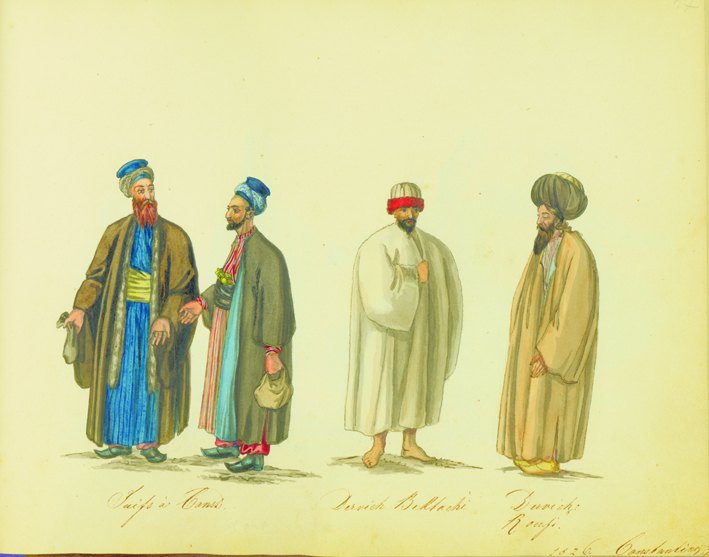
Two features set the dhimma apart from everything this Unit has traced in Europe, and both matter for what follows. First, it was not a law about Jews. It bound every protected non-Muslim alike, and in most of the Islamic world Jews were one minority among several, not a singled-out exception. Second, it was a religious category with an exit: conversion to Islam ended the restrictions the same day. Historians of the period, Bernard Lewis and Mark Cohen among them, note that there was no theology of Jews as a cosmic enemy, no charge that Jews had killed God (the deicide accusation Europe built), no claim that Jewishness survived conversion. Europe would eventually build a hatred that followed ancestry and could not be exited; the Racial Turn Chapter documents that construction.
One more feature defined life under the system: none of it operated evenly. For long stretches the conditions sat lightly or went unenforced. Synagogues rose, Jews rode horses, and viziers served kings while the dress rules stayed in the law books. Under a strict ruler, or in a tense decade, the conditions came back. A community that had lived a century at ease relearned the terms. How hard the contract pressed depended on who held power, where, and when. That variability is not a footnote to the system. It was the system.
The record
What the system allowed, and what it broke.
Read across twelve centuries, the record refuses both classroom myths. A reader looking for a golden age can find one. A reader looking for persecution can find it. The honest account holds both, and notices that they happened inside the same legal world, sometimes in the same city, sometimes in the same family.
The flourishing was real. In the 800s and 900s, under the caliphs of Baghdad, the ancient Jewish academies of Babylonia became the address of the Jewish world. Their heads, the geonim, answered legal questions sent from Spain to Yemen. And the exilarch, the recognized head of the empire’s Jews, held a place at the ruler’s court. In Córdoba, the capital of Muslim Spain, the Jewish physician Hasdai ibn Shaprut served the caliph as diplomat and minister in the mid-900s. He also funded the poets and grammarians who began Hebrew’s golden age in Spain. And in the early 1000s in Granada, Samuel ibn Naghrela rose to vizier, the king’s chief minister, and, so his own battle poems record, commanded armies. And one biography holds the system’s whole range at once. Maimonides, whose code of Jewish law is studied to this day, fled Córdoba as a boy in the 1140s, when a conquering dynasty called the Almohads offered Jews conversion, flight, or death. His family lived years in hiding. He ended his life in Egypt as physician to the court of Saladin, the most powerful Muslim ruler of his age.
The violence was real too, and this site dates it. Granada, December 30, 1066: a mob storms the Jewish quarter, kills Joseph ibn Naghrela, and destroys the community in a single day; medieval accounts put the dead in the thousands. The Almohad persecutions, from around 1146: convert, flee, or die, a policy rare in Islamic history, and the one that drove the Maimonides family out. The Mawza exile of 1679: Yemen’s ruler expels the country’s Jews, and only the Jews, to a barren coastal strip, where by some scholarly estimates as many as two-thirds die. The two years of attacks under Sultan Moulay Yazid in Morocco from 1790. The forced conversion of the Jews of Mashhad, Iran, in 1839. Each is documented, with its sources, on this site’s Timeline and in the Unit 2 community Chapters. That record is the region’s own, and it predates modern politics by centuries.
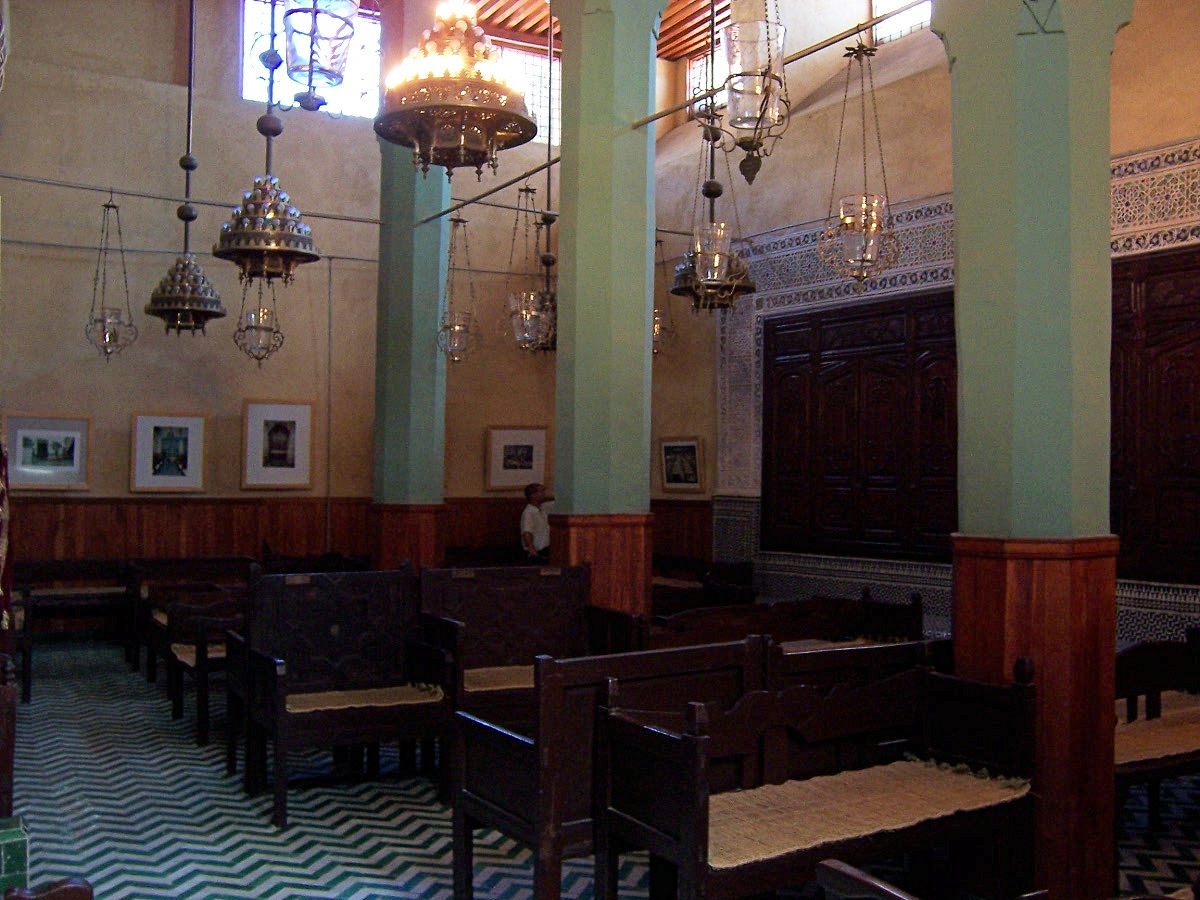
The system could also harden into walls. In 1438, the Jews of Fez were confined to a walled quarter beside the royal palace, the first mellah; the word became the name for Jewish quarters across Morocco. Communities lived inside it for five centuries. One of its synagogues, built by the Ibn Danan family in the seventeenth century, stands there still.
And the same system could open doors that Europe was closing. In 1492, when Spain expelled its Jews, the sultan Bayezid II admitted the refugees across the Ottoman Empire, the Muslim empire ruled from today’s Turkey. Dhimmi status, taxed and second-class, was still a legal place to stand. Within two years, the exiles had founded the first printing press in Constantinople, today’s Istanbul. The Expulsions Chapter follows that dispersion. The point is not a scorecard. It is that protection and subordination were both real, both written down, and both dependent on rulers the communities did not choose.
Object Spotlight
The masterpiece and the tax list.
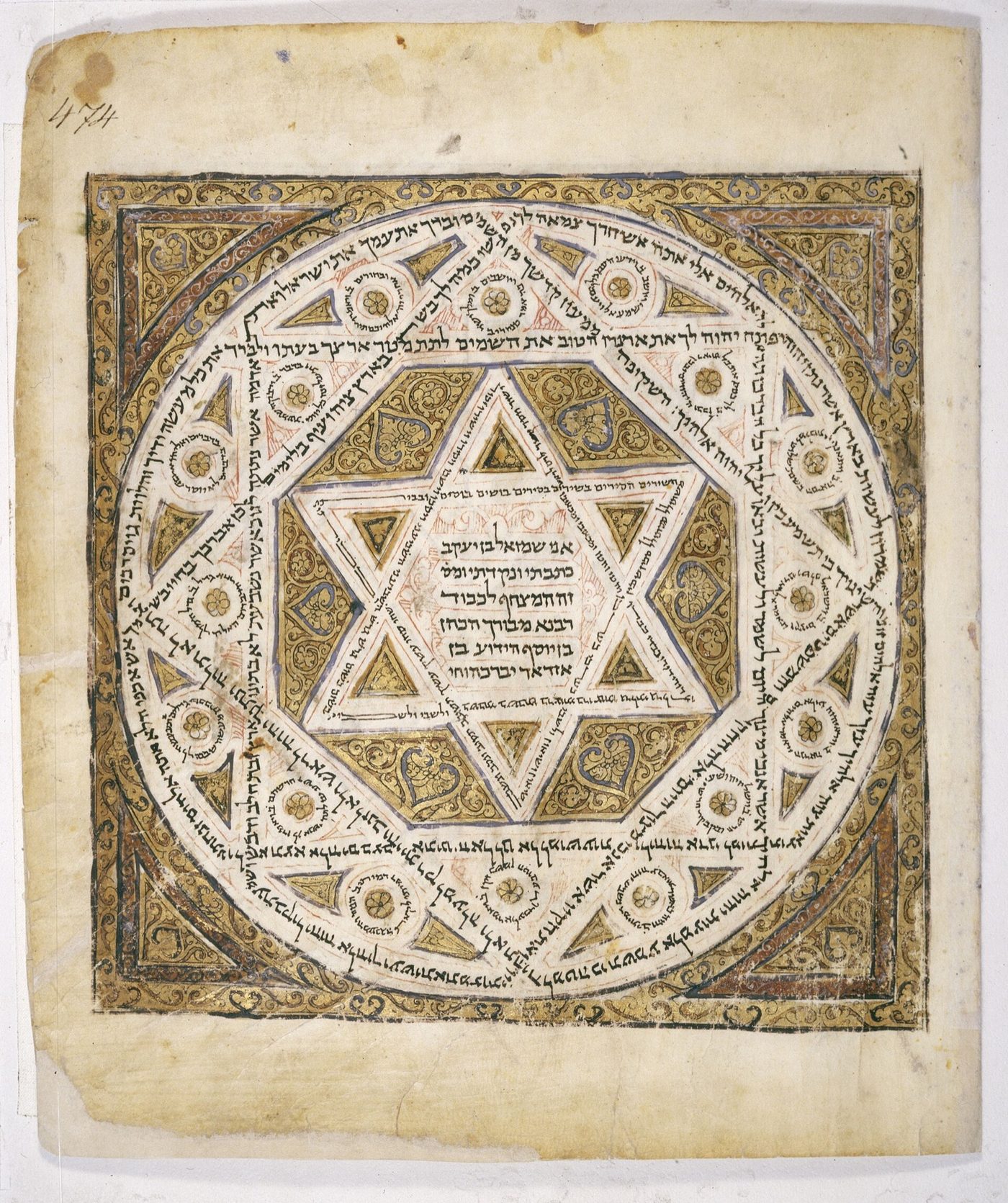
Two documents from one city, Cairo, show what the dhimma looked like from inside. The first is a masterpiece. In 1008, in Cairo, a scribe named Samuel ben Jacob finished copying a complete Hebrew Bible, and closed it with pages of gold interlace and patterned script, decoration in the same visual language as the finest Islamic art of his day. In the center of one page, he signed his name. His book, known today as the Leningrad Codex, is the oldest complete Hebrew Bible in the world, and scholars still work from its text.
The second is a scrap, made a few decades later. It comes from the Cairo Geniza, the sacred storeroom of a Cairo synagogue where a thousand years of worn-out papers were kept rather than thrown away. It is a list, name after name, of people in one community who could not pay the jizya. It was drawn up so that others could pay the tax for them.
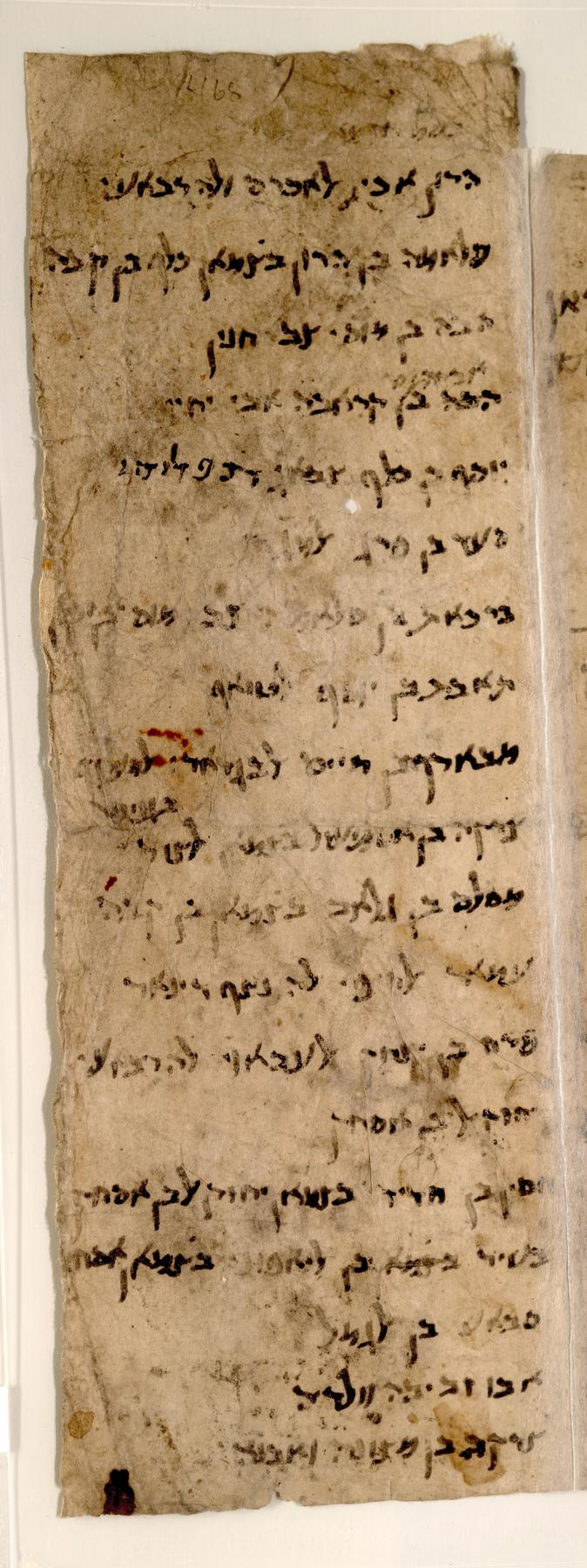
The tax fell on every adult male, poor or not, and the historian S. D. Goitein, who spent a lifetime reading these documents, found that for the poor it was the heaviest burden the system imposed. Families borrowed, begged, and sometimes fled ahead of the tax collector. What this list records is the community’s answer. Someone went name by name through the neighborhood and wrote down who needed help. The tax would be paid together, or people would suffer alone.
The Pact of Umar is the system as rulers wrote it. These two pages are the system as one community lived it: the masterpiece and the tax list, the same city, the same rules, a few decades apart. The grand narratives about Jewish life under Islam, golden and dark alike, are built from viziers and massacres. The Geniza preserves the other ninety-nine percent, and history at street level is where the system’s real weight can be measured.
1839–1856
The contract ends.
The dhimma lasted longer than almost any legal arrangement in this Unit, and it ended not with a revolution but with two decrees. In November 1839, the Ottoman Empire, which then ruled most of the region’s Jews, issued the Gülhane decree. It promised security of life, honor, and property to all subjects, whatever their religion. In 1856 a second decree, the Islahat, said the rest plainly: Muslim and non-Muslim subjects were equal before the law. On paper, after some twelve centuries, the contract was over. Practice moved slower. The jizya ended as a religious tax and came back dressed as a fee for staying out of the army. Equality arrived unevenly and was resisted in the provinces. Outside the empire the status lasted longer still: in Morocco into the twentieth century, in Yemen in some forms until the community itself left for Israel around 1950.
The end of the old system was not the end of the story, because something else was already arriving. The year after the Gülhane decree, the blood libel appeared in Damascus, promoted by a French consul. This was medieval Europe’s invented charge that Jews murder Christians for ritual, and the Blood Libel Chapter documents the case. In the century that followed, the European tradition this Unit has traced entered the region step by documented step: the conspiracy forgery, the race ideology, the broadcast propaganda. That import is the next Chapter’s subject, and what it eventually cost the region’s Jewish communities is told in Unit 2’s Departure from MENA.
The analytical question
Two shapes.
Unit 3 can now set its two systems side by side. Europe built a body of ideas about Jews specifically: the deicide charge, the libels, the race science, and at the end a state project of extermination. Islamic law built a category for non-Muslims generally: subordination written into a contract, and protection written into the same contract, enforced and relaxed by turns for twelve centuries. Its violence came in episodes, tied to rulers, crises, and mobs. It had no arc toward extermination. Both are documented. Both did real damage to real people. They are not the same shape, and the difference is not a courtesy to either tradition. It is what the documents show. And the region’s modern history cannot be read without both: an old subordination ending in law at the very moment a new, imported hatred began to arrive.
The vizier and his murdered son have been waiting at the top of this page the whole time. Samuel ibn Naghrela rose as high as the system allowed a Jew to rise, and it allowed a great deal. Joseph’s death in 1066 shows what the protection was worth in the worst hour. The system was both facts at once. So was the life inside it.
Key takeaways
- The dhimma was a standing legal contract: protection of life, property, and worship for Jews, Christians, and Zoroastrians under Muslim rule, in exchange for the jizya tax and conditions of subordination set out in texts like the Pact of Umar.
- The system inherited and reworked the anti-Jewish laws of Christian Rome, and it bound all protected non-Muslims alike: Jews were not its singular target, and conversion ended the status.
- Enforcement varied by ruler and century. The same legal world produced the academies of Baghdad, the Hebrew golden age of Córdoba, and Jewish viziers of Granada, and also the 1066 Granada massacre, the Almohad persecutions, and the Mawza exile.
- A mid-eleventh-century Cairo Geniza list of people needing help paying the poll tax shows the system as families lived it, and how communities organized to carry their poor.
- The Ottoman reform decrees of 1839 and 1856 ended the dhimma in law across most of the region, at the same moment a different, European hatred began arriving; the next Chapter documents that import step by step.
Discussion questions
Working from the evidence.
Grounded in the sourced record above. Each asks students to read the documents rather than restate a conclusion.
- The Pact of Umar is written in the voice of the conquered, listing their own restrictions as promises to the conqueror. Who benefits from that framing, and what can the form of a document tell historians beyond its contents?
- Samuel ibn Naghrela commanded armies for a Muslim king; his son was killed by a mob in 1066. Can both facts honestly describe the same system? What breaks in the history if an account keeps only one?
- Halper 468 is a list of people who could not pay the poll tax, kept so the community could pay it for them. What does this one scrap show about the difference between law as written and life as lived, and why might everyday documents like it correct both the golden-age myth and the perpetual-persecution myth?
- The dhimma bound Christians and Zoroastrians as well as Jews, and conversion ended it. The racial antisemitism Europe built after 1879 followed ancestry and could not be exited. Why does that structural difference matter for understanding what happened in the twentieth century?
- The Ottoman decrees of 1839 and 1856 ended the dhimma in law. The blood libel reached Damascus in 1840, promoted by Europeans. What does the overlap in those dates suggest about how one era of the region’s Jewish history ended and another began?
Classroom Connections
Where this Chapter fits.
Teaching Connections
The disciplines and courses this Chapter naturally supports, for any educator, anywhere.
- World History: the rise of Islam, Muslim Spain, the Baghdad caliphate, and the Ottoman reforms, taught through the legal status of one minority across twelve centuries.
- Comparative Law & Religion: how premodern states categorized religious minorities; reading a legal text (the Pact of Umar) against its uneven enforcement record.
- Sephardic & Mizrahi Studies: the legal frame behind the community histories of Unit 2, from Baghdad and Córdoba to Fez and Sana’a.
- Historical Thinking & Source Analysis: chronicles against documentary evidence; what the Cairo Geniza’s everyday papers correct in both grand narratives.
Standards Alignment
- NYS Global History & Geography: 9.5 (political powers and achievements, including the Islamic caliphates: the legal status of Jewish communities under Islamic rule).
- Common Core ELA-Literacy: RH.11–12.6 and RH.11–12.9 (source perspective, and integrating primary texts, documentary evidence, and scholarship into a coherent account).
Further Teaching Resources
- Fordham Internet Medieval Sourcebook, the Pact of Umar, the full text in translation for classroom use.
- The Princeton Geniza Project, a searchable database of Cairo Geniza documents, including thousands of everyday records like Halper 468.
- JIMENA, the Sephardic & Mizrahi bibliography, for deeper reading on the communities that lived this history.
- Films & Video: documentary material for this period is gathered in the full Films & Video collection.
Sources and citations
Primary sources
A primary source is a record from the time. It was made by people who were there. Examples: letters, diaries, photos, decrees, trial records, and newspapers.
- The Pact of Umar. Earliest complete surviving versions preserved in later works, including al-Turtushi, Siraj al-Muluk (Egypt, 1122). English translation in Stillman, The Jews of Arab Lands (below). Full text at the Fordham Internet Medieval Sourcebook.
- Quran 9:29, the verse establishing the jizya. Widely available in translation; cited here as the tax’s scriptural basis.
- Ibn Ishaq. Sirat Rasul Allah (the earliest biography of Muhammad, eighth century), translated by Alfred Guillaume as The Life of Muhammad. Oxford: Oxford University Press, 1955. Records the Banu Qurayza executions and the Khaybar agreement.
- al-Tabari. History of the Prophets and Kings (tenth century), on the caliph al-Mutawakkil’s dress decrees of 850. English translation: SUNY Press, Albany.
- Halper 468, Lists of beneficiaries for the poll tax. Cairo Geniza, Egypt, mid-eleventh century, Judeo-Arabic. Center for Advanced Judaic Studies Library, University of Pennsylvania. openn.library.upenn.edu.
- The Leningrad Codex. Complete Hebrew Bible, written in Cairo by the scribe Samuel ben Jacob, completed 1008. National Library of Russia, St. Petersburg (Firkovich Collection).
- The Theodosian Code, Book 16: imperial Roman laws concerning Jews, 4th–5th centuries CE (including the marriage ban of 388, the synagogue ban of 423, and the bar from office of 438). English translation: Clyde Pharr, The Theodosian Code (Princeton, 1952). With Justinian’s Novella 146 (553), the legal world the dhimma inherited.
- The Gülhane decree (November 3, 1839) and the Islahat decree (February 18, 1856). English translations in J. C. Hurewitz, The Middle East and North Africa in World Politics: A Documentary Record. New Haven: Yale University Press, 1975.
Secondary sources
A secondary source was written later. It is a book or article by a historian who studied those records and explains what they mean.
- Cohen, Mark R. Under Crescent and Cross: The Jews in the Middle Ages. Princeton: Princeton University Press, 1994. The standard comparative study of Jewish life under Islam and Christendom, and the book that names and dismantles both classroom myths.
- Stillman, Norman A. The Jews of Arab Lands: A History and Source Book. Philadelphia: Jewish Publication Society, 1979.
- Lewis, Bernard. The Jews of Islam. Princeton: Princeton University Press, 1984.
- Goitein, S. D. A Mediterranean Society: The Jewish Communities of the Arab World as Portrayed in the Documents of the Cairo Geniza. 6 volumes. Berkeley: University of California Press, 1967–1993. Volume II documents the poll tax’s weight on the poor.
- Levy-Rubin, Milka. Non-Muslims in the Early Islamic Empire: From Surrender to Coexistence. Cambridge: Cambridge University Press, 2011. The textual history and dating of the Pact of Umar.
A finding note. Events from Islam’s first decades rest on the tradition’s own earliest biographies, written down in the eighth and ninth centuries; historians debate their details, and this page reports what those sources record. Casualty figures from medieval chronicles, including the Granada massacre’s “thousands,” are contemporary estimates, not counts. The Pact of Umar’s dating follows the scholarship in Levy-Rubin and Mark Cohen. The Geniza document is cited from the holding library’s own catalog, and the description of the poll tax’s burden follows Goitein’s reading of the documents.
The system this Chapter documents had just ended in law when a different tradition arrived from Europe: a forgery in translation, wartime radio, a charter, a classroom. The import, documented step by step.
Comments?
Write to editor@makorproject.org.
Last updated: August 2026.